Dubai Opens World's First Living Cell Bank for 10,000 Species
The UAE and Colossal Biosciences just unveiled a revolutionary genetic vault that will preserve living cells from over 10,000 endangered species, starting with the 100 most at-risk animals. Unlike traditional biobanks, this facility will be open to the public at Dubai's Museum of the Future.
A groundbreaking genetic preservation facility opened this week in Dubai, offering real hope in the race to save Earth's disappearing species.
The Colossal BioVault and World Preservation Lab will store living cells and DNA from more than 10,000 endangered species using advanced cryogenic technology. The nine-figure partnership between the UAE and Colossal Biosciences was announced at the World Governments Summit, marking the most ambitious species preservation effort ever attempted.
Scientists estimate that nearly half of Earth's species could vanish by 2050. Since 1500, roughly 30 percent of all species have faced extinction or disappeared entirely, and current trends suggest this could reach 37 percent by 2100.
The new facility tackles this crisis head-on with technology that traditional conservation efforts couldn't match alone. Advanced robotics and AI systems will monitor and preserve millions of samples with unprecedented precision, creating a secure backup system for life on Earth.
"We are losing species at an alarming rate, and the world urgently needs a distributed network of global BioVaults," said Ben Lamm, co-founder and CEO of Colossal Biosciences. The facility will initially focus on the 100 most imperiled species not currently preserved elsewhere.
The BioVault builds on proven models like Norway's Svalbard Global Seed Vault, which protects over 1.3 million plant seed samples. However, this facility goes further by storing living animal cells at ultra-cold temperatures, making future restoration possible.
The approach already works. In 2020, scientists successfully cloned a Przewalski's horse from cells frozen 40 years earlier, and similar breakthroughs with black-footed ferrets proved that cryopreserved cells can restore genetic diversity to struggling populations.
The Ripple Effect
What makes this vault truly revolutionary is its accessibility. Unlike hidden research facilities, the BioVault sits inside the Museum of the Future where visitors can watch scientists process tissue samples, sequence DNA, and preserve cell lines in real time.
The facility emphasizes youth education and citizen science programs, turning conservation into something anyone can witness and understand. By making cutting-edge preservation work visible, organizers hope to inspire the next generation of environmental stewards.
Dubai's vault is just the beginning. Colossal plans to build a distributed network of BioVaults across multiple countries, creating redundant backup systems for endangered species worldwide, and scientists globally will have access to all non-proprietary data.
The facility will also generate genomic data to inform biodiversity planning, create reference genomes for understudied species, and advance conservation research that benefits the entire planet.
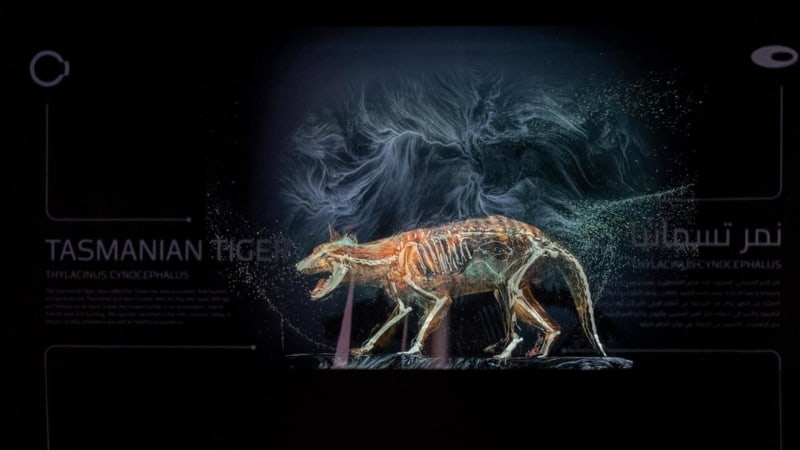
Thanks to CRISPR gene-editing technology developed by Colossal, the preserved cells could even help restore extinct species like the woolly mammoth and Tasmanian tiger. But more importantly, they'll protect the thousands of species still with us but running out of time.
Crown Prince Sheikh Hamdan bin Mohammed bin Rashid Al Maktoum championed the initiative as part of the UAE's commitment to environmental protection. "I believe the future belongs to those who harness technology and innovation to address our greatest challenges," said Majed Al Mansoori, Executive Director of the Museum of the Future.
A modern Noah's Ark is now open for business, and it's giving threatened species a fighting chance at survival.
Based on reporting by Google: species saved endangered
This story was written by BrightWire based on verified news reports.
Spread the positivity!
Share this good news with someone who needs it