Duke Engineers Reveal Path to Better Computer Chips
Scientists just solved a measurement problem that's been hiding the true potential of next-generation computer chips for nearly 20 years. The discovery clears the way for building faster, smaller processors that could transform computing.
Engineers at Duke University just cracked a problem that's been quietly skewing research on the future of computer chips.
For almost two decades, scientists have been testing ultra-thin materials called 2D semiconductors as potential replacements for silicon in computer processors. The promise is huge: smaller, faster, more energy-efficient devices that could power the next generation of technology.
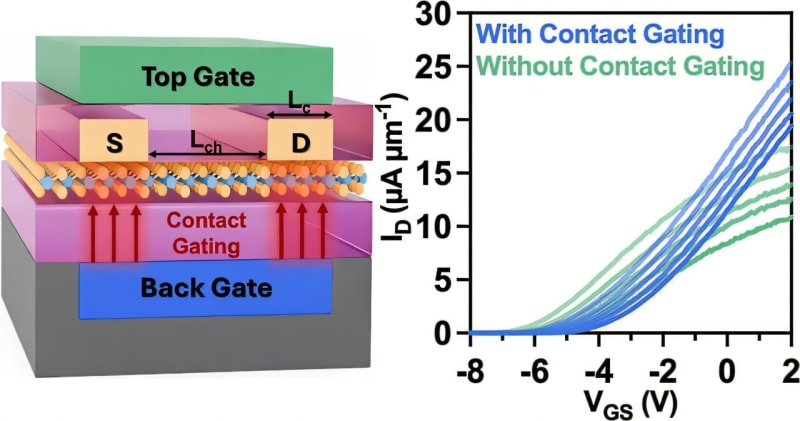
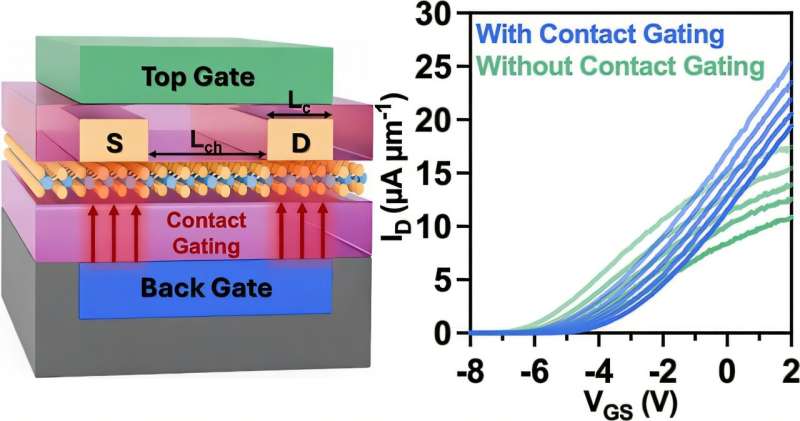
But there's been a hidden flaw in how researchers have been measuring these materials. Most labs use a testing setup called "back-gating" because it's simple and fast. The catch? This method artificially inflates performance by up to six times in tiny devices.
"Most reports of high-performance 2D transistors use a device design that isn't compatible with commercial technologies," said Aaron Franklin, professor of electrical and computer engineering at Duke. The testing creates something called "contact gating" that makes the materials look better on paper than they'll actually perform in real products.
Ph.D. student Victoria Ravel spent a year building a special device that could measure the difference. Her symmetric dual-gate transistor allowed the team to test the same materials with and without contact gating, revealing exactly how much the standard method skews results.
The findings showed that in larger devices, contact gating roughly doubled performance numbers. In the tiniest devices, the ones actually relevant for future technology, it boosted performance up to six times higher than reality.
Why This Inspires
This discovery isn't bad news. It's the opposite.
Now researchers finally have an accurate baseline to work from. Instead of chasing inflated numbers, they can focus on real improvements that will actually translate into better devices. It's like discovering your bathroom scale was wrong, then getting an accurate one so you can track genuine progress.
The Duke team is already pushing forward with even smaller tests and exploring new materials to reduce resistance. They're working to establish clearer design rules that the entire field can use to evaluate these promising materials fairly.
Transistors are the tiny switches that make all computing possible, turning electrical currents on and off to create the ones and zeros behind every app, game, and program. Silicon has powered this technology for decades, but we're hitting its physical limits. Some components are already as thin as physics allows.
That's why 2D materials matter so much. These semiconductors work even when they're just one or two atoms thick, potentially allowing computers to keep getting faster and more efficient for years to come.
Thanks to this research, published in ACS Nano, the path forward is clearer than it's been in nearly two decades.
More Images
Based on reporting by Phys.org
This story was written by BrightWire based on verified news reports.
Spread the positivity!
Share this good news with someone who needs it