
Duke Scientists Build Lego-Like Robot Parts That Shift on Command
Engineers have created programmable building blocks that can change their flexibility instantly, like how muscles tense and relax. The breakthrough could lead to robots that adapt inside the human body or navigate tight spaces.
Scientists at Duke University just solved one of robotics' biggest challenges: making materials that can change how they move without changing their shape.
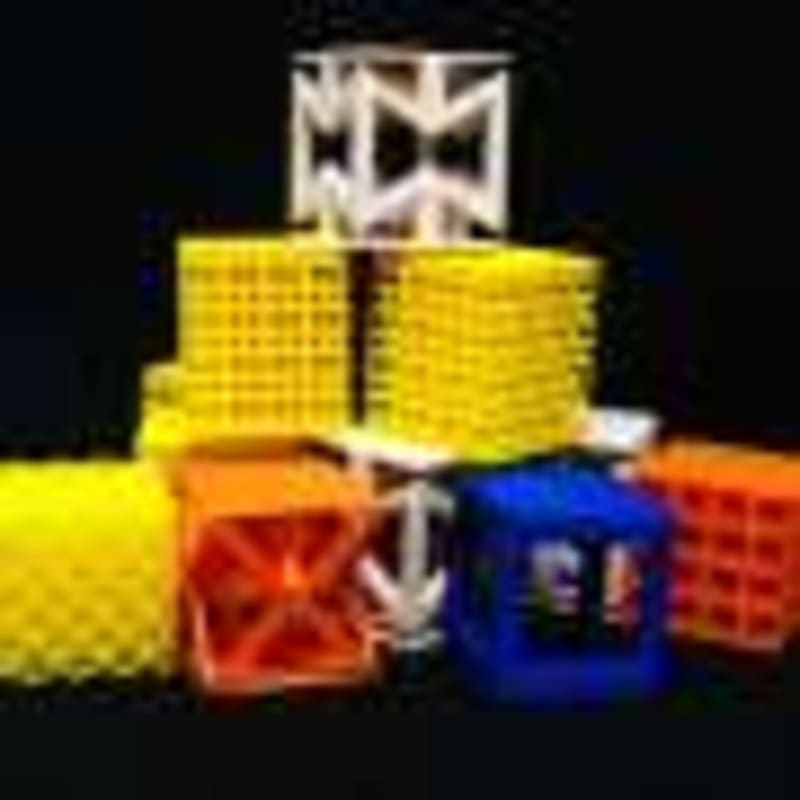
The team created Lego-like blocks filled with a special mix of gallium and iron that can switch between solid and liquid states. By applying a small electrical current, researchers can heat up individual cells within each block, choosing exactly which parts stay rigid and which turn flexible.
Think of it like your muscles. When you flex your arm, the muscle gets harder without changing size. These blocks work the same way, but they can be reprogrammed thousands of times by simply refreezing them at zero degrees and starting over.
"We want to make materials that are alive," said Yun Bai, the Ph.D. student who led the research published in Science Advances. Traditional 3D printers can create parts with specific properties, but you need to print a whole new part to change them.
The team demonstrated their invention by building a robotic fish with a programmable tail made of 10 connected blocks. By changing which cells were solid or liquid, the same fish with the same motor swam along completely different paths. No hardware changes needed, just a new pattern programmed into the tail.
The Ripple Effect
This technology opens doors that seemed like pure science fiction just years ago. Researchers envision tiny versions of these blocks navigating through blood vessels, checking for health problems and even transforming into medical stents that adapt to each patient's needs.
The same concept could help robots squeeze through earthquake rubble during rescues, adjust their grip when handling delicate objects, or reconfigure themselves for different tasks without needing multiple tools. One robot could do the work of ten, simply by reprogramming its own body.
The building blocks can mimic everything from hard plastics to soft rubbers, giving engineers an enormous range of possibilities. Tests showed the material maintained its properties through repeated cycles of melting and freezing.
Assistant Professor Xiaoyue Ni, who leads the lab, plans to experiment with different metal combinations that could work safely at body temperature. The team is also working on shrinking the technology down to microscopic sizes for medical applications.
The research represents a major step toward robots that can truly adapt to their environment in real time, not just follow preprogrammed instructions. It's bringing us closer to machines that can think on their feet, or rather, reprogram their feet while standing on them.
More Images

Based on reporting by Phys.org - Technology
This story was written by BrightWire based on verified news reports.
Spread the positivity!
Share this good news with someone who needs it