Dutch Scientists Race to Solve Seal Mystery
After recovering from near-extinction to 33,000 seals, the Wadden Sea's harbor seal population is mysteriously shrinking again. A team of Dutch researchers is now leading a groundbreaking investigation to save the beloved marine mammals before it's too late.
When a playful young harbor seal nicknamed "Uutje" swam through Amsterdam's canals in September, dodging beer cans and bicycles, residents couldn't help but smile at the unexpected visitor. But behind the charming headlines, scientists are racing to solve a troubling mystery about what's happening to thousands of Uutje's relatives.
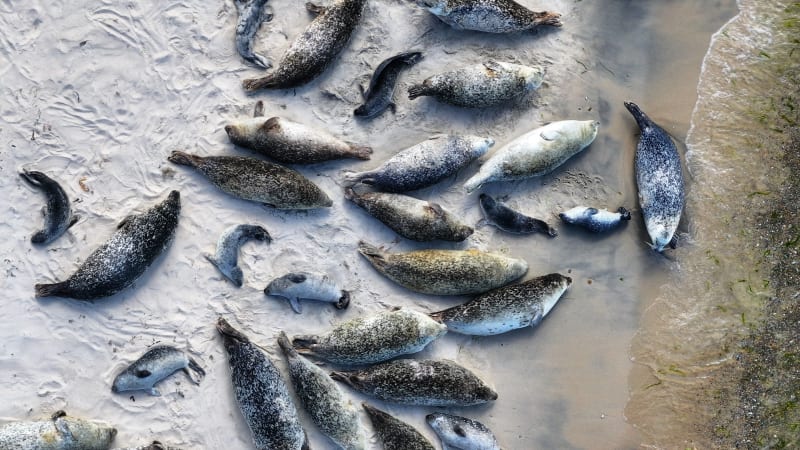
The Wadden Sea, a UNESCO World Heritage Site stretching across the Netherlands, Germany, and Denmark, was once home to fewer than 5,000 harbor seals in 1975. After hunting bans in the 1960s and '70s, the population soared to 33,300 by 2023 in one of Europe's greatest conservation success stories.
Then something changed. Between 2020 and 2021, the population began shrinking for the first time in decades, dropping about 4 percent each year since.
The mystery deepens when you look at the baby seals. This year brought the second highest pup count ever recorded, but by August, the total population had barely grown. Somewhere between birth and adulthood, thousands of young seals are simply vanishing.
"We are missing significant portions of the population," says David Goldsborough, a marine policy expert leading a two-year research consortium funded by the Dutch government. "All those pups, we completely lose sight of them, and that's just strange."
His team at Van Hall Larenstein University is investigating every possibility. It's not disease, according to Ana Rubio-Garcia, who runs one of Europe's largest seal rehabilitation centers. The pups arriving for care show normal, treatable conditions like parasitic pneumonia.
It's probably not overcrowding either. If the ecosystem had reached capacity, other species like gray seals would also be declining, but they're thriving.
One theory gaining attention involves those same gray seals. Known to prey on harbor seal pups, their growing numbers and shrinking food sources might be pushing them to hunt their smaller cousins more aggressively. It would explain why researchers aren't finding more dead pups on beaches.
Marine ecologist Robbie Weterings notes another clue: harbor seals are homebodies. "They like to come back to the same spot year after year," he says, ruling out the idea that they've simply relocated to better waters.
The Bright Side
What makes this story hopeful isn't just that scientists are investigating. It's that they're doing it before the decline becomes catastrophic. Unlike previous distemper outbreaks that killed half the population within months, this gradual decrease gives researchers precious time to understand and potentially reverse the trend.
The Dutch government's investment in the two-year research consortium shows commitment to protecting the conservation success they've already achieved. These scientists aren't just watching seals disappear. They're building the knowledge needed to ensure that young seals like Uutje have a thriving population to return to after their adventures.
The Wadden Sea's seals survived near-extinction once before, and now a dedicated team is working to make sure they never face that threat again.
More Images


%2Fhttps%3A%2F%2Ftf-cmsv2-smithsonianmag-media.s3.amazonaws.com%2Faccounts%2Fheadshot%2Ftim.png)
Based on reporting by Smithsonian
This story was written by BrightWire based on verified news reports.
Spread the positivity!
Share this good news with someone who needs it