Dutch Students Build Solar Ambulance for Remote Africa
University students in the Netherlands just unveiled the world's first solar-powered ambulance designed to bring medical care to remote villages without reliable electricity or fuel. The vehicle can travel 715 kilometers on sunshine alone while powering X-rays, defibrillators, and vaccine storage.
A team of Dutch students just solved one of healthcare's toughest challenges: how to reach patients in places where roads are rough, fuel is scarce, and electricity is unreliable.
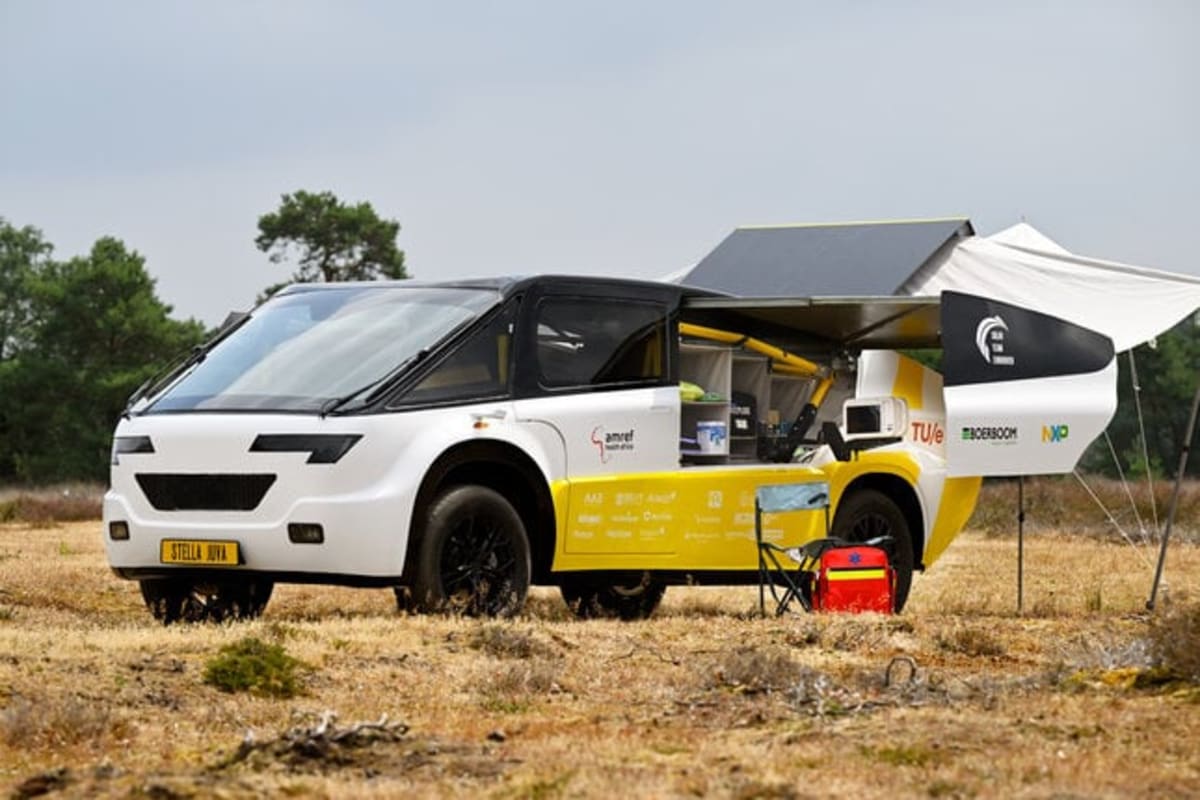
Meet Stella Juva, the world's first solar-powered ambulance. The sleek white and yellow vehicle was unveiled Tuesday by students at Eindhoven University of Technology in the Netherlands, and it's heading to Kenya next month for real-world testing.
The two-seater ambulance doesn't just run on solar power. Its rooftop panels also keep critical medical equipment running, from X-ray machines to defibrillators, ultrasound devices, and refrigerated vaccine storage.
Project leader Mathijs van Gerven, a 21-year-old biomedical engineering student, designed the vehicle to bring healthcare directly to patients rather than transport them across impossible distances. It includes tuberculosis testing kits and can hit speeds of 120 kilometers per hour on off-road terrain.
On a sunny day, Stella Juva can travel 715 kilometers without stopping. When clouds roll in or night falls, a solar-charged battery keeps everything running.
The innovation tackles a pressing problem across rural Africa. Many villages sit hours away from the nearest clinic, and residents often lack transportation to reach them.
"The distance between very remote villages and healthcare facilities is really big," said Femke Maurits, partnerships manager at Amref Health Africa. "There's little public transportation, fuel is very expensive, electricity networks are unreliable."
The Ripple Effect
This student project could transform healthcare delivery across entire regions. By removing dependence on fuel and grid electricity, solar ambulances could operate sustainably in areas where traditional vehicles struggle.
The team's decision to design for off-road terrain means Stella Juva can navigate paths that stop conventional ambulances. Pregnant women needing ultrasounds, children requiring vaccines, and tuberculosis patients awaiting diagnosis could all receive care without leaving their communities.
Amref Health Africa is already partnering with the students, recognizing how this technology could solve healthcare delivery challenges across multiple African countries.
The Kenya trip will put theory into practice, testing whether sunshine and student ingenuity can indeed bridge the gap between remote villages and lifesaving medical care.
Based on reporting by Google News - Netherlands Technology
This story was written by BrightWire based on verified news reports.
Spread the positivity!
Share this good news with someone who needs it