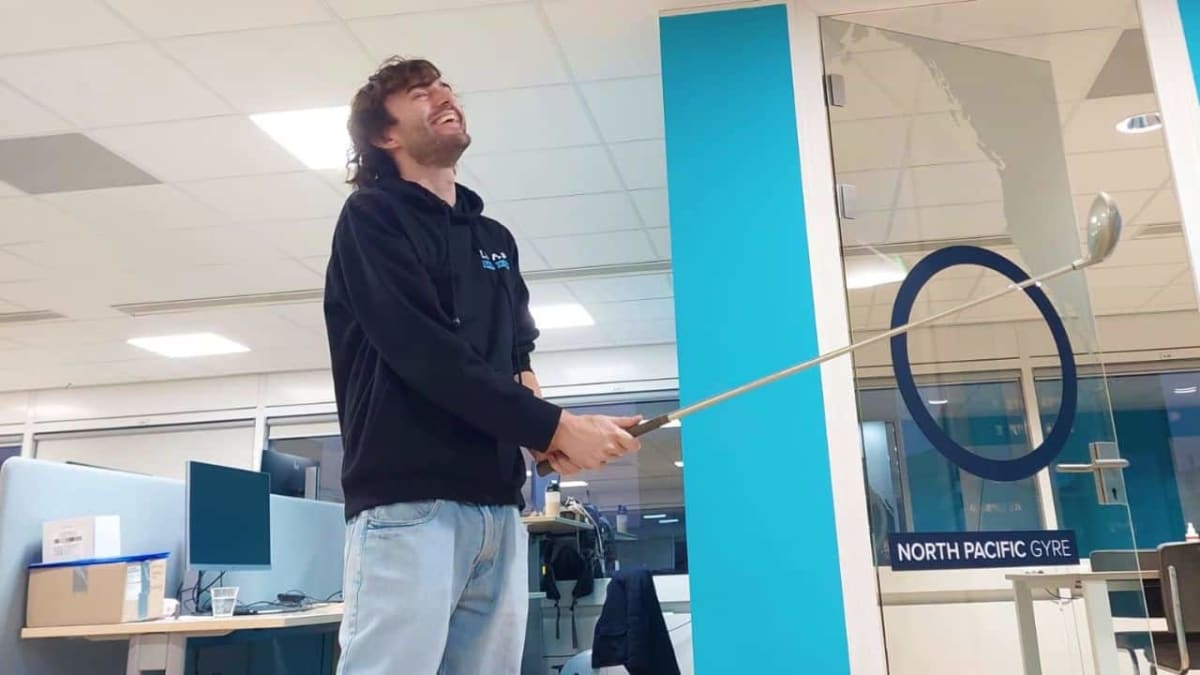
Dutch Teen's Ocean Cleanup System Removes Tons of Plastic
A Dutch inventor started designing ocean cleanup technology as a teenager and has now deployed systems that use ocean currents and solar power to collect plastic waste. Experts say the approach offers real promise for tackling pollution at scale. #
Boyan Slat was just 16 when he first sketched out a revolutionary idea: what if we could use the ocean's own movements to trap floating plastic waste?
Now, his nonprofit organization The Ocean Cleanup has turned that teenage dream into reality. His team has developed innovative systems that work with ocean currents rather than against them, using long floating barriers to concentrate plastic debris for collection.
The technology comes in two forms. In the open ocean, passive collection systems use U-shaped barriers that drift with currents, funneling plastic into a retention zone where it can be retrieved. For rivers (which carry most ocean-bound plastic), the team created solar-powered "Interceptors" that catch trash before it reaches the sea.
The Dutch inventor's approach stands out because it focuses on efficiency. Instead of burning fuel to chase plastic across vast ocean expanses, the systems let natural currents do the heavy lifting. Solar panels power the river barriers, making the operation sustainable.
Experts consider the technology a promising large-scale solution, though they emphasize it addresses only part of the problem. The Ocean Cleanup has already removed significant amounts of plastic from the Great Pacific Garbage Patch and deployed Interceptors in multiple countries.
The Ripple Effect
The project demonstrates how youthful idealism combined with engineering can tackle problems that seem impossibly huge. Slat's persistence has inspired a generation of young inventors to think big about environmental solutions.
The systems also create unexpected benefits beyond cleanup. Retrieved plastic gets recycled into products, turning ocean waste into useful materials. Communities along polluted rivers gain cleaner waterways, improving both ecosystems and public health.
Still, scientists stress that cleanup technology cannot replace prevention. Reducing plastic production and improving waste management remain essential to solving the ocean pollution crisis at its source.
But for the millions of tons already floating in our waters, Slat's invention offers genuine hope: proof that human ingenuity can help heal the damage we've done.
#
Based on reporting by Google News - Ocean Cleanup
This story was written by BrightWire based on verified news reports.
Spread the positivity!
Share this good news with someone who needs it