Earth Won the "Goldilocks" Chemistry Lottery for Life
Scientists discovered Earth stayed habitable only because oxygen levels hit a perfect sweet spot 4.6 billion years ago. Too much or too little oxygen during planet formation, and life-essential elements would have vanished.
Earth may owe everything to an astonishingly lucky chemistry accident that happened before life even began.
New research from ETH Zurich reveals that our planet formed under a razor-thin chemical balance. During Earth's birth 4.6 billion years ago, oxygen levels had to fall within an extremely narrow range for two life-essential elements to stick around: phosphorus and nitrogen.
Phosphorus builds the backbone of DNA and powers every cell's energy system. Nitrogen forms the proteins that make cells work. Without enough of both, life simply cannot start.
Lead researcher Craig Walton and his team discovered these elements only remain available during a critical window. When a young planet's molten materials separate into core and mantle, oxygen levels determine where phosphorus and nitrogen end up.
Too little oxygen? Phosphorus bonds with iron and sinks into the core, locked away forever. Too much oxygen? Nitrogen escapes into space and disappears.
Earth threaded the needle perfectly. Our planet formed with moderate oxygen levels that kept both elements in the mantle and crust, right where emerging life could access them.
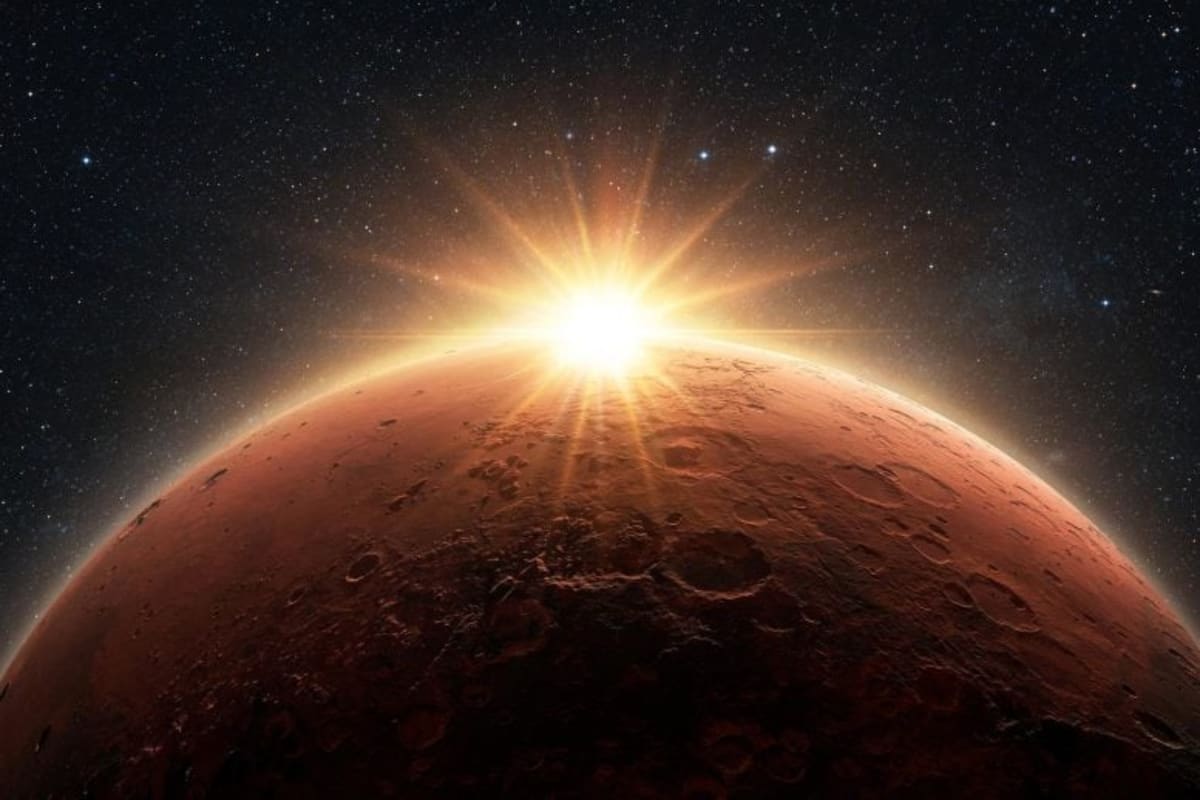
Mars wasn't so lucky. The red planet formed outside this "Goldilocks zone," leaving it with more phosphorus but far less nitrogen than Earth. That chemical imbalance made conditions much harder for life.
Why This Inspires
This discovery completely reshapes how we search for life beyond Earth. For years, scientists focused almost entirely on finding water on distant planets. This research proves water alone isn't enough.
A planet could have oceans and still be chemically dead on arrival. If oxygen levels were wrong during those first moments of formation, the planet never had a fighting chance at hosting life.
The good news? Astronomers can now focus their search more precisely. Because planets form from the same material as their host star, scientists can study a star's chemistry to estimate whether its planets hit the Goldilocks zone.
That means we should concentrate on solar systems with Sun-like stars. Different chemistry likely means different outcomes for life.
This research transforms a discouraging reality into an actionable roadmap. Instead of searching everywhere and finding nothing, we can now look in the right places. Every discovery that narrows our search brings us closer to answering humanity's biggest question: are we alone?
Earth didn't just get lucky with one condition but with a cosmic chemistry lottery that made everything else possible.
Based on reporting by Science Daily
This story was written by BrightWire based on verified news reports.
Spread the positivity!
Share this good news with someone who needs it