Earth's Hidden Oxygen Vault May Explain Our Breathable Air
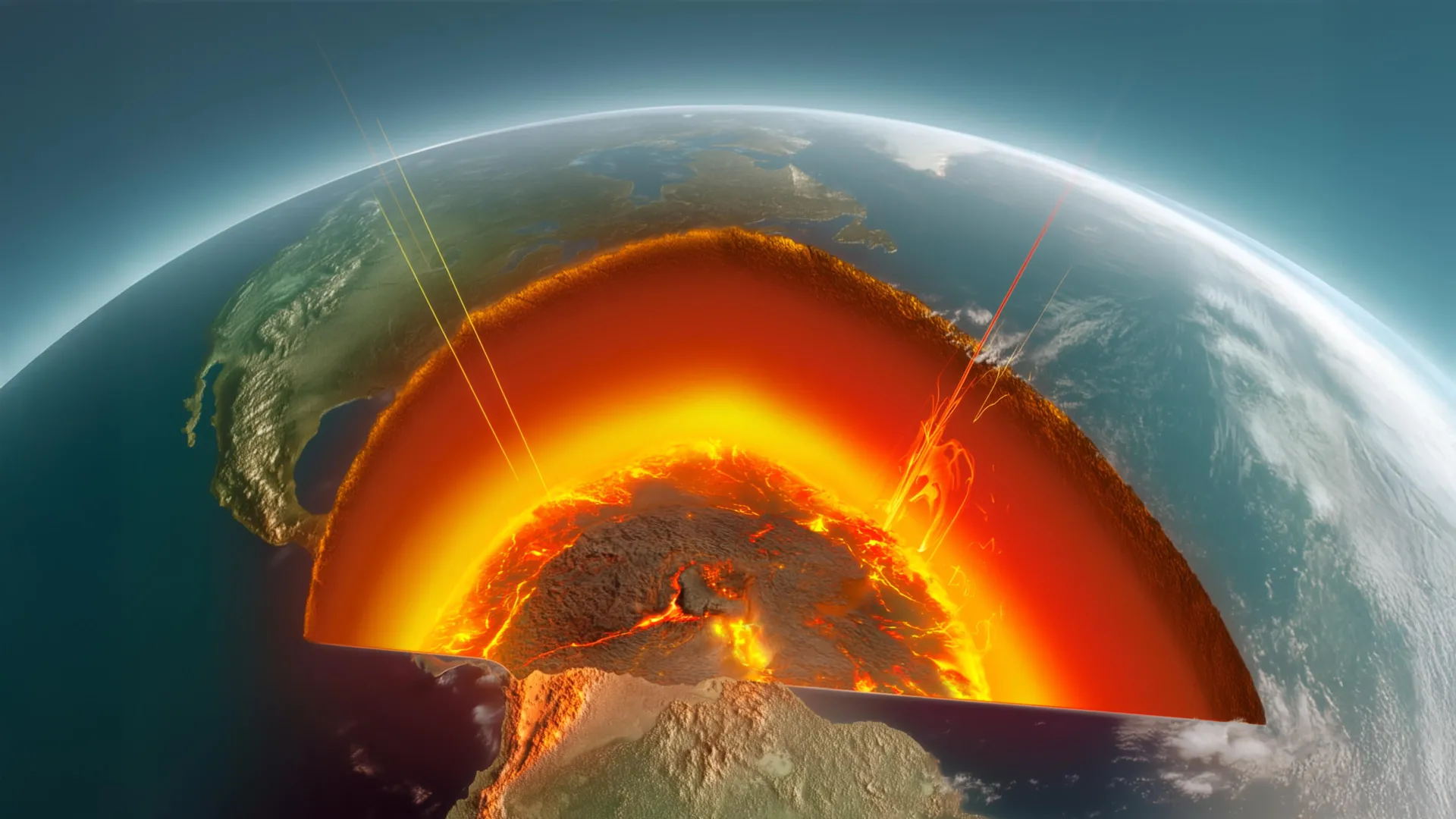
Scientists discovered that magma deep inside Earth can store far more oxygen than anyone realized, potentially solving the mystery of how our planet developed its oxygen-rich atmosphere. This hidden reservoir could help us understand how life became possible on Earth and where to look for it on other worlds.
Deep beneath your feet, molten rock is hiding a secret that could explain how Earth became a planet we can breathe on.
Scientists have discovered that magma can absorb and store surprising amounts of extra oxygen, far beyond what researchers previously thought possible. This finding challenges decades of assumptions about how Earth works and offers an exciting new explanation for one of science's biggest questions: where did all our oxygen come from?
Dr. Yanhao Lin and Dr. Ho-kwang Mao from the Center for High Pressure Science and Technology Advanced Research led the groundbreaking study. Working with international colleagues, they published their findings in National Science Review.
The team recreated conditions from deep inside Earth using extreme laboratory equipment. They heated volcanic rock samples to temperatures between 1200 and 1800 degrees Celsius and subjected them to pressures 69,000 times stronger than the air around us.
What they found surprised everyone. At normal pressure, the molten rock contained almost no extra oxygen. But at extreme depths, excess oxygen made up more than 5% of the sample's weight.
The researchers used light analysis to confirm the oxygen had actually become part of the rock structure rather than forming tiny bubbles. Computer simulations helped them understand exactly how atoms in the molten material grab onto and store the additional oxygen.
This matters because oxygen makes up more than half the atoms in Earth's interior rocks. Scientists always assumed magma could only hold specific amounts based on its other chemical ingredients. The new research proves that assumption wrong.
The Ripple Effect
This discovery connects three crucial pieces of Earth's story: the deep interior, volcanic eruptions, and our breathable atmosphere. Ancient volcanoes may have released stored oxygen from Earth's depths over billions of years, gradually transforming our planet's air into something life could use.
The implications reach beyond Earth. Understanding how planets develop oxygen-rich atmospheres helps scientists know what to look for when searching for life on distant worlds. A hidden oxygen reservoir might be a key ingredient that makes a planet habitable.
The findings also suggest that Earth's interior played a more active role in creating conditions for life than previously recognized. Instead of oxygen coming solely from living organisms or chemical reactions at the surface, our planet's deep magma may have been contributing all along.
Future research will explore how much oxygen volcanic eruptions actually released throughout Earth's history. Scientists also want to know if this oxygen storage happens in other types of molten rock and at even greater depths.
For now, the message is clear: Earth has been holding its breath for billions of years, and we're just beginning to understand how that helped us take ours.
Based on reporting by Science Daily
This story was written by BrightWire based on verified news reports.
Play Today’s BrightWire Positive Mini Crossword & Word Game
Keep your mind sharp with our free 5-minute uplifting daily crossword and positivity word puzzle.
Spread the positivity!
Share this good news with someone who needs it