Educators Ditch Test Scores for Curiosity-Based Learning
Teachers across America are replacing compliance-based education with approaches that prioritize curiosity, critical thinking, and lifelong learning habits. The shift is creating students who become community changemakers instead of just test-takers.
Classrooms across America are undergoing a quiet revolution that's producing something more valuable than high test scores: students who genuinely love learning.
For decades, education has measured success through grades and standardized tests. But a growing movement of educators recognizes these metrics capture only a tiny snapshot of what students can truly achieve.
The problem with focusing solely on test performance is that it creates what researchers call "compliance-based learning." Students become so afraid of wrong answers that they stop exploring ideas. They learn to memorize facts rather than question systems, analyze problems, or imagine solutions.
Carol Dweck's research reveals how this narrow focus cultivates fixed mindsets instead of growth mindsets. Students begin seeing education as a hoop to jump through rather than a tool for understanding their world.
Progressive educators are now reimagining what learning should look like. They're prioritizing skills like critical thinking, curiosity, and problem-solving over rote memorization and standardized benchmarks.
The Ripple Effect
When students develop genuine learning dispositions, the benefits extend far beyond report cards. These young people become agents of change in their communities, questioning unjust systems and seeking innovative solutions to persistent challenges.
This transformation proves especially powerful for students from historically underserved communities. Learners who develop strong critical-thinking skills can bridge gaps between their neighborhoods and academic institutions, translating knowledge in ways that build community trust.
Research on ethnic studies programs shows that when students engage critically with issues of identity, power, and culture, they develop heightened civic agency. Many take on mentoring roles, creating ripple effects that transform entire communities.
Professor and documentary filmmaker Dr. Crystal Sanders experienced this shift personally while researching Black educators before and after the 1954 Brown v. Board of Education decision. Her oral history project revealed how many accepted "facts" were incomplete or sanitized versions of complex realities.
That realization transformed her from instructor to lifelong learner. Her research became the feature-length documentary "Belonging Beyond Brown," demonstrating how curiosity can spark professional and personal renewal.
The movement challenges what Brazilian educator Paulo Freire called the "banking model" of education, where teachers deposit information into students treated as empty vessels. Instead, these educators embrace what scholar bell hooks calls "engaged pedagogy," creating spaces where learning becomes a practice of freedom.
Students who experience this liberating approach often become educators themselves, whether formally or informally, carrying forward principles of inquiry-based and asset-based learning into their own communities.
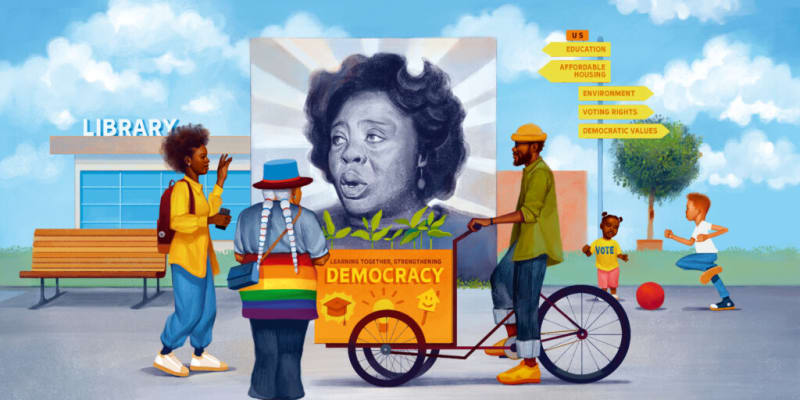
This shift matters for democracy itself because students trapped in compliance-focused environments lack preparation for today's complex social, economic, and political realities.
More Images

Based on reporting by Google News - Student Achievement
This story was written by BrightWire based on verified news reports.
Spread the positivity!
Share this good news with someone who needs it