Egypt Uncovers Sacred Lake at Ancient Karnak Temple
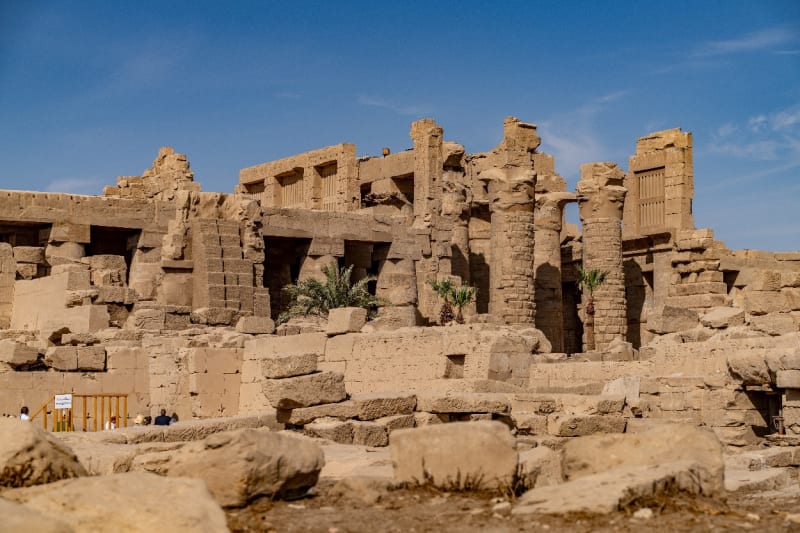
Archaeologists in Egypt have discovered a previously unknown sacred lake at the ancient Karnak temple complex, confirming a long-held theory about ritual practices. The 50-square-meter stone basin offers new insights into how priests performed purification ceremonies over a thousand years ago.
A hidden piece of ancient Egyptian spirituality just emerged from the sands after millennia.
An Egyptian-Chinese archaeological team announced the discovery of a sacred lake at Karnak, one of Egypt's largest and most important temple complexes in Luxor. The finding confirms what researchers had suspected for years but never proven.
The stone basin covers 50 square meters within the temple precinct. Its design and placement match the architectural features of known sacred lakes, marking it as a ritual site rather than just a water source.
Ancient Egyptians believed sacred lakes represented Nun, the primordial waters from which all creation emerged. These pools served as bridges between the physical and spiritual worlds, allowing priests to connect with divine forces through daily ceremonies.
Vincent Rondot, an Egyptologist and honorary director of Egyptian Antiquities at the Louvre Museum, explained that sacred lakes were "essential theological instruments" that allowed temples to function independently. Priests purified themselves in these waters before performing rituals, making the lakes central to religious life.
The excavation revealed more than just water. In a nearby chapel dedicated to Osiris, the god of the afterlife, archaeologists found three shrines, animal bones, and small statuettes. These artifacts show that Karnak remained an active worship site for centuries, with priests performing animal sacrifices and other ceremonies.
The Ripple Effect
This discovery does more than fill a gap in archaeological records. It helps modern researchers understand how ancient Egyptians organized their spiritual lives and built communities around shared beliefs. The lake's confirmation validates decades of scholarly work and opens new questions about similar features that might exist at other temple sites across Egypt.
Karnak served as a center of religious, political, and economic activity for over a thousand years. Each new discovery there adds another layer to our understanding of how one of history's greatest civilizations thrived.
The sacred lake stands as a testament to human devotion and the enduring power of belief to shape our world.
More Images

Based on reporting by Google: archaeological discovery
This story was written by BrightWire based on verified news reports.
Spread the positivity!
Share this good news with someone who needs it