Engineer Predicted Today's EV Revolution in 1920
A brilliant engineer who shaped our electrical grid predicted electric vehicles would dominate American roads—he was just a century early. His 1920 list comparing EVs to gas cars reads like it was written yesterday.
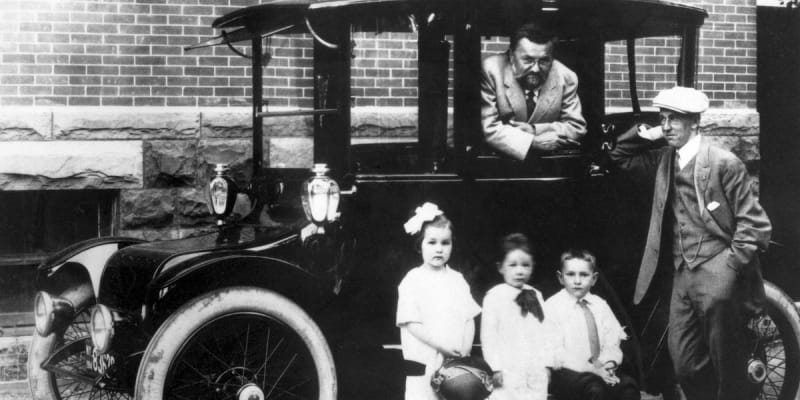
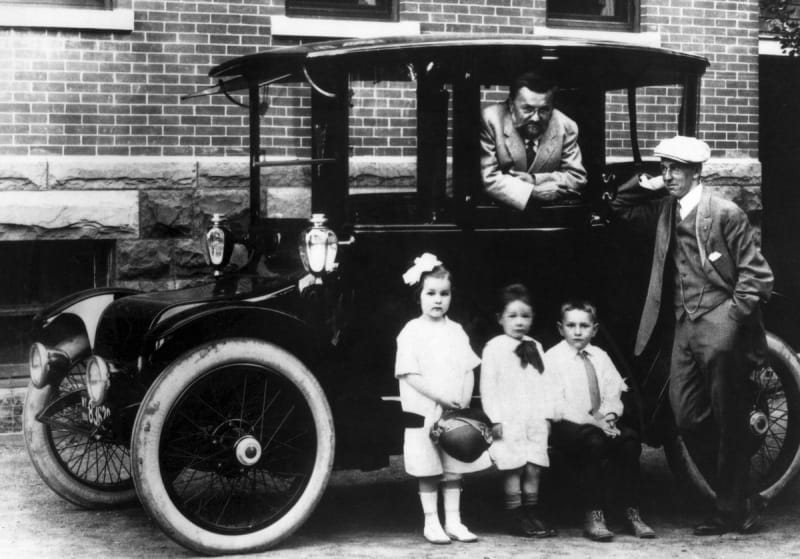
Charles Proteus Steinmetz drove around New York in 1914 in a top hat and suit, puffing cigars from the backseat of his electric car. Sometimes he'd sit back there with his chauffeur up front, making it look like the vehicle drove itself—a century before Tesla's autopilot.
But this wasn't just a quirky rich guy with a fancy toy. Steinmetz was one of the most brilliant minds in electrical engineering, the man who helped build America's power grid from the ground up.
In March 1920, he typed out a comparison of electric versus gasoline vehicles. His list of EV advantages included low maintenance costs, reliability, simple operation, and cheaper running costs. The downsides? Limited charging stations, short range, and lower speeds.
Sound familiar? That's because we're having the exact same conversation today, just with better batteries.
Steinmetz believed one million electric vehicles would be on American roads by 1924. He was off by about a hundred years, but his vision is finally coming true.
The man knew what he was talking about. He'd literally written the equations that made modern transformers and electric motors possible. His work on AC circuits is still taught in engineering schools today. As General Electric's chief consulting engineer starting in 1893, he helped bring electricity to America.
His own Detroit Electric sedan could hit 25 miles per hour and travel about 30 miles on a charge from its 14 six-volt batteries. Not impressive by modern standards, but revolutionary for 1914.
After Steinmetz died in 1923 at age 58, his beloved electric car ended up rotting in a field. In 1971, Union College in Schenectady found it and spent a decade restoring it. Students and faculty brought it back to running condition, where it remains today.
The Ripple Effect
Steinmetz fled Prussia in 1888 as a socialist refugee, arriving in New York with radical ideas about politics and technology. He believed electricity would democratize transportation and make life better for everyone, not just the wealthy.
His technical breakthroughs made today's electric grid possible. Without his equations for magnetic hysteresis and AC circuit analysis, we wouldn't have the infrastructure to charge millions of electric vehicles.
The prediction he made in 1920 seemed laughably wrong for decades. But in 2024, the United States finally hit his target of one million electric vehicles on the road—exactly a century late.
Sometimes the visionaries are right. We just needed time to catch up.
More Images
Based on reporting by IEEE Spectrum
This story was written by BrightWire based on verified news reports.
Spread the positivity!
Share this good news with someone who needs it