Engineers Inspired the Scientific Method 400 Years Ago
Before "scientists" even existed as a profession, inventive engineers were the ones doing bold experiments and learning by trial and error. A new look at history reveals how 17th-century makers actually shaped what we now call the scientific method.
The story we tell about science has it backward, and historians are finally setting the record straight.
In the early 1600s, Dutch engineer Cornelis Drebbel built something that seemed impossible: a boat that dove beneath London's Thames River and resurfaced hours later with passengers still breathing. Around the same time, French engineer Salomon de Caus created fountains so ingenious that garden statues appeared to sing and move on their own.
These weren't just showmen. They were rigorous experimenters who tested, adjusted, and tested again until their wild ideas actually worked.
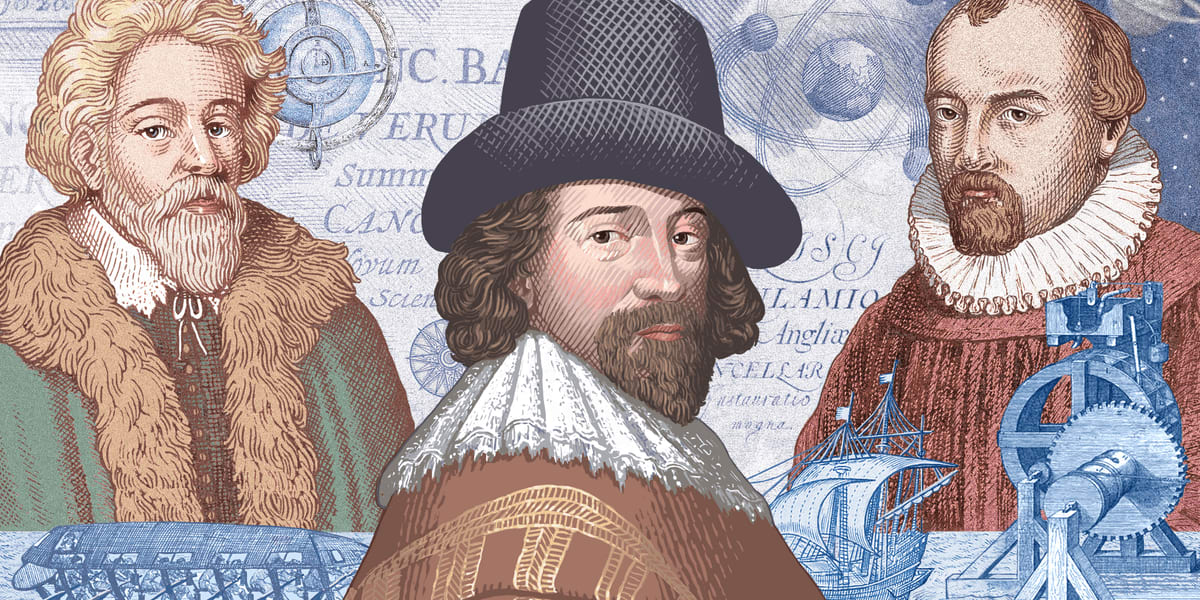
Philosopher Francis Bacon watched these engineers closely. What he saw changed everything about how we pursue knowledge today.
Drebbel didn't theorize about underwater travel. He built submarines, dove into the river, learned what failed, and improved his design with each attempt. De Caus didn't debate the principles of hydraulics in abstract terms. He got his hands wet installing pipes and pumps until water danced exactly as he envisioned.
Bacon realized these makers had stumbled onto something profound: nature reveals its secrets through hands-on experimentation, not armchair philosophy. In 1620, he published "Novum Organum," arguing that practical inventions like printing presses and compasses had transformed civilization far more than endless scholarly debates.
His vision came alive in "The New Atlantis," a story published in 1627 imagining an entire society organized around experimental workshops. The fictional Salomon's House featured deep caves for refrigeration tests, towers for astronomy, and sound-houses for acoustic trials. Its residents bore titles that still sound futuristic: Merchants of Light, Pioneers, Interpreters of Nature.
The inspiration was obvious. Drebbel's airtight chambers and methodical trials. De Caus's spectacular fountains and hidden mechanisms. Real engineers doing real work.
Bacon's final act proved his commitment. On a frigid March day in 1626, he stopped his carriage to test whether snow could preserve a chicken's flesh. The experiment worked, but the cold gave him pneumonia that killed him weeks later.
The Ripple Effect
Bacon's ideas sparked a revolution. In 1660, a group of London thinkers founded the Royal Society with the motto "take no one's word for it," committing to evidence over authority. They explicitly credited Bacon's vision of learning through making and testing.
But over the next two centuries, something strange happened. As "scientist" became a prestigious profession in the 1800s, the story flipped. Suddenly, scientists discovered truths and engineers merely "applied" them. We still use that backward language today, calling engineering "applied science."
History tells a different story. The experimenters came first. The scientific method grew from workshops and river trials, not libraries.
Creation and understanding have been partners from the very beginning, and perhaps it's time we remembered that engineers helped write the original playbook.
More Images

Based on reporting by IEEE Spectrum
This story was written by BrightWire based on verified news reports.
Spread the positivity!
Share this good news with someone who needs it