Erin Brockovich Maps AI Data Centers Across America
Environmental activist Erin Brockovich launched a crowdsourced map tracking AI data centers nationwide, giving communities a voice in protecting their water and power supplies. Nearly 3,000 people have already reported concerns about facilities in their neighborhoods.
When communities feel unheard about massive tech projects moving into their backyards, one of America's most famous environmental activists just gave them a megaphone.
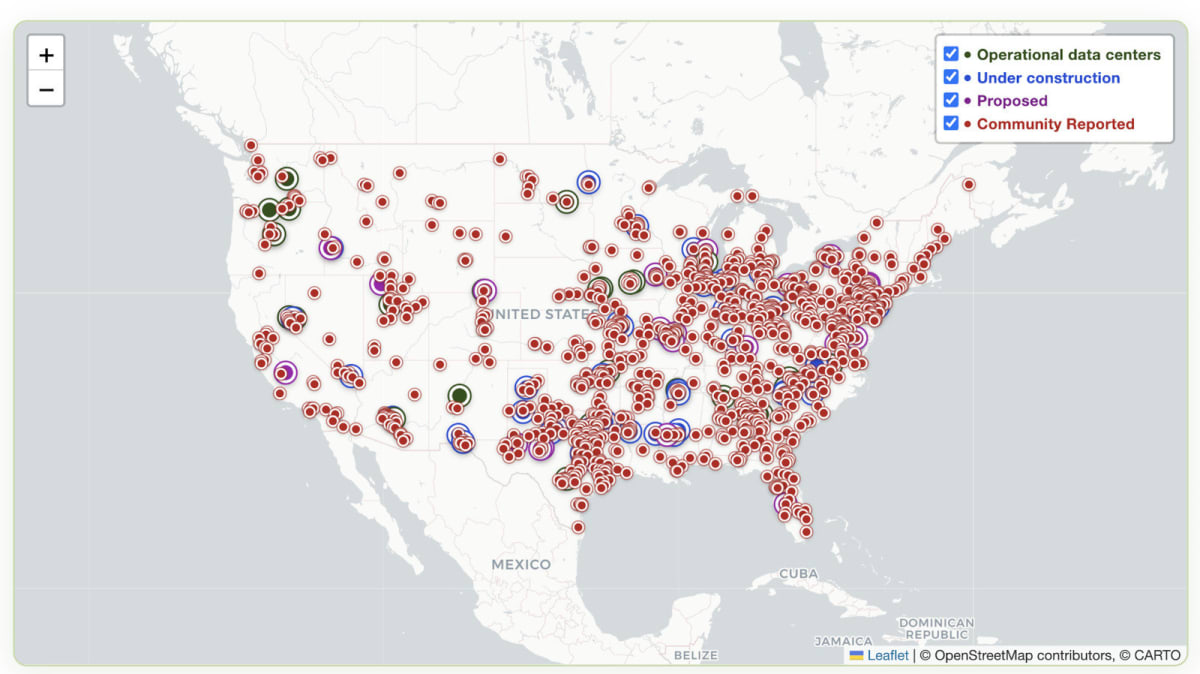
Erin Brockovich, known for taking on Pacific Gas & Electric in the 1990s over contaminated groundwater, launched a new website that maps AI data centers across the United States. The platform lets people report facilities in their communities and share concerns about how these massive buildings might affect their lives.
The response has been overwhelming. Nearly 2,800 reports have poured in since launch, with Texas leading the charge at 612 reports. Nearly half of those came from Sulfur Springs, where a company plans to build one of the continent's largest AI facilities spanning 1,600 acres.
The concerns are remarkably consistent across communities. Water tops the list, followed by electricity costs and health impacts. These aren't abstract worries.
Large AI data centers gulp down 5 million gallons of water daily, about the same amount a town of 10,000 to 50,000 people uses. That puts freshwater supplies at risk for nearby residents who've lived there for generations.
The electricity demands create their own ripple effects. Utility companies upgrade their infrastructure to handle the load, then pass those costs directly to everyday consumers through higher bills.
People also worry about breathing the air and enduring the noise these facilities produce. Lawsuits have already been filed in Sulfur Springs by former landowners and residents trying to stop the project.
The Ripple Effect
What started as scattered community concerns now appears as a national pattern. The map reveals how AI's rapid growth is reshaping American towns, often without residents having much say in the process.
Brockovich's platform transforms isolated complaints into visible data. Communities can see they're not alone in their struggles, and policymakers can no longer dismiss concerns as one-off situations.
The website puts power back where it belongs: in the hands of people who drink the water, pay the electric bills, and raise their families in these towns. When 297 people from one Texas town all speak up, that's not noise. That's democracy working.
Citizens now have a tool to track what's happening in their neighborhoods and connect with others facing similar challenges. Information that was once scattered across news reports and city council meetings now lives in one accessible place.
Sometimes the best way to solve tomorrow's problems is giving people a voice today.
More Images



Based on reporting by Engadget
This story was written by BrightWire based on verified news reports.
Spread the positivity!
Share this good news with someone who needs it