Ethiopia and WHO Partner on Vaccines and Health Innovation
Ethiopia's leading research institute just gained a powerful ally in the fight for better health across Africa. The World Health Organization is teaming up with the newly expanded Armauer Hansen Research Institute to develop vaccines, improve medicines, and strengthen health systems.
Ethiopia's premier biomedical research center is stepping into a bold new era of scientific collaboration that could transform health outcomes across the continent.
The World Health Organization's Ethiopia office and the Armauer Hansen Research Institute (AHRI) announced a strategic partnership in June 2026 to advance research in vaccines, diagnostics, and local drug manufacturing. The collaboration builds on AHRI's recent expansion from a traditional research facility into a powerhouse covering everything from vaccine development to traditional medicine.
Founded in 1970, AHRI recently underwent a major transformation that significantly broadened its mission. The institute now operates seven specialized research units and runs 40 state-of-the-art laboratories that Prime Minister Abiy Ahmed opened in April 2026.
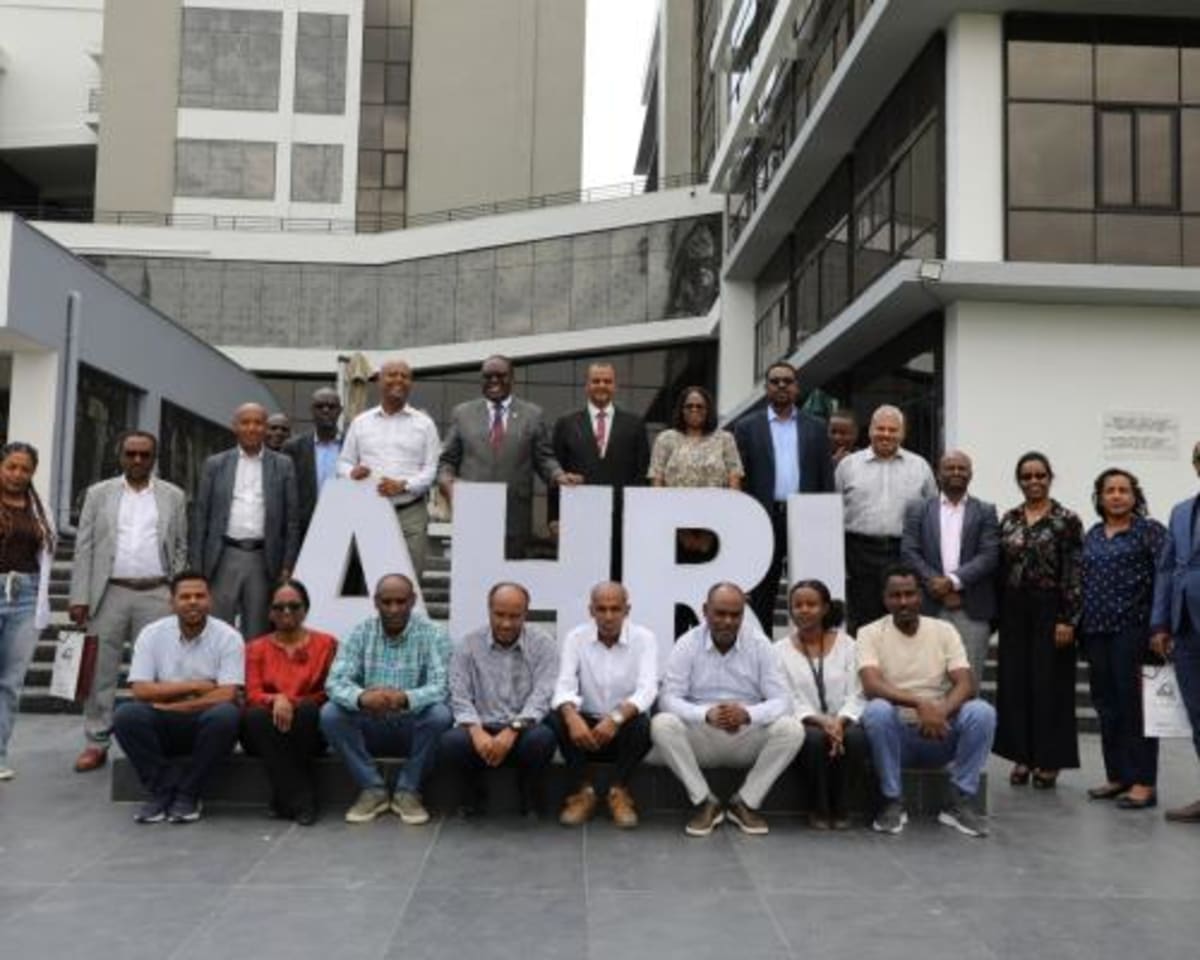
WHO Representative Professor Francis Chisaka Kasolo visited the new facility with his technical team to explore partnership opportunities. What they found exceeded expectations: advanced genomics platforms, bioinformatics systems, and a bioequivalence center designed to ensure medicines produced locally meet international safety standards.
AHRI Director General Professor Afework Kassu expressed gratitude for WHO's longstanding support in tuberculosis research and neglected tropical diseases. He shared the institute's ambition to become an official WHO Collaborating Centre, a designation that would strengthen its impact across the region.
The partnership will focus on several critical areas. Vaccine research and immunization systems top the list, alongside clinical trials, laboratory strengthening, and health emergency preparedness. Local production of medicines and vaccines represents another key priority, addressing Africa's dependence on imported pharmaceuticals.
The Ripple Effect
This collaboration extends far beyond Ethiopia's borders. The new laboratory complex provides a platform for Ethiopian and international scientists to work together on solutions for regional health challenges. As Africa continues building its scientific capacity, partnerships like this one create infrastructure that benefits the entire continent.
The facility's bioequivalence center particularly stands out. By ensuring locally produced medicines match the quality of imported drugs, it opens doors for affordable, accessible treatments manufactured closer to the patients who need them. This approach strengthens health security while reducing costs.
Both organizations identified genomics, bioinformatics, and traditional medicine research as promising areas for joint work. These fields blend cutting-edge science with culturally relevant approaches, creating solutions that fit African contexts.
Professor Kasolo emphasized the strong alignment between AHRI's expanded mandate and WHO's strategic priorities. The timing couldn't be better as Ethiopia invests heavily in scientific research and innovation to strengthen its health systems.
The visit concluded with concrete next steps: establishing formal partnership frameworks, identifying joint research initiatives, and creating coordination mechanisms to guide future collaboration.
Together, WHO and AHRI are building the scientific foundation Ethiopia needs to protect its people and contribute solutions for Africa's most pressing health challenges.
Based on reporting by Regional: ethiopia development (ET)
This story was written by BrightWire based on verified news reports.
Spread the positivity!
Share this good news with someone who needs it