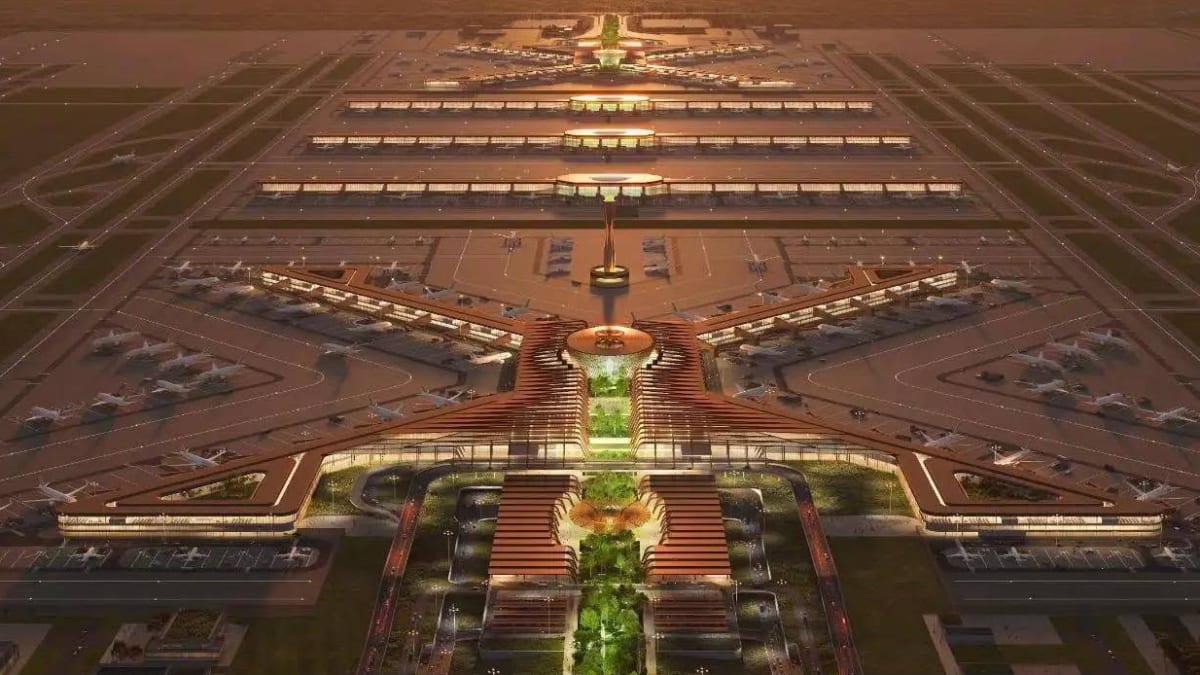
Ethiopia Breaks Ground on $12.5B Airport for 110M Travelers
Ethiopia just started building Africa's largest airport ever, a $12.5 billion hub that will connect 110 million travelers a year without leaving the continent. The massive project could finally make African air travel work for Africans.
Flying between two African cities often means a frustrating detour through Paris, Dubai, or Istanbul. Ethiopia is about to change that with the largest aviation project in African history.
Construction began in January on Bishoftu International Airport, located 30 miles southeast of Addis Ababa. The $12.5 billion project will open in 2030 with capacity for 60 million passengers annually, then expand to handle 110 million travelers a year.
That final number would rival Hartsfield-Jackson Atlanta International Airport, one of the world's busiest hubs. But this isn't just about size. It's about keeping African travelers in Africa.
Ethiopian Airlines, the continent's largest carrier, is leading the project after outgrowing its current hub at Bole International Airport. The airline has been hamstrung by lack of space just as demand keeps climbing.
The new airport focuses specifically on connecting flights, turning Ethiopia into a true continental crossroads. Travelers heading from Kenya to Senegal or South Africa to Egypt will have direct options instead of routing through Europe or the Middle East.
The Ripple Effect goes beyond passengers. The airport will handle 3.73 million tons of cargo annually, supporting the African Continental Free Trade Area that launched in recent years. Better cargo connections mean African businesses can trade with each other more easily, keeping money and jobs on the continent.
Right now, African airlines carry only a small fraction of travelers flying to, from, and within Africa. Foreign carriers dominate because the infrastructure hasn't existed to support homegrown networks. This airport could flip that script.
Prime Minister Abiy Ahmed calls it a turning point for the continent. The scale matches the ambition: two runways, room to grow, and capacity that acknowledges Africa's rising middle class wants to travel without the hassle of international layovers.
For decades, African aviation has been stuck in a cycle where lack of infrastructure prevented growth, which prevented investment in infrastructure. Ethiopia is betting big that the cycle can be broken.
By 2030, connecting two African cities might finally be as simple as it should have been all along.
Based on reporting by Morocco World News
This story was written by BrightWire based on verified news reports.
Spread the positivity!
Share this good news with someone who needs it