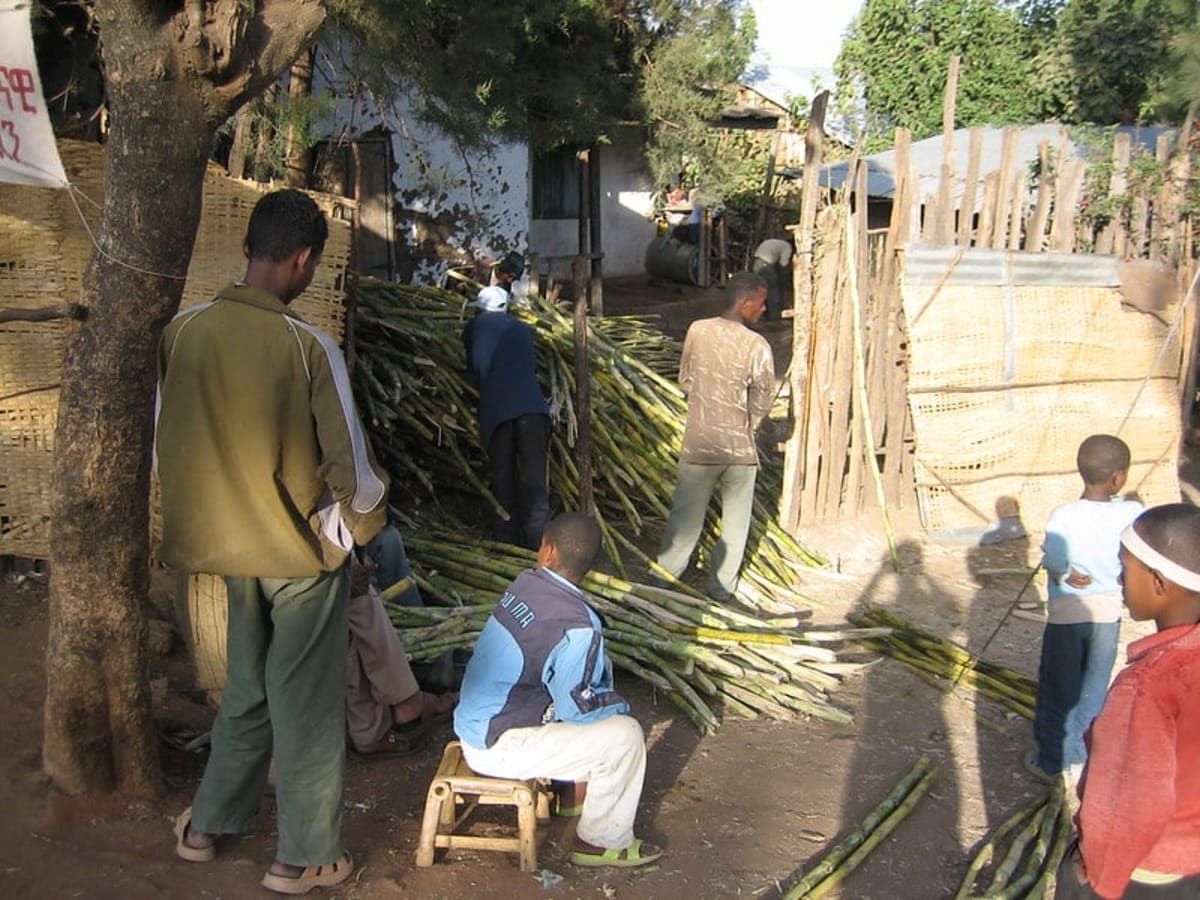
Ethiopia's Bamboo Industry Creates Thousands of Green Jobs
Ethiopia is turning its vast bamboo forests into a thriving green economy that's creating jobs and lifting rural communities out of poverty. The country holds 67% of Africa's bamboo resources and is transforming this fast-growing plant into furniture, construction materials, and sustainable livelihoods.
In the highlands and southwestern regions of Ethiopia, a quiet revolution is growing tall. The country's 1.47 million hectares of bamboo forests are becoming factories without smokestacks, creating sustainable jobs for farmers, craftspeople, and entrepreneurs across rural communities.
Ethiopia holds nearly two-thirds of Africa's entire bamboo supply. For generations, rural families used this abundant resource mainly for fencing and simple household items, never capturing its full economic potential.
That's changing fast. Farmers now cultivate and harvest bamboo as a cash crop, while local businesses transform the renewable material into furniture, flooring, baskets, and construction materials. Unlike traditional timber that takes decades to regrow, bamboo regenerates naturally after harvesting and grows quickly enough to provide steady income.
The economic ripple extends throughout entire communities. Women and young people are finding new income streams that supplement traditional farming. Carpenters, manufacturers, and transportation workers are building careers around products that used to be considered basic household materials.
The International Bamboo and Rattan Organization has partnered with Ethiopian communities to improve production methods and connect producers with buyers. Government forestry programs are promoting sustainable management practices while encouraging private companies to invest in processing facilities that create skilled manufacturing jobs.
The Ripple Effect
The transformation goes beyond individual paychecks. When small businesses receive training, equipment, and financing, they can produce engineered bamboo panels and high-value furniture for both domestic and international markets. These enterprises are helping rural communities develop entrepreneurship skills while reducing dependence on crops vulnerable to drought and climate challenges.
Processing bamboo locally means communities capture more value instead of selling raw materials at low prices. A farmer who once sold bamboo poles can now participate in manufacturing finished products worth many times more.
The environmental benefits strengthen the economic case. Bamboo grows fast, stores carbon, and helps restore degraded landscapes while providing income. As global demand increases for eco-friendly building materials, Ethiopian bamboo businesses are positioned to serve growing markets.
Private companies are now investing in Ethiopia's bamboo manufacturing sector, creating a virtuous cycle where increased production capacity drives demand for locally grown bamboo. This investment addresses key barriers to rural prosperity by improving access to training, technology, and reliable markets.
For households with limited income sources, bamboo offers something precious: economic resilience built on a resource that regenerates naturally and creates opportunities that climate change can't easily destroy.
Based on reporting by Regional: ethiopia development (ET)
This story was written by BrightWire based on verified news reports.
Spread the positivity!
Share this good news with someone who needs it