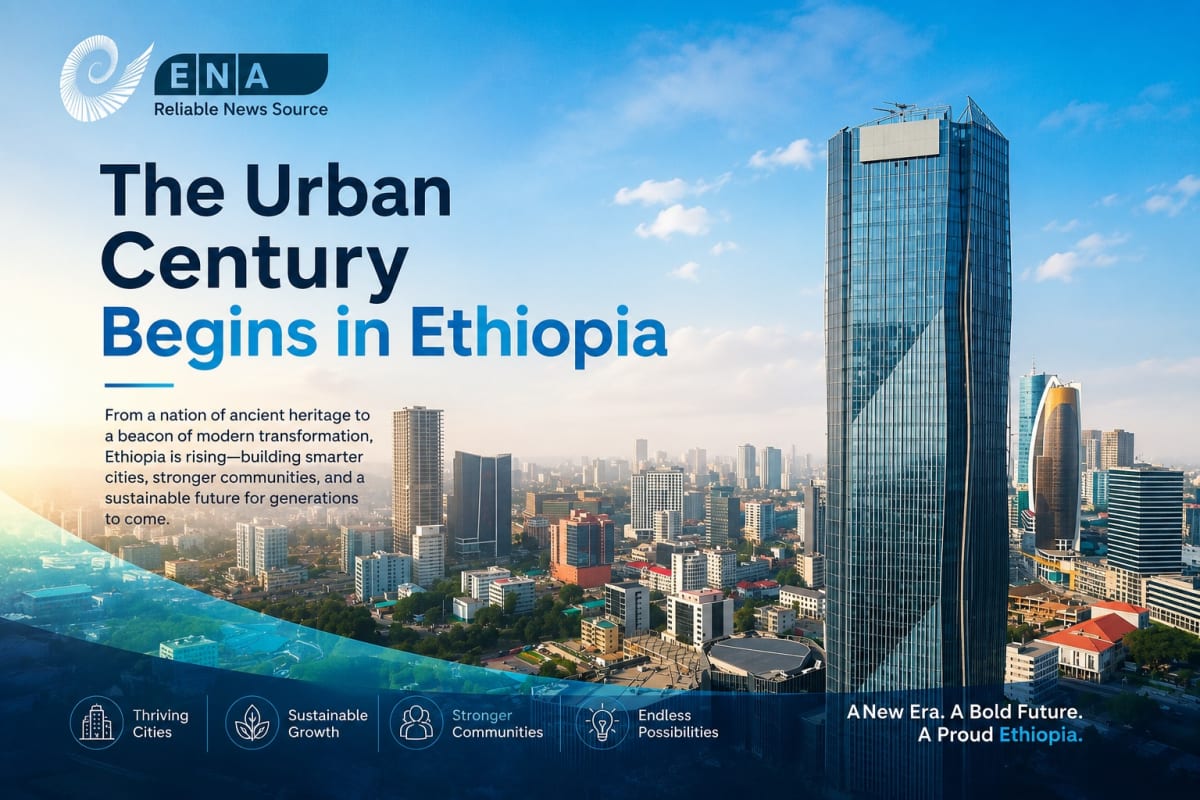
Ethiopia's Urban Population Doubles in 15 Years
Once one of Africa's least urbanized nations, Ethiopia has transformed into a rapidly growing urban powerhouse. Cities that were small trading posts are now bustling centers of industry, innovation, and opportunity for millions.
Ethiopia's cities are experiencing a transformation that seemed impossible just two decades ago, and the numbers tell an inspiring story of national reinvention.
In 2000, only 14 percent of Ethiopians lived in cities. The country's identity was rooted in rural highland communities and agricultural traditions that stretched back generations. Urban centers served mainly as administrative outposts and regional markets, while the countryside defined economic life.
Today, that Ethiopia is vanishing. The urban population has more than doubled since 2010, jumping from 13 million to over 26 million people. Cities are growing at over four percent annually, making Ethiopia one of Africa's fastest urbanizing nations.
The capital, Addis Ababa, had 2.7 million residents in 2007. Now its skyline bristles with high rises, and neighborhoods like Bole and Yeka have transformed from farmland into thriving commercial districts. The city's footprint has expanded far beyond its historical boundaries.
Secondary cities tell equally remarkable stories. Hawassa grew from a town of 188,000 to a major industrial hub anchored by successful manufacturing parks. Bahir Dar has leveraged tourism and education to fuel growth. Adama has become a vital logistics center connecting trade routes across the country.
This growth didn't happen by accident. Ethiopia made a deliberate choice to invest in urban infrastructure as an economic strategy. Billions went into transportation networks, industrial parks, housing developments, electricity systems, and telecommunications. These investments created the foundation for sustained growth.
The transformation extends beyond infrastructure. Manufacturing, financial services, technology, and logistics are clustering in urban centers, creating employment opportunities that didn't exist a generation ago. Young Ethiopians are finding futures in cities that once offered few options beyond government offices and small markets.
The Ripple Effect
The urban boom is reshaping opportunity across Ethiopian society. Factory jobs in industrial parks provide stable incomes for families who previously depended on subsistence farming. Improved roads and logistics networks connect remote communities to urban markets, opening new economic possibilities.
The construction of modern housing developments, commercial centers, and public facilities has created thousands of jobs in building trades, services, and retail. Small businesses are flourishing as urban populations grow and consumer demand expands.
Ethiopia's experience shows that rapid urbanization, when supported by strategic infrastructure investment, can become a powerful engine for reducing poverty and creating shared prosperity. Cities that were administrative afterthoughts have become centers of innovation and economic dynamism.
The transformation continues. While challenges remain in managing this rapid growth, Ethiopia has demonstrated that nations can deliberately reshape their economic futures through bold urban development strategies.
A country once defined by its rural highlands is writing a new chapter as an emerging urban nation.
More Images
Based on reporting by Regional: ethiopia development (ET)
This story was written by BrightWire based on verified news reports.
Spread the positivity!
Share this good news with someone who needs it