EU Locks In 90% Emissions Cut by 2040
The European Union just made its boldest climate promise legally binding. By 2040, the bloc will slash greenhouse gas emissions by 90% compared to 1990 levels.
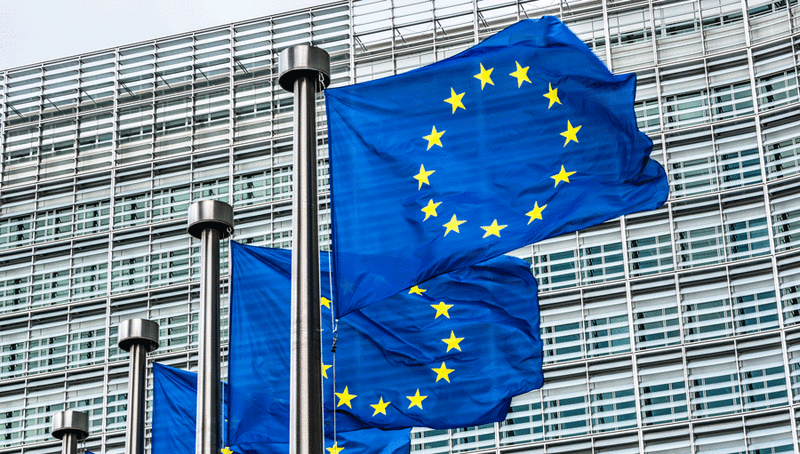
The European Parliament voted overwhelmingly this week to enshrine a 90% emissions reduction target into law, giving the EU's climate ambitions real teeth. With 413 votes in favor and just 226 against, lawmakers cleared the final hurdle to make 2040 climate goals as legally binding as the bloc's 2050 net-zero pledge.
This isn't just political theater. The new law creates a concrete roadmap between the EU's existing 2030 target (a 55% cut) and its 2050 climate neutrality goal, closing what had been a worrying gap in long-term planning.
The legislation includes practical flexibility to help member states reach these ambitious goals. Starting in 2036, countries can use high-quality international carbon credits from partner nations to cover up to 5% of their required reductions. The law also allows permanent carbon removal projects to offset the hardest emissions to eliminate, particularly in heavy industry covered by the EU's carbon trading system.
European officials debated these details intensely. Spain and the Netherlands wanted stricter limits on carbon credits, while Poland and Italy pushed for more flexibility. The compromise reflects a balance between ambition and achievability.
The Ripple Effect
This binding target sends a powerful signal far beyond Europe's borders. When a bloc representing 450 million people and one of the world's largest economies commits legally to deep decarbonization, it influences global markets, technology development, and other nations' policies.
The law builds in accountability through biennial progress reviews starting soon. The European Commission will examine scientific data, technological advances, industrial competitiveness, energy prices, and impacts on households every two years. If progress stalls or circumstances change dramatically, officials can propose adjustments.
The updated law also delays the expansion of carbon pricing to buildings and road transport by one year, pushing implementation to 2028 instead of 2027. This gives businesses and households more time to prepare for the transition.
What makes this moment significant isn't just the ambitious number. It's that Europe is transforming climate promises into enforceable legal obligations with clear timelines, regular checkpoints, and practical pathways forward.
Twenty days after the Council's final endorsement, this becomes the law of the land across the EU, proving that bold climate action and democratic process can work together.
Based on reporting by Google News - Emissions Reduction
This story was written by BrightWire based on verified news reports.
Spread the positivity!
Share this good news with someone who needs it