EU Women Scientists Nearly Double to 7.9 Million Since 2008
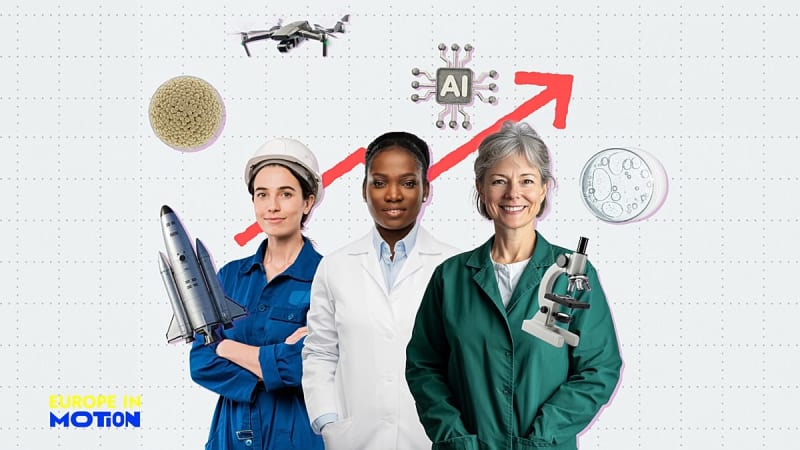
The number of female scientists and engineers across the European Union has more than doubled in 16 years, jumping from 3.4 million to 7.9 million. In some regions, women now outnumber men in these critical fields.
Women are claiming their place in Europe's science labs, and the numbers tell an exciting story of progress.
Between 2008 and 2024, the number of female scientists and engineers in the EU skyrocketed from 3.4 million to 7.9 million, according to new data from Eurostat. That's more than double the representation in just 16 years.
Science and technology fields employ more than 73.8 million people across Europe. While women still have ground to gain, the momentum is building in the right direction.
Some regions are already breaking barriers. In 11 areas across Spain, Portugal, Poland, Bulgaria, Sweden, and Latvia, women now represent the majority of scientists and engineers.
Spain's Canary Islands leads the charge with women making up 58.8% of scientists. Portugal's Azores follows at 57.3%, with Madeira close behind at 56.4%.
At the national level, Latvia tops the EU with women comprising 50.9% of scientists and engineers. Denmark comes in second at 48.8%, and Estonia third at 47.9%.
The picture varies by sector. Women have nearly achieved equal representation in higher education research at 44% and government sector research at 45%. The business sector still lags at 22% female representation, showing where the next frontier lies.
The Ripple Effect
This surge in female scientists isn't just changing who works in labs. It's reshaping how Europe approaches innovation and problem solving.
More women in science means more diverse perspectives tackling everything from climate change to medical breakthroughs. When half the population sees themselves reflected in these careers, entirely new generations of girls grow up knowing these paths are open to them.
The European Commission's 2024 She Figures report notes that while gender segregation remains a challenge, there's a "gradual trend towards reversing this, indicating slow but steady progress towards gender equality."
Some challenges persist. Women make up only 25% of self-employed professionals in science, engineering, and technology. Women born outside the EU face additional barriers, with just 36% working as scientists compared to 42% of EU-born women.
But the trajectory is clear: Europe's scientific community is becoming more representative, one breakthrough and one researcher at a time.
Based on reporting by Euronews
This story was written by BrightWire based on verified news reports.
Spread the positivity!
Share this good news with someone who needs it