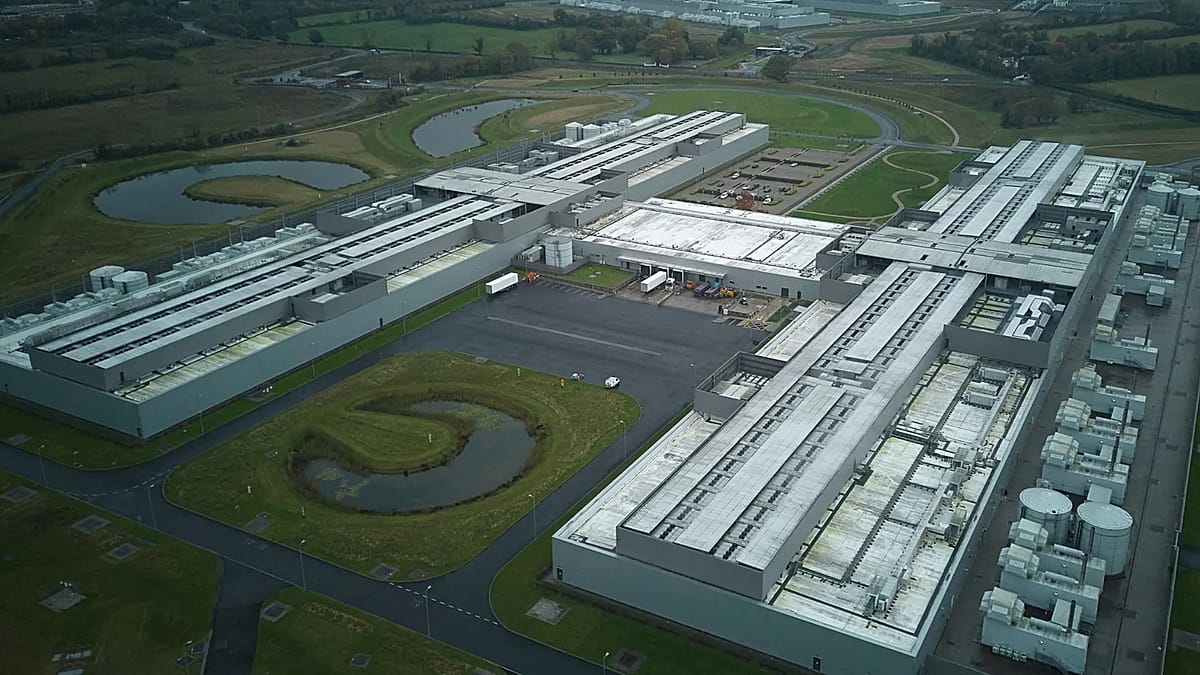
Europe Building 7 AI Gigafactories by 2028
The European Union just launched a plan to build up to seven massive AI training facilities across the continent, backed by €30 billion in public and private funding. The gigafactories aim to make Europe a global AI powerhouse while reducing dependence on foreign tech suppliers.
Europe is about to become home to seven cutting-edge AI gigafactories, marking one of the continent's biggest tech investments in decades.
The European Commission officially opened applications for these massive computing facilities, designed to train the next generation of artificial intelligence technologies. These aren't ordinary data centers. They're specialized powerhouses equipped with advanced chips capable of processing trillions of data points to develop the most sophisticated AI models in the world.
The response from industry has been overwhelming. Seventy-six potential consortia expressed interest in building these facilities, prompting the Commission to expand from its original plan of four or five factories to seven. Ten countries are already competing to host them: Germany, Italy, France, Poland, Czechia, Denmark, Finland, Greece, Portugal, and Spain.
The total investment reaches €30 billion, split between public and private funding. Brussels will contribute roughly €5 billion, with another €5 billion coming from participating European governments and €20 billion from private companies. In return for their investment, governments receive proportional access to computing power for research centers, universities, and public AI projects.
Construction is scheduled to begin in early 2027, with the first facilities going live by mid-2028. The timeline reflects Europe's urgency to catch up with similar projects already underway in the United States and China, where the race for AI dominance is heating up.
The initiative draws inspiration from CERN, the renowned physics laboratory in Geneva that became a global center for scientific collaboration. European Commission President Ursula von der Leyen first announced the gigafactory plan at the AI Action Summit in Paris in February 2025, framing it as critical to Europe's technological future.
The Ripple Effect
These gigafactories represent more than just buildings filled with computers. They're about keeping Europe competitive in technologies that will shape healthcare, climate solutions, scientific research, and countless other fields. By building sovereign AI infrastructure, European researchers and startups gain access to the computing power that's currently scarce and expensive, democratizing innovation across the continent.
The facilities must be financially sustainable, developing commercial services alongside their public mission. Operating costs fall entirely on private partners, ensuring these gigafactories become self-sustaining hubs that fuel Europe's AI ecosystem for generations. While Europe still depends on foreign suppliers like Nvidia, AMD, and Qualcomm for specialized chips, the Commission is building safeguards against vendor lock-in to protect long-term independence.
Europe's betting big that homegrown AI infrastructure today means breakthrough innovations tomorrow.
Based on reporting by Euronews
This story was written by BrightWire based on verified news reports.
Spread the positivity!
Share this good news with someone who needs it