Europe's Firefighting Network Saves France From Wildfires
When catastrophic wildfires overwhelmed France's own firefighting fleet, 13 countries answered the call within hours through Europe's emergency coordination system. The rapid response showcases how international cooperation can tackle disasters too big for any single nation.
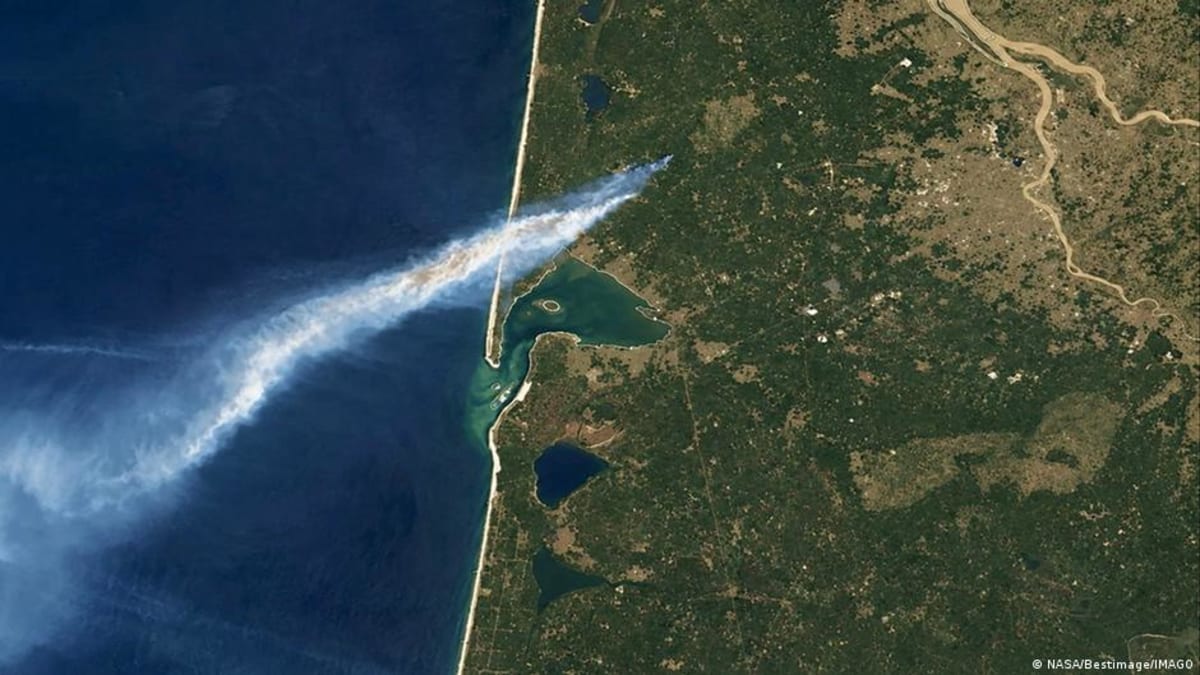
When wildfires scorched over 100,000 acres near Bordeaux and forced 220,000 people to evacuate, France discovered its fleet of 20 firefighting aircraft wasn't enough.
Within hours of France activating the EU civil protection mechanism, aircraft and crews from seven countries were heading to help. Portugal, Croatia, the Czech Republic, Germany, Turkey, Sweden and Slovakia sent firefighting planes and helicopters to battle the flames.
The European Union's emergency response coordination centre in Brussels operates 24/7 to make this possible. When France reported its dire needs, ERCC experts quickly identified which of 37 participating countries could spare resources. Six more aircraft deployed from Greece, Turkey and Italy to assist Spain, which was fighting its own fires.
The system has grown significantly since launching in 2001. Today it coordinates 22 firefighting aircraft stationed across twelve countries, plus 777 firefighters pre-positioned in vulnerable regions during fire season. High-resolution satellite imagery from the EU's Copernicus program helps track fires in real time.
Turkey, Norway and several Western Balkan nations participate alongside the 27 EU members. The cooperation works on a simple but powerful principle: one country's spare capacity becomes another's lifeline.
France even deployed its military A400M transport aircraft for firefighting duty for the first time ever. The massive plane can drop 20 tons of fire retardant, more than triple what standard Canadair aircraft carry.
The Ripple Effect
This coordinated response does more than save French forests. It demonstrates how pooling resources creates resilience no single nation could achieve alone.
The EU is investing 600 million dollars to establish a permanent rescEU fleet of twelve new firefighting aircraft by 2026. These planes will be stationed in France, Spain, Portugal, Italy, Greece and Croatia, ready to deploy wherever fires strike.
The network faces real challenges as climate change increases extreme weather events affecting multiple countries simultaneously. Currently, 13 of the 22 available aircraft are already deployed, showing how quickly reserves can be exhausted.
But the system keeps evolving. Countries learn from each deployment, refine their coordination and expand their shared capabilities. What started as basic cooperation has become a sophisticated network that can mobilize help across a continent in hours.
Europe's wildfire season now stretches from late April through early November, much longer than in previous years. Yet the coordination centre has responded to every activation, proving that when nations pool their strength, they can face challenges that would overwhelm them individually.
More Images
Based on reporting by DW News
This story was written by BrightWire based on verified news reports.
Spread the positivity!
Share this good news with someone who needs it