Europe's Hera Probe On Track for Asteroid History in 2026
A spacecraft just completed a supersonic speed boost in deep space, setting itself up to visit the asteroid that humanity deliberately smashed two years ago. The mission will help turn planetary defense from a one-time experiment into a repeatable safety system.
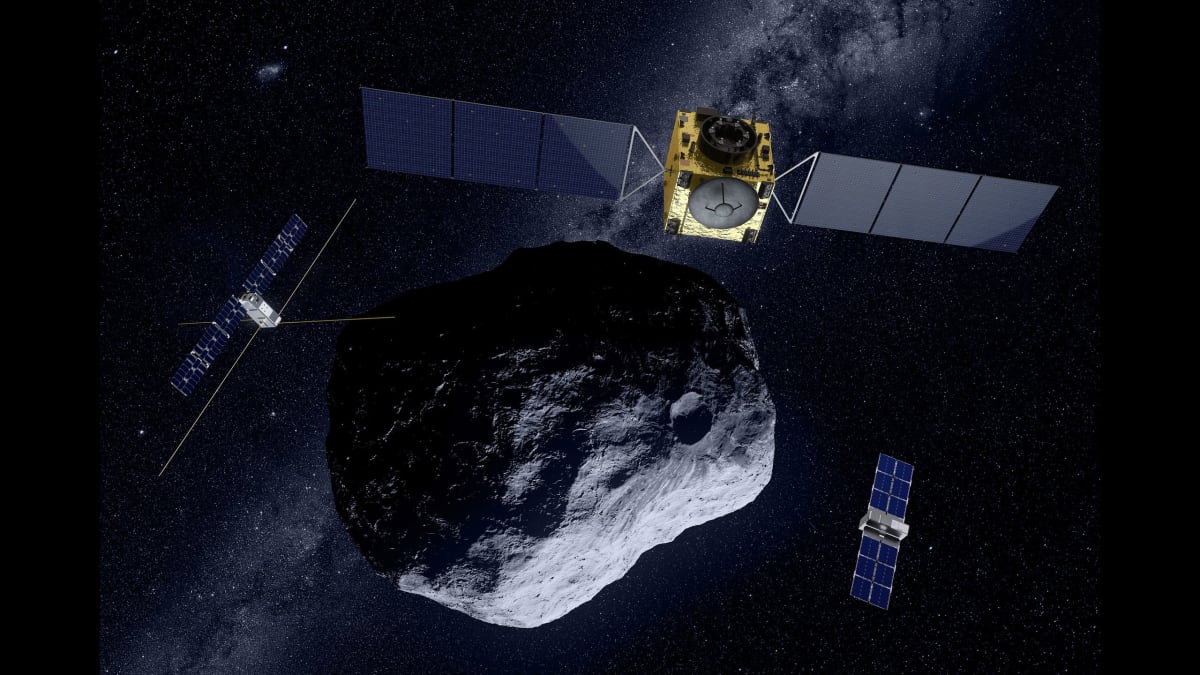
The European Space Agency's Hera spacecraft just pulled off a tricky maneuver in deep space, burning enough fuel to boost its speed by 821 mph and stay on course for a November rendezvous with asteroid history. The probe is heading to Dimorphos, the space rock that NASA's DART spacecraft intentionally crashed into back in September 2022.
Hera launched aboard a SpaceX rocket in October 2024 and has been cruising through space ever since. In February and March 2026, the spacecraft performed three major engine burns plus one correction maneuver over four weeks, consuming 271 pounds of fuel.
The speed change was so dramatic that mission planners compared it to accelerating from a standstill to supersonic flight. Engineers at the European Space Operations Centre in Germany used the maneuver to test all the systems they'll need when Hera arrives at the asteroid system later this year.
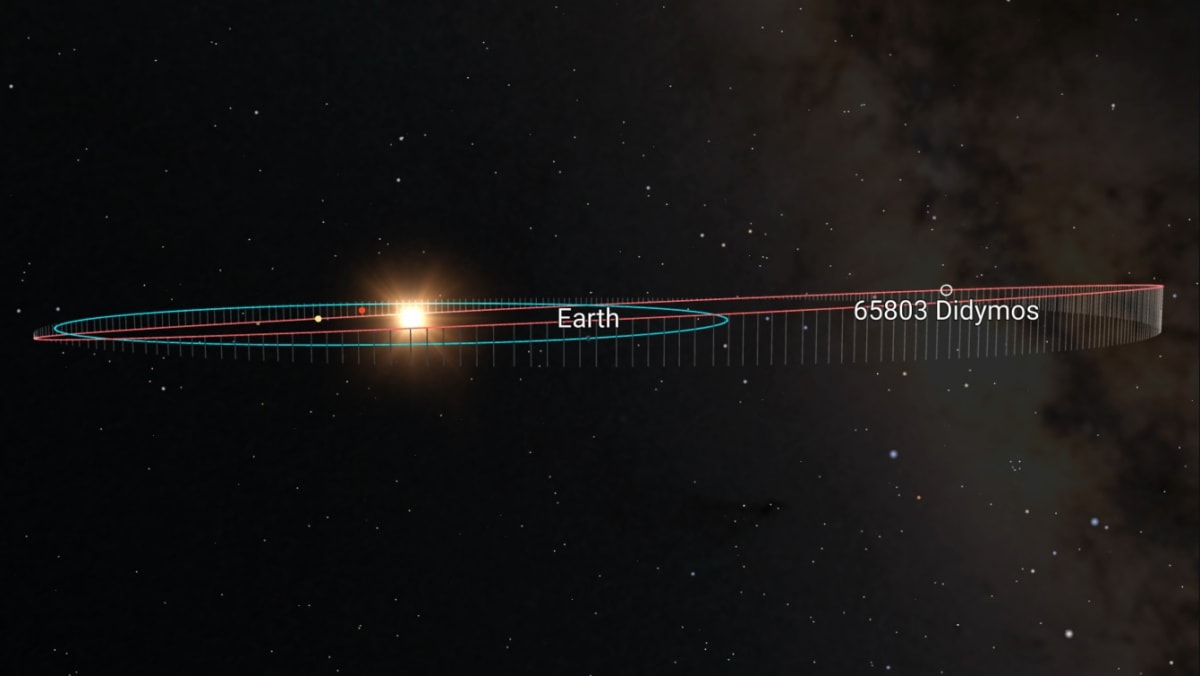
The spacecraft already completed a Mars flyby in March 2025, where it practiced its autonomous navigation by taking pictures of the Martian moon Deimos. Now it's barreling toward the Didymos binary asteroid system, where Dimorphos orbits its larger companion asteroid.
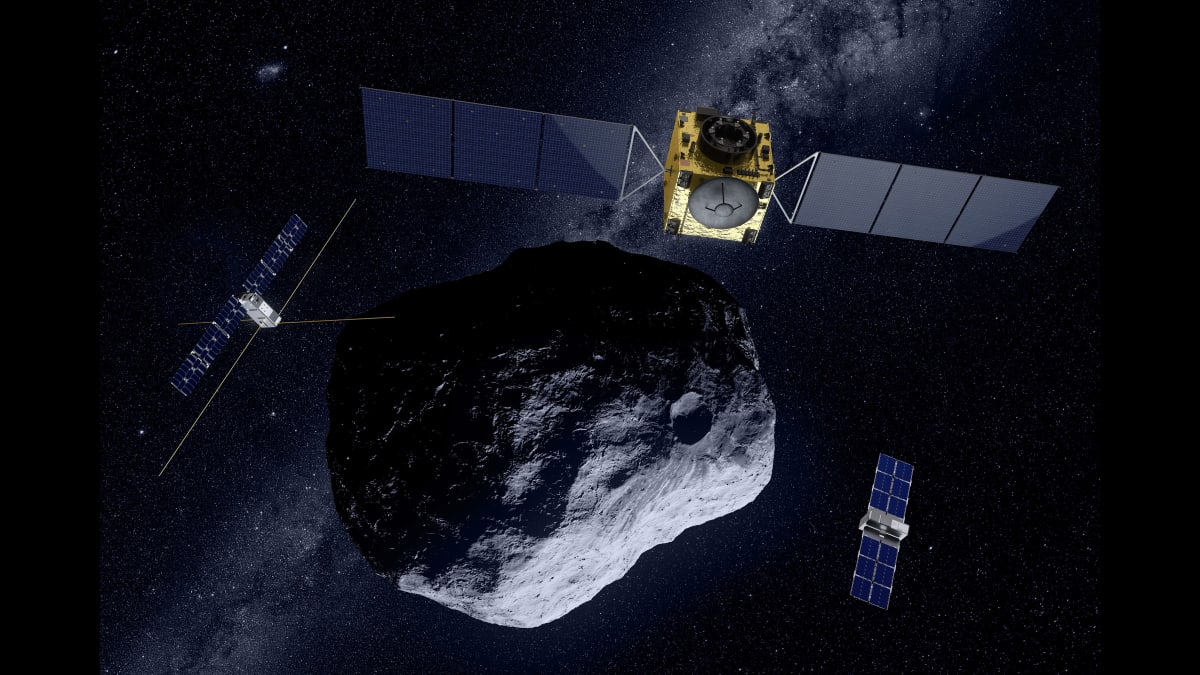
When Hera arrives in November, it will become the first mission to thoroughly study a binary asteroid system. The spacecraft will spend at least six months examining both asteroids, deploying two tiny cubesats named Milani and Juventas to help with the investigation.
The grand finale involves a daring close-up inspection of the crater DART created when it slammed into Dimorphos. Hera will swoop down to within just over half a mile of the surface to photograph the impact site.
Why This Inspires
This mission represents humanity's first attempt to turn planetary defense from a one-off experiment into a reliable method. DART proved we could hit an asteroid, but Hera will tell us exactly what happened and whether we could do it again if a dangerous space rock ever threatened Earth.
Scientists recently discovered that DART's impact did something unexpected. The collision didn't just change Dimorphos, it also altered the orbit of Didymos, the larger asteroid. This surprise finding could reshape our understanding of how binary asteroid systems work and how they respond to impacts.
Starting in October, Hera will begin a series of precision burns to shift from cruise mode to rendezvous mode. The spacecraft's 12 scientific instruments will then get to work mapping, measuring, and studying the aftermath of humanity's first planetary defense test.
The mission builds on growing global expertise in visiting small worlds, joining efforts from NASA, Japan's space agency, and China. But Hera's focus on a binary system breaks new ground entirely.
What started as a bold experiment to nudge an asteroid is becoming the foundation for protecting our planet from future threats.
More Images

Based on reporting by Space.com
This story was written by BrightWire based on verified news reports.
Spread the positivity!
Share this good news with someone who needs it