Europe's Lost Solar Satellite Phones Home After 30 Days
After a month of silence that threatened to end its mission, Europe's Proba-3 Coronagraph satellite has reconnected with Earth. The spacecraft, which creates artificial solar eclipses in space, is stable and recovering from its ordeal.
A satellite that went silent in deep space for a month has finally sent a signal home, bringing relief to scientists who feared their groundbreaking mission was over.
The European Space Agency received a data packet from its Proba-3 Coronagraph satellite on March 19, marking the first contact since mid-February when an anomaly knocked it offline. The spacecraft is now stable, running on battery power, and slowly warming up after 30 days exposed to extreme cold.
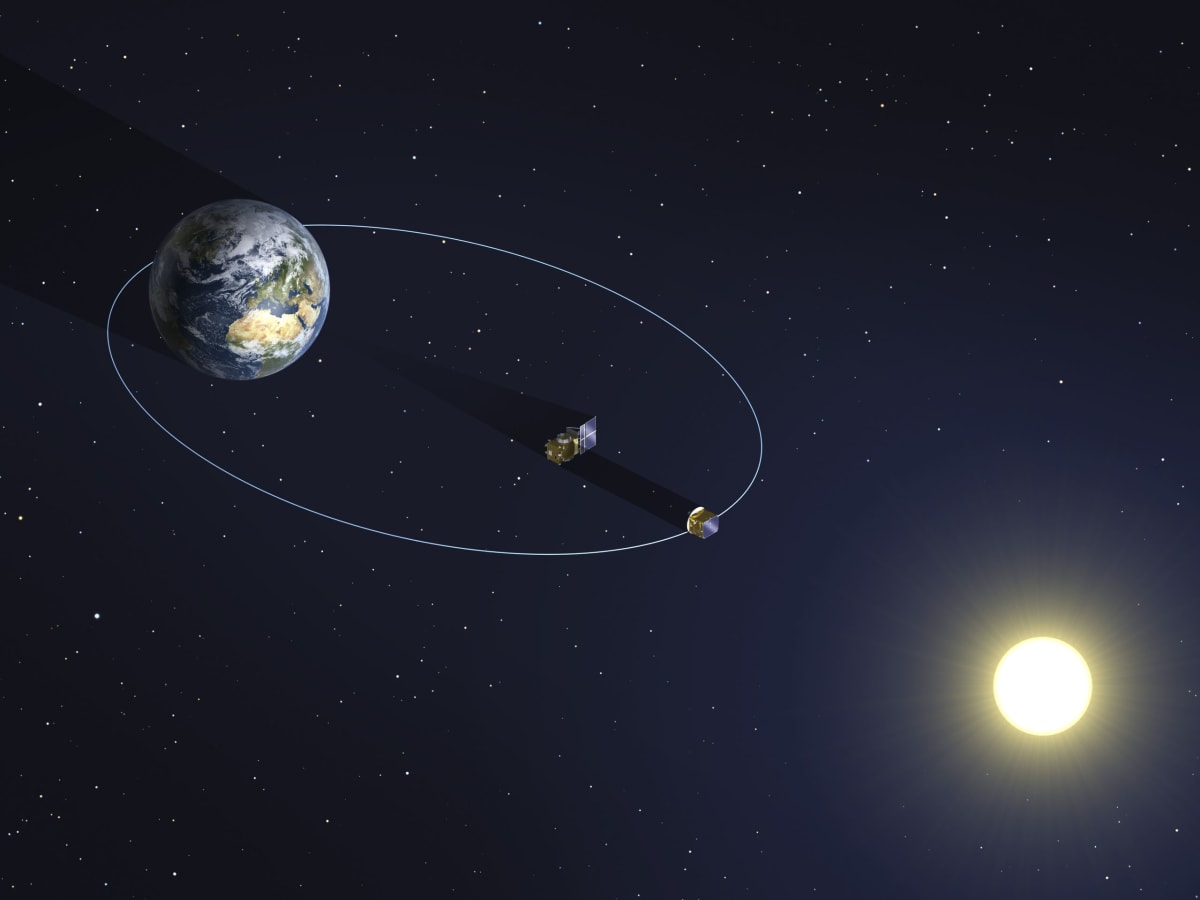
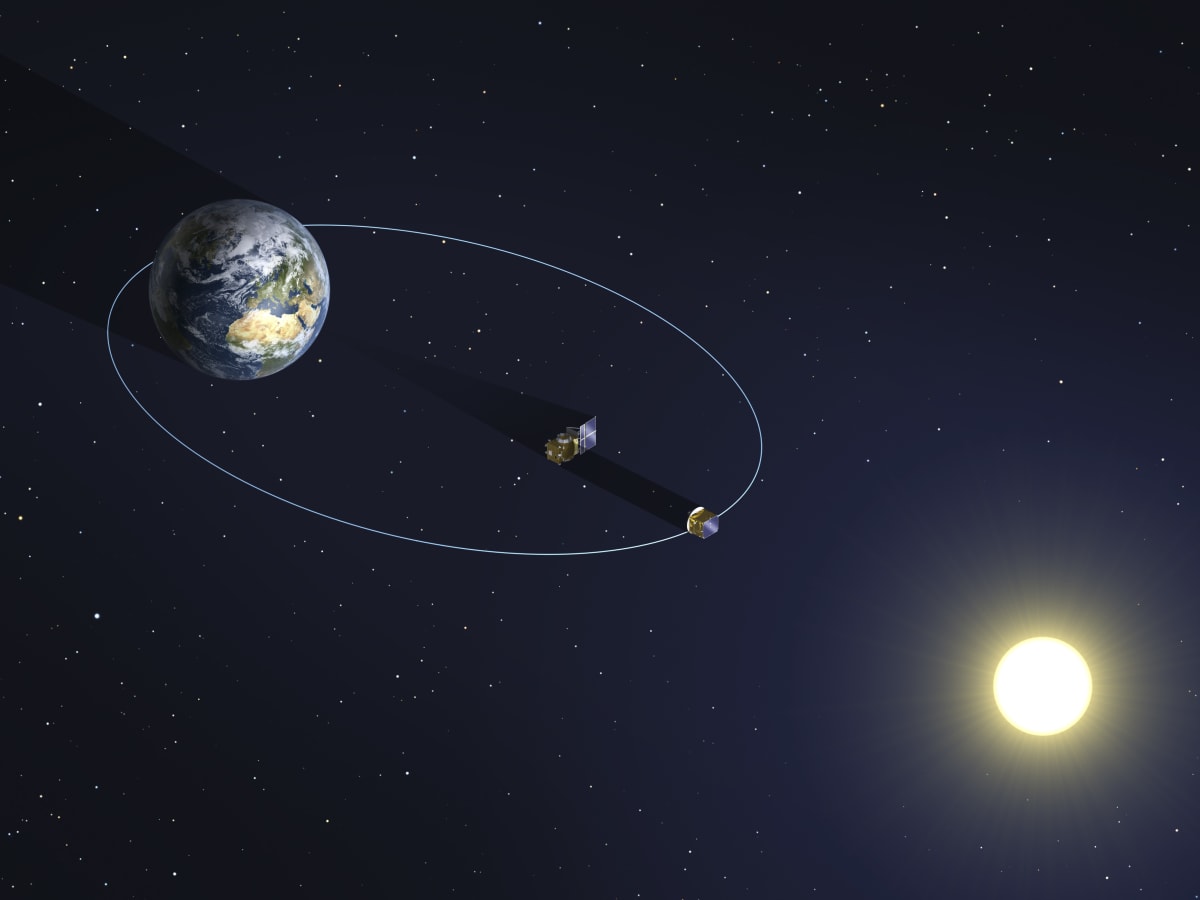
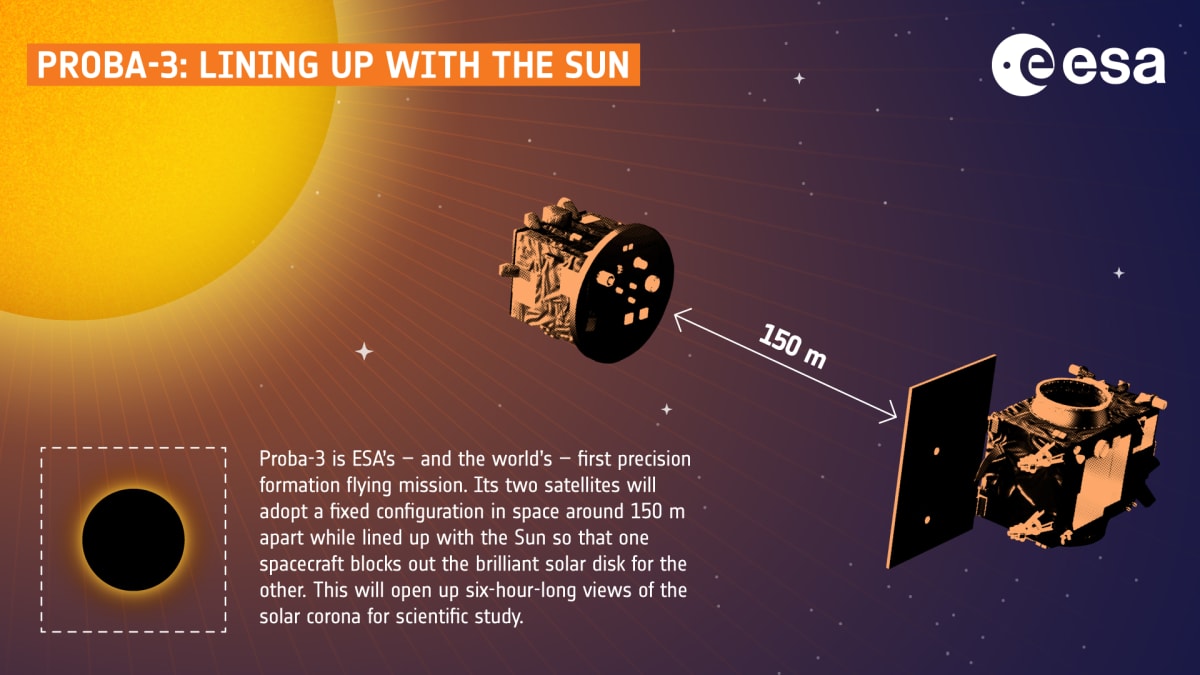
The Coronagraph works with a partner satellite called the Occulter to create artificial solar eclipses in space. While the Occulter blocks the sun's disk, the Coronagraph studies the sun's faint outer atmosphere, which is usually impossible to see because of our star's overwhelming brightness.
This delicate dance requires incredible precision. The two satellites fly through space about 500 feet apart, maintaining their positions within just one millimeter of accuracy. If either satellite fails, the entire mission ends.
That's why last month's silence was so alarming. The anomaly triggered a chain reaction that caused the Coronagraph to lose its orientation and prevented it from entering safe mode as designed. For 30 days, the satellite drifted through space, its fate unknown.
"Hearing back from the Coronagraph is amazing news, and a great relief!" said Damien Galano, the mission's manager. The spacecraft launched from India in December 2024, making this crisis come just months into what should be a years-long mission.
The Bright Side
The satellite's solar panel is now facing the sun, generating power for essential electronics and charging the battery. Ground teams at ESA's station in Villafranca, Spain, are conducting health checks to determine if the spacecraft suffered any damage during its month-long silence.
Engineers are taking their time with the recovery. After floating in space and exposed to freezing temperatures for so long, the onboard systems need time to warm up before any major actions can be taken. The patient approach shows the mission team's commitment to getting this right.
The Proba-3 mission represents a breakthrough in formation flying technology. The satellites' ability to maintain millimeter-level precision while orbiting Earth opens possibilities for future space missions that require multiple spacecraft working in perfect coordination.
For now, the focus remains on bringing the Coronagraph back to full health. The successful reconnection proves the satellite survived its ordeal and gives scientists hope they can resume their groundbreaking study of the sun's corona.
More Images


Based on reporting by Space.com
This story was written by BrightWire based on verified news reports.
Spread the positivity!
Share this good news with someone who needs it