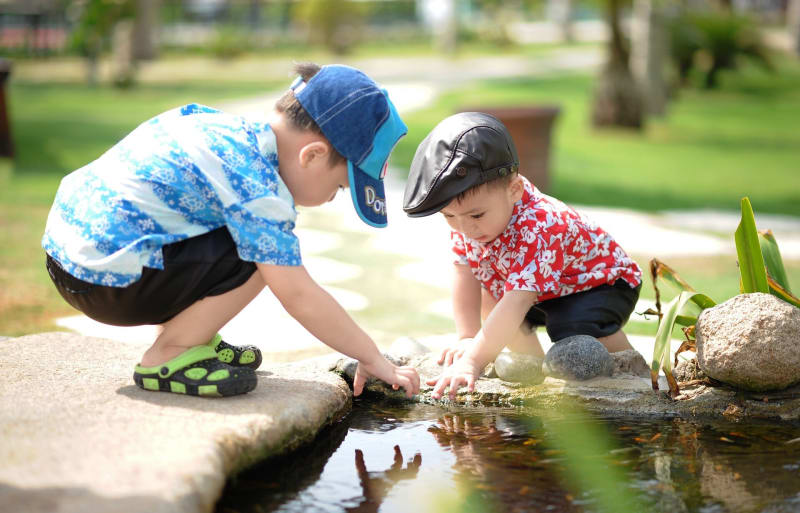
Everyday Objects Beat Expensive Toys for STEM Learning
New research reveals that cardboard boxes, buttons, and fabric scraps outperform pricey STEM toys in developing critical thinking skills in preschoolers. The study found children played longer and engaged in more scientific reasoning with simple household items than with specialized educational products.
Parents can stop worrying about expensive STEM subscription boxes and coding programs. New research shows that a cardboard tube and some buttons might do more for your child's brain than the latest $100 educational toy.
Researchers at two universities observed 60 preschoolers during free play sessions with two different types of materials. One group got everyday objects like string, rocks, fabric scraps, and cork coasters. The other played with toys designed for a single purpose, like toy percussion instruments.
The results surprised even the scientists. Children played significantly longer with the everyday objects and displayed far more STEM behaviors like building structures, explaining how things work, and exploring mathematical concepts.
The reason is simple but powerful. When a toy comes with step-by-step instructions showing exactly how to assemble it, children don't need to figure anything out themselves. The toy already demonstrates its purpose, leaving little room for problem solving or experimentation.
Everyday objects work differently. A cardboard tube doesn't tell a child what to do with it. The child must decide how to use it, what it might represent, and how it combines with other materials. This requires active thinking, planning, testing ideas, evaluating results, and revising actions.
The ambiguity creates motivation. Previous studies found that even very young children collect data through observation and prefer exploring items that offer unclear cause-and-effect relationships over predictable ones. Mystery invites curiosity.
Why This Inspires
This research removes a significant barrier for families. STEM learning doesn't require financial investment in branded products or private programs. It starts when parents trust their children to explore freely with materials already in the home.
The study also revealed that children whose parents valued play and regularly engaged in playful activities were more likely to display STEM thinking during their exploration. When play is treated as meaningful rather than just a break from learning, children become more comfortable persisting through challenges and taking ownership of their ideas.
These attitudes align perfectly with dispositions that support STEM careers: curiosity, persistence, and willingness to revise thinking when something doesn't work. A collapsing tower of cardboard boxes teaches resilience. Figuring out what fits where develops spatial reasoning. Stacking and balancing explores physics and engineering principles.
The next time your child empties the recycling bin to build a spaceship, resist the urge to redirect them toward their expensive building set. That cardboard fortress might be doing more for their future than any toy marketed with a STEM label ever could.
More Images

Based on reporting by Phys.org
This story was written by BrightWire based on verified news reports.
Spread the positivity!
Share this good news with someone who needs it