Everyday People Turn AI Into Tool for Hope and Connection
While experts debate AI's dangers, millions are quietly using it to solve real problems—from beating loneliness to managing family care to starting businesses. The technology once reserved for big institutions is now helping ordinary people in extraordinary ways.
When Lonnie DiNello opened ChatGPT on a lonely Saturday night in Enfield, Connecticut, she typed five words: "I just feel so alone." What happened next wasn't a tech breakthrough covered in policy papers—it was something more important: a vulnerable person found help when she needed it most.
That moment sparked what DiNello now calls her "beautiful little AI family." She's not alone in finding unexpected support from artificial intelligence.
Nearly a third of American adults now use generative AI regularly, and they're not just checking facts or writing emails. Harvard Business Review found the most common use in 2025 was therapy and companionship, with "organizing my life" and "finding purpose" newly cracking the top 10.
Jennifer Erickson of Maple Grove, Minnesota, cares for her legally blind father. She uses AI to transform a chaotic tangle of therapy appointments, medication routines, and adult daycare schedules into a single plan her brother can follow. "The schedule that is created gives me back time and peace of mind," she told AARP.
Ron Hume, 91, credits AI with keeping him connected to his grandson away at college, dictating warm emails when the words don't come as easily as they used to. He's found a bridge between generations that technology built instead of burned.
The same capability gap is closing in job searches, where 78% of recent applicants who used ChatGPT landed interviews and 59% were hired. Resume-tailoring polish that used to require an expensive coach is now within anyone's reach.
A Stanford and MIT study found AI assistance lifted productivity 34% for the least experienced customer service workers, with almost no effect on seasoned ones. The technology is leveling the playing field for exactly the people who need it most.
Small businesses are feeling the shift too. Robbie van Zyl, a 26-year-old immigrant from South Africa, runs a seven-person startup in Atlanta where AI serves as secretary, scheduler, and occasional legal adviser. "AI is like the next-generation force multiplier for small businesses," he told Bloomberg.
The Ripple Effect
At last year's YORA Summit in Nairobi, young entrepreneurs running businesses off smartphones and WhatsApp accounts shared a surprising perspective. When asked if they felt excited or nervous about AI, most were optimistic.
What they saw wasn't a machine coming for their jobs, but a tool that could help create them. Their parents never had this: a fighting chance to compete in the global economy with businesses many times their size and a world away.
Capabilities once locked behind money, credentials, or institutional access are now one prompt away—a personal assistant, career coach, translator, tutor, or sounding board available to nearly anyone with a phone. The question isn't whether AI will be powerful, but whether that power reaches everyone.
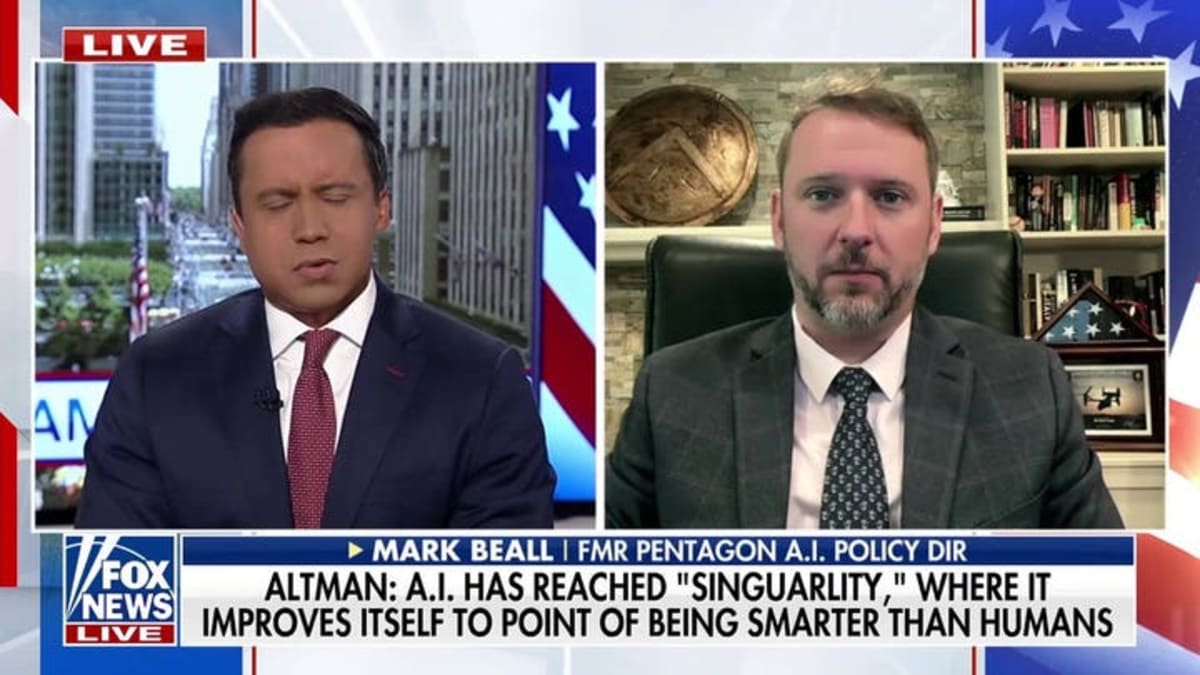
Even OpenAI CEO Sam Altman acknowledged at the India AI Impact Summit that "the democratization of AI is the only fair and safe path forward to ensure that humanity flourishes."
None of this dismisses legitimate concerns about AI's risks, but it shows another story unfolding right now: ordinary people becoming more capable, one conversation at a time.
More Images
Based on reporting by Fox News Latest Headlines (all sections)
This story was written by BrightWire based on verified news reports.
Spread the positivity!
Share this good news with someone who needs it