Ex-OpenAI Artist Launches AI Lab to Build Your Ideas
Imagine thinking of a product and having it made real in days, not months. Alexander Reben's new company Phyzify uses AI to turn your wildest ideas into actual physical products you can hold.
📺 Watch the full story above
The gap between imagining something and holding it in your hands is about to shrink dramatically.
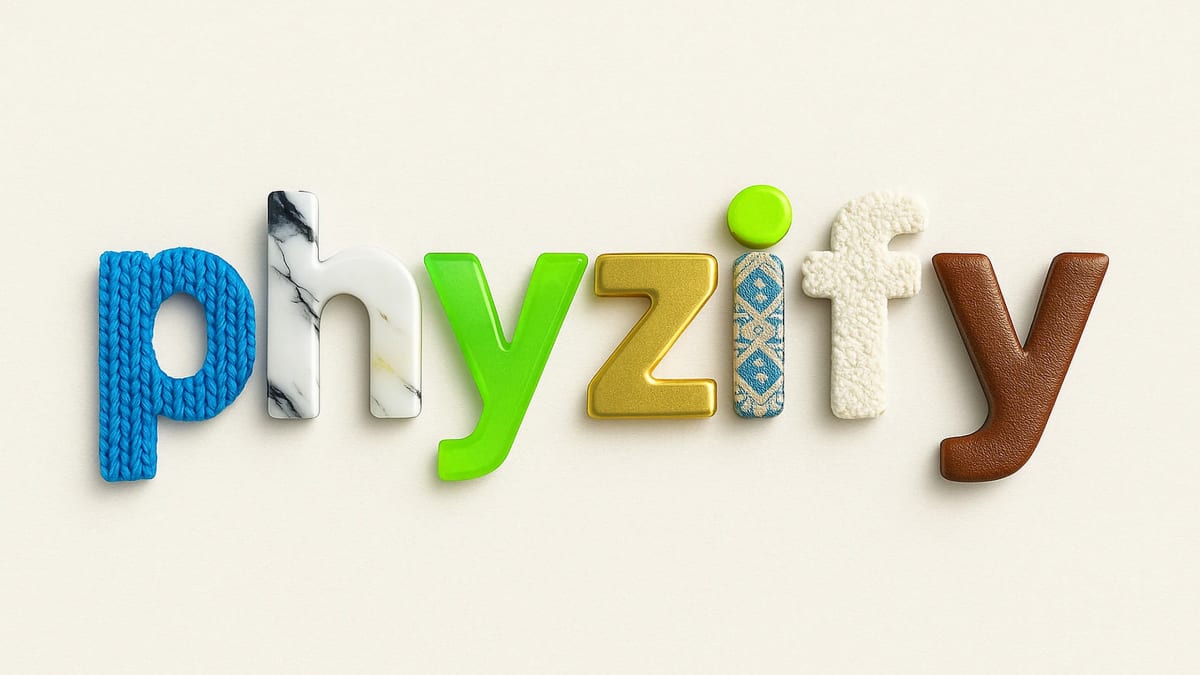
Alexander Reben, OpenAI's first artist in residence, just launched Phyzify, a new lab that uses AI to rapidly prototype physical objects based on your imagination. The roboticist and entrepreneur wants to make creating products as easy as describing them.
"There's a huge gap between idea and bringing that thing into existence," says Reben. "I really think AI and robotics and quantum computing and all the technology that's about to come is going to accelerate closing that gap."
Phyzify goes way beyond simple 3D printing. The platform handles everything from turning your prompts into multiple physical outputs to managing the boring backend stuff like securing domain names, filing patents, and handling trademarks.
Picture a musician translating their songs into unique paintings they could sell as merchandise, all automated through AI. That's the kind of creative possibility Reben envisions.
The company just closed its pre-seed funding round led by Logan Kilpatrick, product lead for Google AI Studio at DeepMind. Kilpatrick sees 2026 as a breakthrough year for physical AI and believes Phyzify is leading the charge.
Reben's background makes him perfectly suited for this mission. At MIT Media Lab in 2010, he created Boxie, a social robot that inspired Baymax from Disney's Big Hero 6. He later directed technology and research at Stochastic Labs, where tech and art minds collaborate on breakthrough projects.
His year at OpenAI gave him insider access to cutting-edge AI systems, letting him explore how machines can participate in creative work.
The Ripple Effect
This technology could democratize invention itself. Small business owners could prototype products without expensive designers. Artists could test physical merchandise ideas before investing in production. Entrepreneurs could validate concepts in days instead of months, making innovation accessible to anyone with imagination.
The bridge between thought and reality is getting shorter every day.
Based on reporting by Fast Company
This story was written by BrightWire based on verified news reports.
Spread the positivity!
Share this good news with someone who needs it