Eye Drops Restore Vision in Blind Mice Without Surgery
Scientists in Spain developed eye drops that restored light perception in blind mice, offering hope for 200 million people with degenerative eye diseases. The treatment works without gene therapy, implants, or specialized equipment.
Imagine restoring vision with something as simple as eye drops. That's exactly what scientists at the Institute for Bioengineering of Catalonia just achieved in blind mice, opening a potential path forward for millions of people living with untreatable vision loss.
The team developed special light-activated compounds that brought back visual behavior in animals blinded by conditions like age-related macular degeneration and retinitis pigmentosa. These two diseases alone affect roughly 200 million people worldwide and cost an estimated $400 billion annually in healthcare and lost productivity.
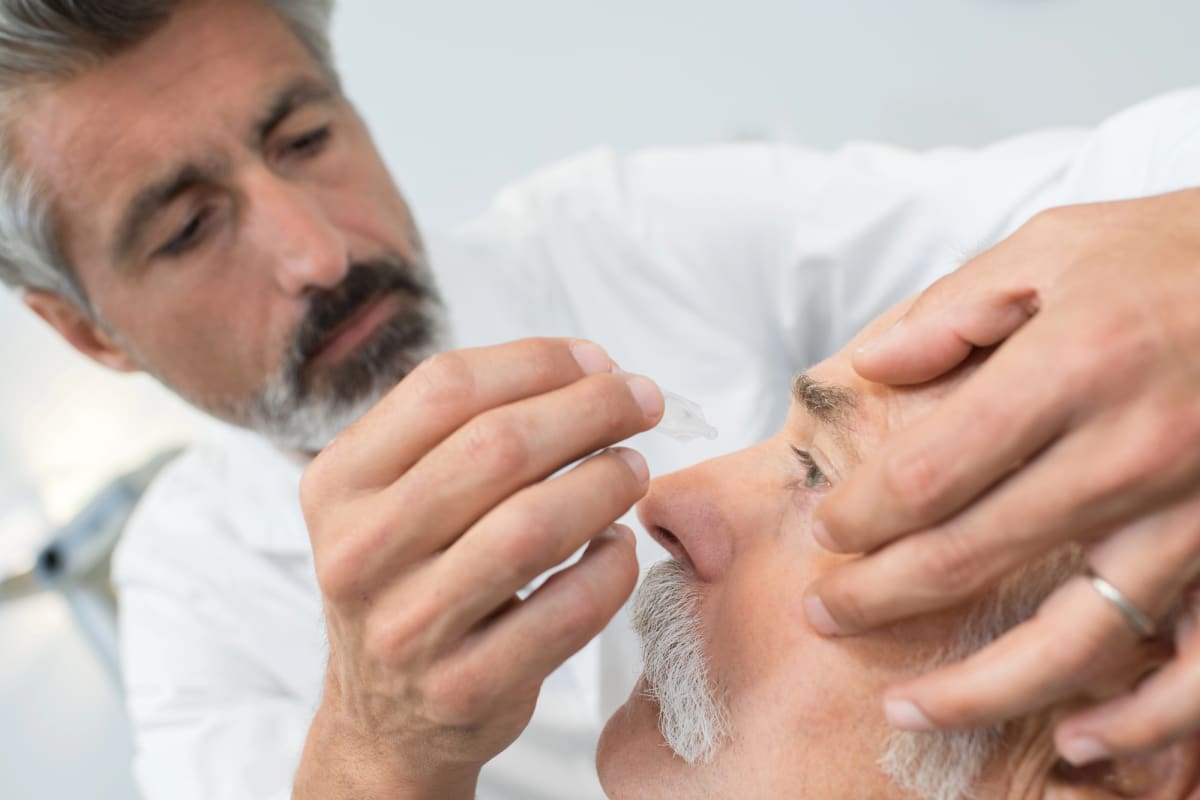
What makes this breakthrough different is its simplicity. Current treatments either work for only a tiny fraction of patients with specific genetic mutations, or require invasive surgical implants that are expensive and demand extensive training to use. This new approach works as ordinary eye drops.
The compounds, called prosthe6, act as substitutes for the photoreceptor cells that disease destroys. They target neurons deeper in the retina that usually receive signals from those lost cells, essentially reactivating the visual system right where it went dark.
"Our goal was to restore vision using a molecular mechanism that is as close as possible to how the healthy retina works," said researcher Rosalba Sortino. "Instead of bypassing retinal processing, we aimed to reactivate it right at the same level of the retinal circuit as the lost photoreceptor cells."
The results were striking. Blind zebrafish larvae regained eye movements. Blind mice spontaneously started avoiding bright areas again, just like sighted mice do, with no training required. The effect worked at everyday light levels, comparable to being indoors or outside on a cloudy day.
Two compounds stood out as especially promising: prosthe6-12 and prosthe6-15. Both worked when applied as simple eye drops rather than injections.
Why This Inspires
This treatment doesn't require knowing which genetic mutation caused someone's blindness, meaning it could help patients who don't qualify for gene therapy today. It's also completely reversible, giving doctors and patients flexibility.
The research team spent over ten years developing this approach across multiple Spanish institutions. They're now forming a company to move toward clinical testing in humans, though co-leader Pau Gorostiza cautions that "turning this into a therapy is a long and laborious process."
These molecules don't cure the underlying disease, but they offer something powerful: the chance to restore sight using an approach so straightforward that patients might one day manage it at home.
For millions living in darkness, that possibility alone is worth seeing clearly.
Based on reporting by Optimist Daily
This story was written by BrightWire based on verified news reports.
Spread the positivity!
Share this good news with someone who needs it