Farm Waste Could Store Carbon for Decades in Buildings
Billions of tons of crop leftovers usually burned or left to rot could fight climate change instead. New research shows turning wheat, rice, and corn waste into building materials locks carbon away for decades.
What if the farm waste we're burning today could cool the planet for the next century?
Researchers at the University of East London discovered that agricultural leftovers from wheat, rice, and corn crops could become powerful weapons against climate change. Instead of releasing carbon back into the air within months, these materials can trap it for decades when turned into construction products.
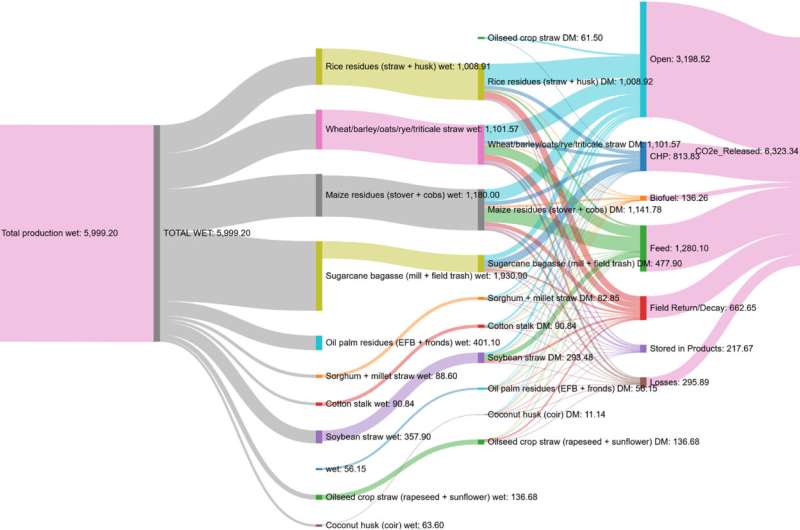
The world produces about 4.4 billion tons of crop residues every year. Most of it gets burned in fields, used as animal feed, or left to decompose. Each option releases carbon dioxide back into the atmosphere quickly.
Dr. Bamdad Ayati and his team at UEL's Sustainability Research Institute studied what happens when we redirect this waste into insulation, boards, and panels instead. Their findings reveal a massive untapped opportunity.
The research used a "dynamic" approach that tracks when carbon gets released or stored over time. This timing turns out to matter far more than scientists previously thought.
The Ripple Effect
Simply stopping the burning of agricultural waste and using it in buildings could deliver sustained cooling effects over the next hundred years. When combined with renewable energy to replace the lost biomass fuel, the climate benefits grow even stronger.
Right now, only a tiny fraction of available crop waste ends up in long-lasting products. The construction industry mostly sticks to traditional materials, leaving billions of tons of climate-fighting potential unused.
The study shows that even if bio-based insulation use grew dramatically, it would still only absorb a small share of available materials. The real opportunity lies in expanding plant-based construction materials beyond niche applications into mainstream building.
This transforms how we think about agricultural waste. What farmers once saw as a disposal problem becomes a valuable climate resource. The fibers that would release carbon in months could instead lock it away for generations.
The findings appeared in the journal Cleaner Environmental Systems, marking one of the first global-scale assessments of agricultural residues as long-term carbon storage. The research involved experts from UEL's Sustainability Research Institute and School of Architecture, Computing and Engineering.
The solution was hiding in plain sight all along, just waiting for builders to recognize farm waste as the climate tool it could become.
More Images



Based on reporting by Phys.org - Earth
This story was written by BrightWire based on verified news reports.
Spread the positivity!
Share this good news with someone who needs it