Farmer Earns $60K Growing Mangoes in a Drought Zone
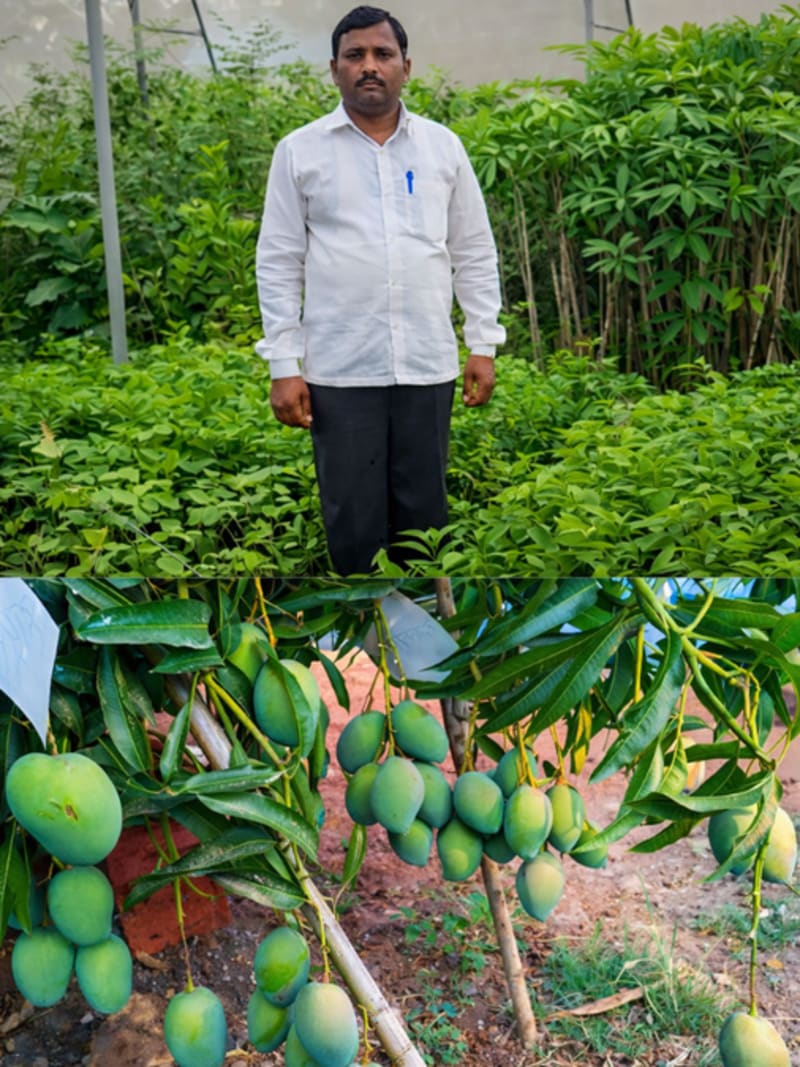
Kakasaheb Sawant planted mango trees in Maharashtra's dry Sangli district where everyone said it was impossible. Today, his thriving 20-acre orchard earns Rs 50 lakh annually and has inspired an entire community to rethink what's possible.
When Kakasaheb Sawant announced he was planting mangoes in drought-prone Antral village, his neighbors laughed at him. Everyone knew mangoes only grew in the coastal Konkan region, not in Sangli's dry inland climate.
After nearly a decade working in automobile shops and teaching in Pune, Sawant returned home in 2010 to manage his family's land. While other farmers stuck to grapes, pomegranates, and grains, he decided to experiment with something radical.
He planted his first mango orchard and waited. Water from the Krishna River reached his farm through pipelines stretching nearly four kilometers. A holding pond stored precious water for the dry months ahead.
Ten years later, half of Sawant's 20 acres now grows Kesar mangoes. The other half produces chikoos, pomegranates, custard apples, guava, and tamarind. His annual earnings from mango farming alone hit Rs 50 lakh (roughly $60,000).
But Sawant didn't stop at proving the doubters wrong. He started Shri Banshankari Rop Vatika, a nursery producing thousands of mango saplings each year. Now farmers across the region can start their own orchards without traveling hundreds of kilometers for quality plants.
During grafting season from June to August, Sawant hires skilled malis from Dapoli, 225 kilometers away. They live with his family, share daily meals, and teach their craft to anyone willing to learn.
The crown jewel of Sawant's farm is a single mango tree grafted with 22 different varieties. Alphonso, Sindhu, Amrapali, and Baramashi all grow on the same trunk, a living showcase of his grafting experiments and agricultural artistry.
The Ripple Effect
What started as one man's stubborn experiment has quietly transformed farming in drought-prone Sangli. Farmers now regularly visit Sawant's orchards to observe his techniques, ask questions, and share their own discoveries. Knowledge flows freely through everyday conversations over chai and weekend visits.
His neighbors who once laughed are now planting their own mango trees. The landscape is changing, one sapling at a time, proving that innovation often begins where belief ends.
Based on reporting by The Better India
This story was written by BrightWire based on verified news reports.
Spread the positivity!
Share this good news with someone who needs it