FAU Wins $1M Grant for Underwater Robot Communication
Florida Atlantic University just scored $1 million to solve one of the ocean's biggest technology challenges: helping underwater robots talk to each other in real time. The breakthrough could transform everything from defense operations to ocean conservation.
Imagine trying to coordinate a team when your walkie-talkies only work at a whisper or can only reach across a room. That's the frustrating reality for underwater robots today, but Florida Atlantic University is about to change that.
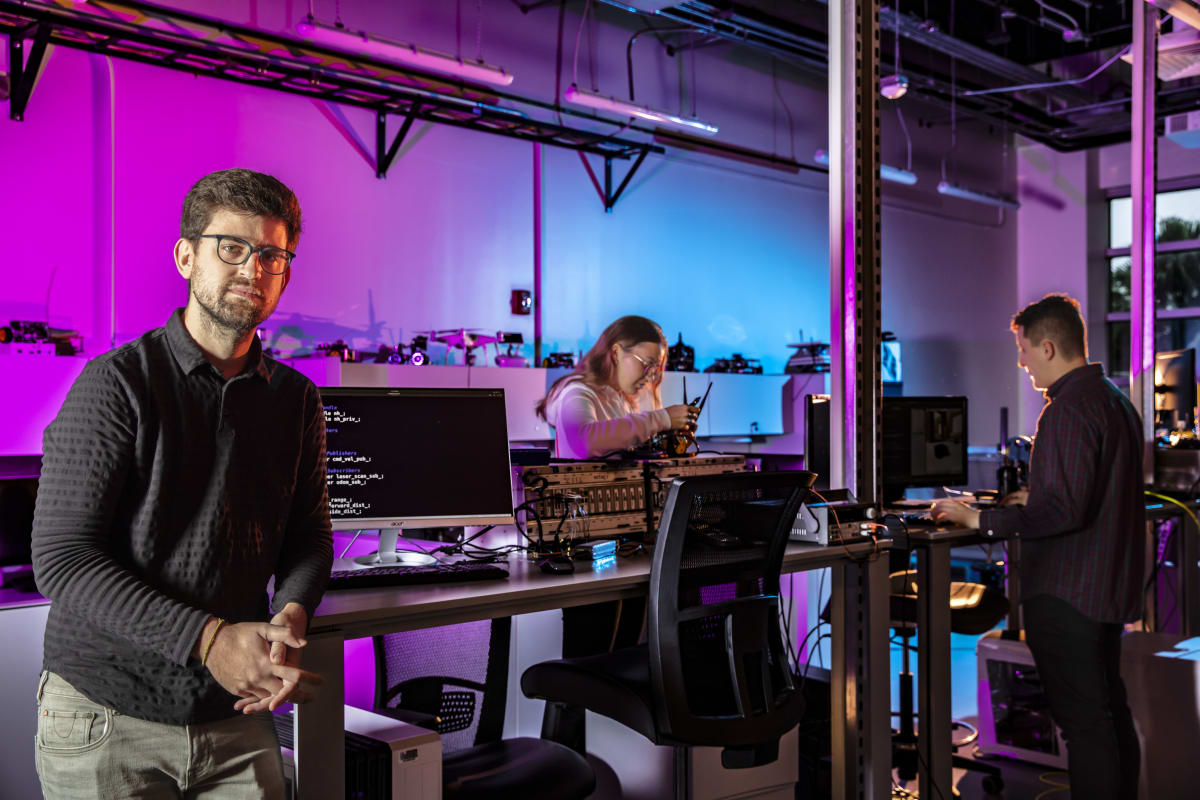
FAU's Center for Connected Autonomy and AI just won a $1 million grant through a groundbreaking partnership between the U.S., U.K., and Australia. The team beat out dozens of top universities and tech companies to land the funding, and for good reason.
The researchers are building something that's never existed before: a system that lets underwater vehicles, sensors, and operators share information quickly and reliably in the deep ocean. Right now, that's nearly impossible because the wireless signals we use on land, like radio waves and GPS, simply don't work underwater.
"Today's underwater communication systems typically force operators to choose between range and speed," explains Dr. George Sklivanitis, who's leading the project. Acoustic signals can travel far but move data slowly, like sending a text one letter at a time. Optical signals using visible light work fast but only over short distances.
FAU's solution combines both technologies into one smart platform. The system will use long-range acoustic signals for critical commands and high-speed light signals for sharing large amounts of data between nearby robots. Even better, it adapts automatically to changing ocean conditions.
Over the next year, the team will test the technology in Switzerland and at FAU's SeaTech campus in Florida, then conduct ocean demonstrations off Australia's coast. They'll use autonomous surface vessels, underwater vehicles, and seabed sensors to prove the system works in real-world conditions.
The Ripple Effect
This technology reaches far beyond military applications. Scientists could deploy fleets of robots to monitor ocean health and track climate change in ways never possible before. Offshore energy companies could inspect underwater equipment more safely and efficiently.
Environmental researchers are particularly excited about the possibilities. Imagine dozens of underwater robots working together seamlessly to track endangered whale migrations, map coral reef damage, or detect ocean pollution in real time.
The breakthrough builds on FAU's ongoing National Science Foundation work with networked swarms of autonomous underwater vehicles. By giving these robot teams the ability to truly communicate and coordinate, researchers are unlocking new levels of ocean exploration and protection.
Dean Stella Batalama sums up the potential perfectly: "It enhances the ability of autonomous systems to operate cooperatively in real-world ocean environments." Translation? We're about to understand and protect our oceans like never before.
Based on reporting by Google: robotics innovation
This story was written by BrightWire based on verified news reports.
Spread the positivity!
Share this good news with someone who needs it