FDA Approves At-Home Brain Device for Depression Treatment
For the first time, Americans can treat depression at home using a headset that gently stimulates the brain with electricity. The FDA's approval of this medication-free approach marks a major shift in mental health care.
Millions of Americans struggling with depression just gained a new treatment option that doesn't come in a pill bottle.
In December, the Food and Drug Administration approved an at-home headset that treats depression using mild electrical currents to stimulate the brain. The device, made by Swedish company Flow Neuroscience, represents the first time this technology has received full medical approval in the United States.
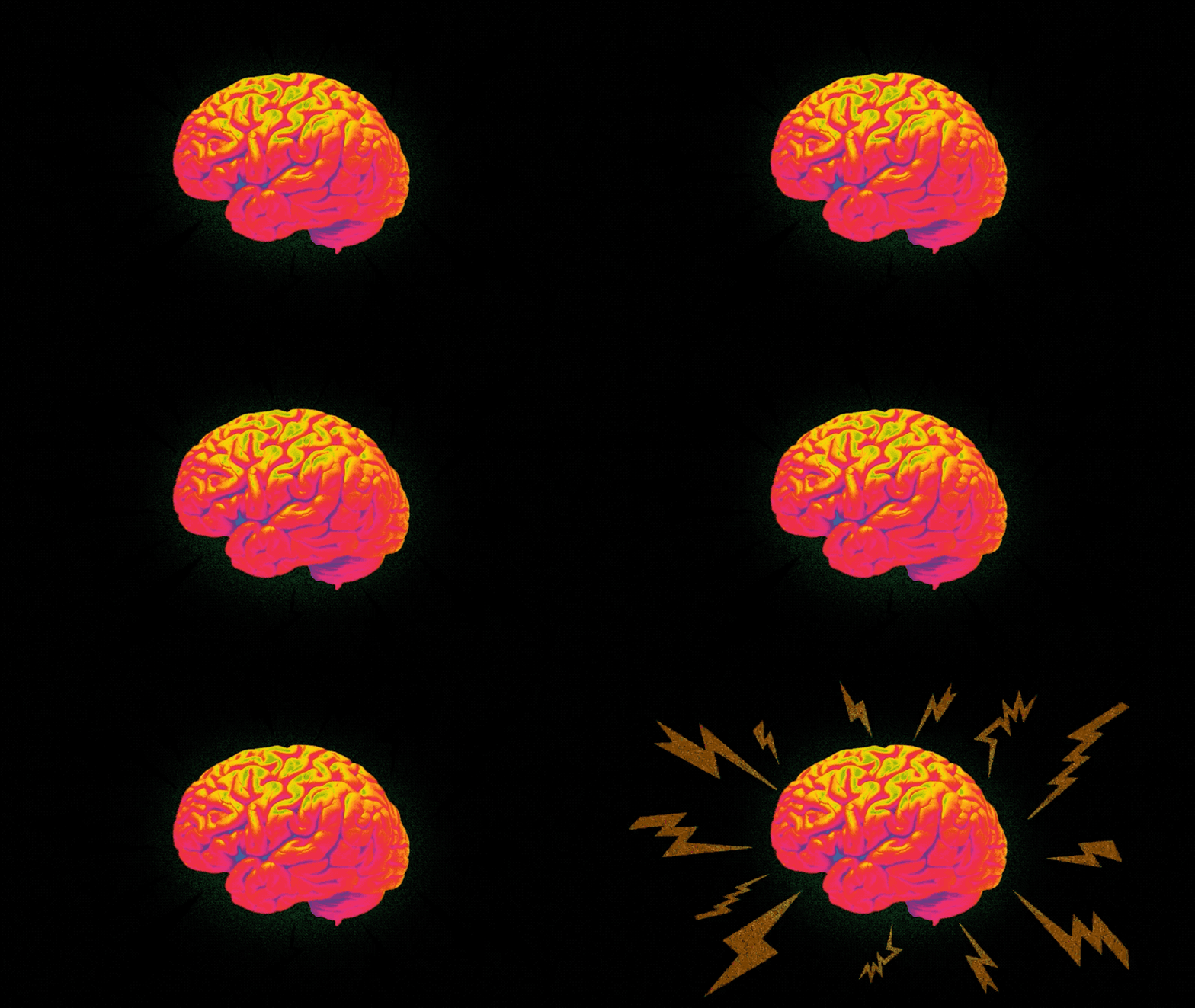
The treatment is called transcranial direct-current stimulation, or tDCS. Users wear a headset that delivers weak electrical currents to specific parts of the brain, helping neurons fire more easily and improving communication between brain regions.
While the technology has existed for over 20 years and has been available in England since 2019, it largely remained on the fringes of wellness products in America. The FDA's approval changes that, giving tDCS legitimacy as a medical therapy rather than just another online gadget.
"It legitimizes the therapy itself as a medical therapy, and not just something sold online for wellness or enhancement," says Anna Wexler, an assistant professor of medical ethics at the University of Pennsylvania who studies brain stimulation.
The approval reflects a major evolution in how scientists understand depression. Rather than viewing it simply as a chemical imbalance, researchers now recognize it as a disorder tied to disrupted connections between different brain regions.
For decades, treatment has centered almost entirely on antidepressants called SSRIs, which became dominant in the late 1980s. Today, roughly one in six Americans takes an antidepressant. But many patients don't respond to medication or struggle with unwanted side effects.
Why This Inspires
This breakthrough offers hope for people who haven't found relief through traditional treatments. By giving patients a medication-free option they can use in the comfort of their own homes, the technology removes barriers that often keep people from getting help.
The approval also signals that psychiatry is expanding beyond its heavy reliance on pharmaceuticals. Mark George, a leading neuromodulation expert at the Medical University of South Carolina, notes that medicine has been "pharmaceutically inclined" when it comes to treating the brain.
Now, patients and doctors have another proven tool in the fight against depression. For anyone who has watched a loved one struggle to find the right treatment, or experienced that frustration themselves, this represents real progress toward personalized mental health care.
The future of depression treatment is getting brighter, one gentle electrical pulse at a time.
Based on reporting by Fast Company
This story was written by BrightWire based on verified news reports.
Spread the positivity!
Share this good news with someone who needs it