FDA Clears Path for First Huntington's Disease Treatment
After initially calling it a failed product, the FDA reversed course to allow accelerated approval of a groundbreaking gene therapy that could slow Huntington's disease. The decision brings hope to 40,000 Americans living with the fatal disorder that currently has no cure.
Families facing Huntington's disease just got news they've been desperately waiting for: the FDA will allow a potentially life-changing treatment to move forward after all.
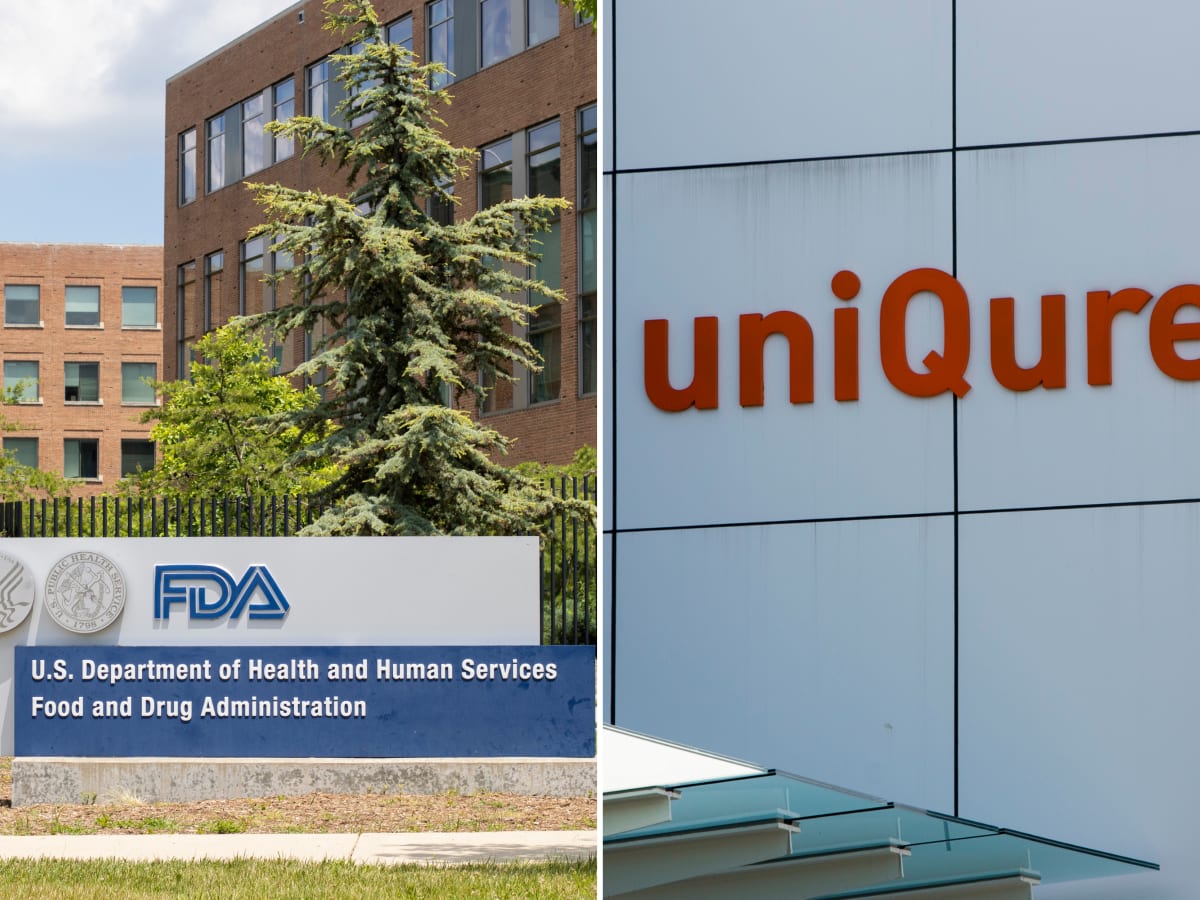
The agency told Dutch biotech company uniQure it can seek accelerated approval for AMT-130, a first-of-its-kind gene therapy that slows the progression of Huntington's disease. Just months ago in March, the FDA had dismissed the drug as a "failed product" and demanded an entirely new clinical trial.
Huntington's disease is a rare, inherited brain disorder that progressively destroys nerve cells. It affects up to 40,000 Americans, causing involuntary movements, cognitive decline, and mood changes that worsen over time until death.
Children of parents with Huntington's have a 50 percent chance of inheriting it. There is currently no cure and no approved treatment that can halt the disease's progression.
AMT-130 works differently than anything available today. The experimental gene therapy reduces production of the harmful protein huntingtin in the brain through a one-time surgical procedure.
Early trial data shows patients receiving higher doses experienced significantly slower decline compared to expected disease progression. The FDA granted the therapy breakthrough status, making it the first Regenerative Medicine Advanced Therapy designation ever given for Huntington's disease.
The agency's reversal removes a major barrier that had frustrated advocates. The FDA previously wanted uniQure to conduct a new trial with a "sham surgery" control group, requiring some patients to undergo invasive brain procedures without receiving actual treatment.
Now the FDA will accept three-year data from an earlier clinical trial as the basis for approval. UniQure plans to submit its application in the third quarter of 2026.
The Ripple Effect
The decision represents more than one drug approval. It signals growing recognition within the FDA of urgent needs in rare disease communities, where limited patient populations make traditional large-scale trials difficult.
The Huntington's Disease Society of America had delivered a petition with over 47,000 signatures and sent more than 11,000 messages to Congress demanding action. "Today, we celebrate an important milestone and the hope it brings to families across the country," the organization said in a statement.
The reversal also boosted investor confidence in rare disease research. UniQure's stock jumped over 75 percent on Wednesday, hitting a seven-month high.
If approved, AMT-130 would become the first treatment to actually alter the course of Huntington's disease, marking a major milestone in both gene therapy and rare disease medicine. The FDA emphasized it remains committed to working with uniQure while "upholding the agency's commitment to gold-standard science."
Advocates caution that approval isn't guaranteed yet and confirmatory studies will be required. But for thousands of families who've watched loved ones decline without options, the door just opened to possibility.
More Images

Based on reporting by Google News - Disease Cure
This story was written by BrightWire based on verified news reports.
Spread the positivity!
Share this good news with someone who needs it