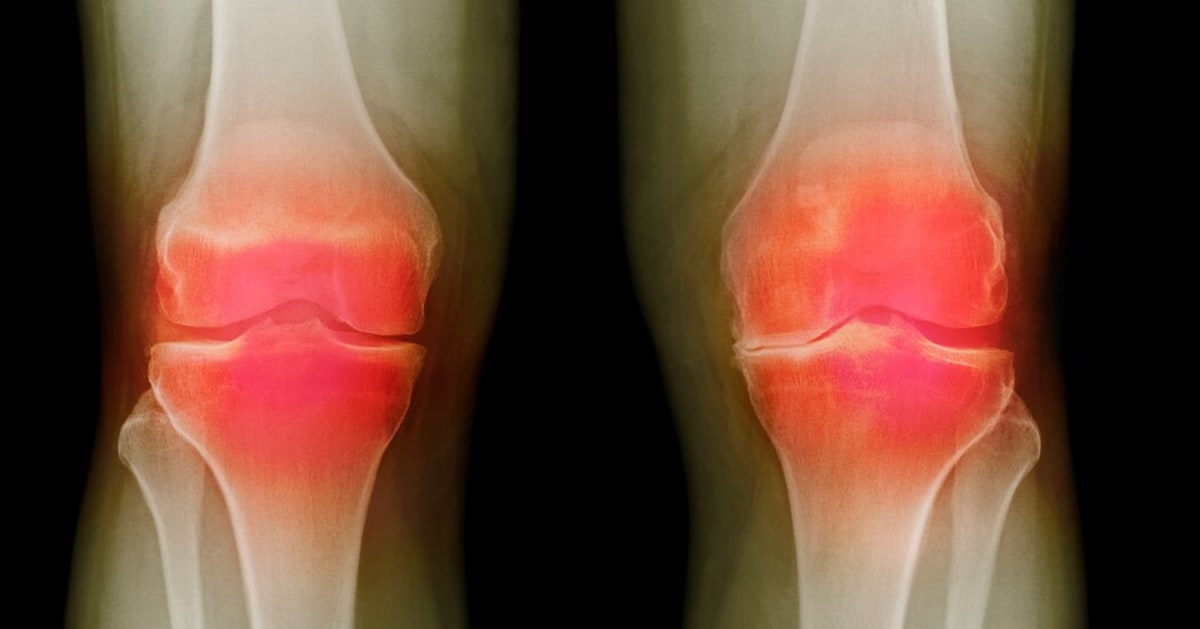
Federal Agency Develops 3 Potential Arthritis Cures
A federal agency just announced three promising treatments that could actually cure osteoarthritis by regrowing damaged joints. After three years and millions in funding, researchers are preparing to test these breakthrough solutions in humans within 18 months.
Scientists may have finally cracked the code on curing osteoarthritis, a painful joint condition that affects 32 million Americans and has no real treatment beyond managing symptoms.
The Advanced Research Projects Agency for Health (ARPA-H) just announced that three research teams have developed treatments that regrow bone and cartilage in damaged knees. The most ambitious project might even regrow an entire knee joint from scratch.
Unlike typical medical research, ARPA-H gave these teams a clear mission: solve the problem completely or don't bother. The agency invested tens of millions of dollars with one goal in mind: find an actual cure, not just another pain reliever.
The three approaches each tackle the problem differently. Researchers at Duke University created injections that make existing cartilage cells multiply and remodel damaged bone back to normal. Their treatments work on rats and mice, targeting either cartilage damage, bone damage, or both depending on what each patient needs.
The University of Colorado team developed a single injection using an existing drug reformulated to release slowly over months. In their animal tests, rabbits with torn ligaments regenerated healthy knees within just two months.
Columbia University's team went even bigger. They created an artificial joint made from 3D-printed scaffolding filled with bone and cartilage cells that grow into a real, functioning knee as the scaffold dissolves over a year.
Why This Inspires
Dr. Scott Rodeo from the Hospital for Special Surgery in New York called the findings "hugely promising." Right now, every arthritis treatment just masks symptoms. Actually regrowing joints would completely change how doctors treat this disease.
The agency modeled itself after DARPA, the defense program that helped create the internet and GPS. ARPA-H demands results: teams must test in humans within 18 months, and any approved treatment can cost no more than 25 percent of current care options.
The trials will focus on the people who need help most. More than half of participants must be women, and the studies must include Native Americans and Alaska Natives, groups particularly affected by arthritis.
These treatments have only been tested in animals so far, but the researchers sound cautiously amazed by their own results. "I tend to be very skeptical, but this surprised me," said Duke's Dr. Benjamin Alman.
Millions of people might soon have access to treatments that don't just manage their pain but actually fix what's broken.
Based on reporting by Google News - Health
This story was written by BrightWire based on verified news reports.
Spread the positivity!
Share this good news with someone who needs it

%2Fhttps%3A%2F%2Ftf-cmsv2-smithsonianmag-media.s3.amazonaws.com%2Ffiler_public%2F8f%2F51%2F8f519049-2d05-4f9a-8858-f58ed880bd57%2Fgettyimages-1432941680.jpg)