Fiji Island Made Entirely of Ancient Shellfish Waste
Scientists discovered a small Fiji island built completely from shellfish discarded by human settlers over 1,000 years ago. The unique "midden island" reveals how ancient communities shaped their landscape in ways still visible today.
A tiny island off Fiji's coast has stunned researchers with an origin story unlike anything documented in the Pacific before: it's made entirely of shellfish leftovers from ancient humans.
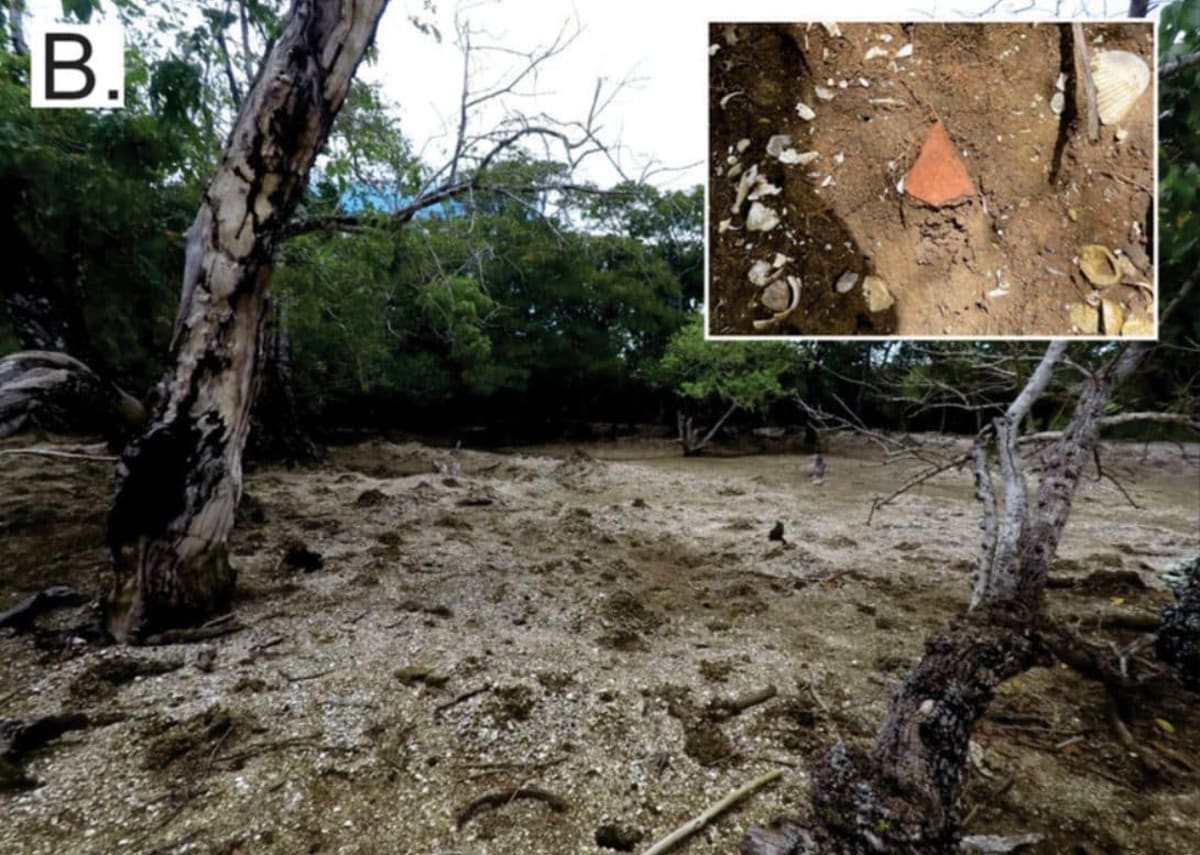
The island sits near Culasawani on Vanua Levu, Fiji's second-largest island. It spans roughly 3,000 square meters and rises about 60 centimeters above the high tide line, with 70 to 90 percent of its mass composed of ancient shell remains.
Patrick Nunn from the University of the Sunshine Coast in Australia led the study published in Geoarchaeology. His team dated shell samples to around 760 CE, with dates ranging from roughly 420 to 1040 CE.
Researchers believe early settlers built stilt homes over shallow coastal waters at the site. Generation after generation discarded shells beneath their platforms, creating massive underwater piles of debris.
As sea levels gradually dropped over centuries, the accumulated shellfish waste rose above the waterline. What began as dinner scraps slowly transformed into solid ground.
Every shell species found was edible, including commonly eaten varieties like Anadara antiquata and Gafrarium tumidum. Pottery fragments scattered throughout confirmed repeated human activity over many years.
The team initially wondered if a tsunami deposited the shells in one catastrophic event. They ruled that out because the shell layer stayed confined to the island without thinning at the edges, which wave deposits would show.
Why This Inspires
This discovery shows how human communities leave lasting marks on their environment in unexpected ways. What ancient Fijians considered waste became a permanent landform that tells their story a millennium later.
The find also demonstrates how archaeology continues revealing surprising connections between people and place. Today's mangrove-ringed island preserves evidence of daily life from communities who shaped the Pacific long before modern history began.
Future research will explore the surrounding seafloor for similar deposits and gather local oral histories about the site. Each new finding could reveal more about how these resourceful settlers thrived in their island home.
This humble pile of shells stands as an unintentional monument to human ingenuity and adaptation.
Based on reporting by Google News - Scientists Discover
This story was written by BrightWire based on verified news reports.
Spread the positivity!
Share this good news with someone who needs it

%3Afocal(700x470%3A701x471)%2Fhttps%253A%252F%252Ftf-cmsv2-smithsonianmag-media.s3.amazonaws.com%252Ffiler_public%252F7b%252F0f%252F7b0ff0da-1226-44bf-84de-647304f51d15%252F20260512-029jk.jpg)