Filipino Robot Digs Up 40,000 Years of Island History
A groundbreaking robot called ArchaeoBot is helping archaeologists uncover evidence that ancient Filipinos were expert seafarers who crossed open oceans and thrived on islands hundreds of thousands of years ago. The smart machine uses sensors and AI to find artifacts that humans might miss, revealing how early island communities mastered both sea and land.
Long before anyone thought the Philippine islands could support human life, ancient seafarers were already crossing open water, hunting massive fish, and building thriving communities across the archipelago.
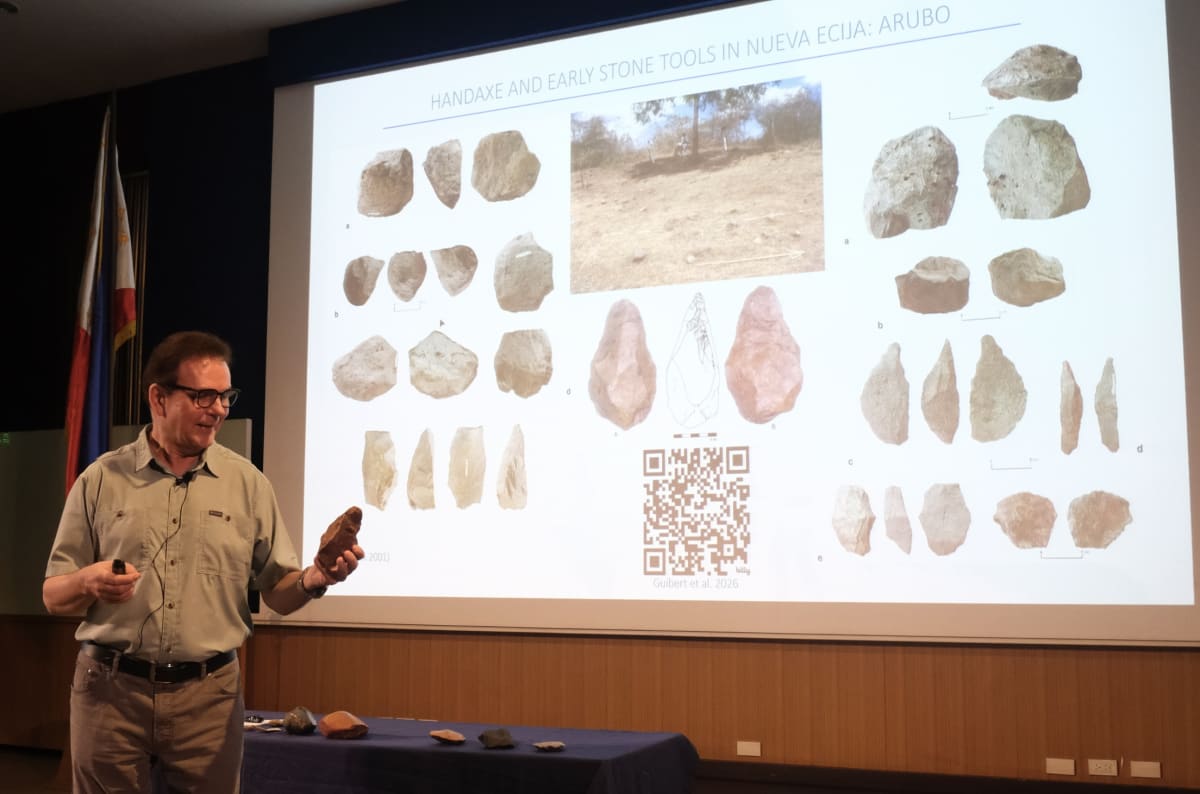
Now, a robot is helping prove just how remarkable they were. Dr. Alfred Pawlik from Ateneo de Manila University recently unveiled ArchaeoBot, a smart excavation system that combines robotics and machine learning to dig more carefully and spot artifacts that human eyes might miss.
The robot doesn't just move dirt. It uses specialized sensors to detect possible finds like ancient tools, burial sites, and cooking hearths while it works. It learns from each excavation, adapts to different soil conditions, and can even help clean and store delicate discoveries.
Dr. Pawlik's team has already uncovered stunning evidence of what these early Filipinos achieved. Around 40,000 years ago, people were deliberately island-hopping across Palawan and Mindoro. Even more astonishing, humans reached Luzon hundreds of thousands of years earlier, making repeated sea crossings that prove these weren't lucky accidents.
The artifacts tell a story of serious skill. Remains of tuna, sharks, and other deep-sea species show advanced fishing techniques. Modified stone weights and bone hooks reveal marine technology that worked for millennia. These communities weren't just surviving on islands; they were mastering them.
What makes this discovery even more meaningful is what it reveals about the Philippines' place in human history. The "Palawan-Mindoro Corridor" wasn't some remote endpoint. It was a crucial gateway for human migration across Southeast Asia, a hub of movement and innovation.
Why This Inspires
This research rewrites the story of who Filipinos are and have always been. These weren't passive settlers waiting for the modern world to arrive. They were adaptive innovators who read ocean currents, developed fishing technology, and built knowledge systems sophisticated enough to thrive for thousands of generations.
Dr. Maria Luz Vilches, Vice President for Higher Education at Ateneo, captured it perfectly: "We owe the anthropologists and their scholarship that we get a better picture of generations and civilizations to which we would otherwise have no access."
ArchaeoBot represents something bigger than efficient digging. It's a bridge between ancient ingenuity and modern innovation, using cutting-edge technology to honor the forgotten brilliance of the past. The robot extends what human archaeologists can do, making systematic what was once backbreaking and uncertain.
Every artifact pulled from Philippine soil now tells a clearer story: these islands have always been spaces of movement, connection, and human achievement at its most resourceful.
Based on reporting by Google: archaeological discovery
This story was written by BrightWire based on verified news reports.
Spread the positivity!
Share this good news with someone who needs it