Filipino Villagers Save 75% of Rescued Sea Turtle Eggs
In the Philippines, former egg collectors now patrol beaches every night to save sea turtle nests from dogs and floods. Their protected hatcheries are giving thousands of baby olive ridley turtles a fighting chance at survival.
On the beaches of San Vicente in the Philippines, villagers who once saw turtle eggs as toys are now racing against time to save them.
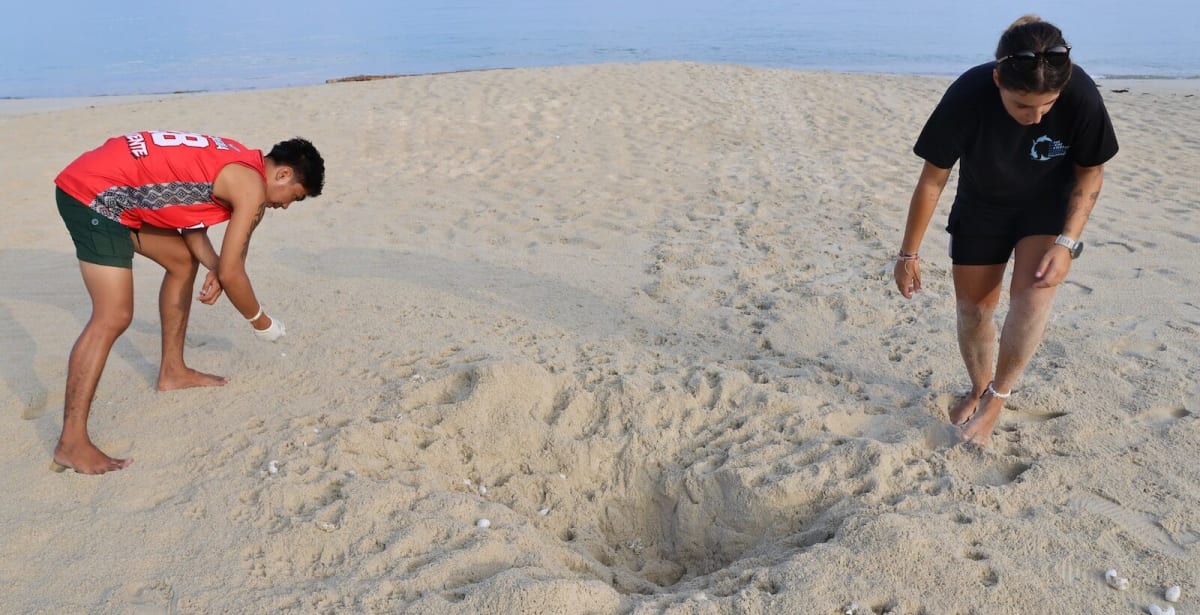
Every night, volunteer patrollers cover over 8 kilometers of coastline in five shifts, watching for olive ridley sea turtles coming ashore to nest. When they spot a mother turtle, they protect her from stray dogs while she lays her eggs. After she returns to the ocean, they carefully move her eggs to protected hatcheries where they have a real chance of survival.
The stakes are high. Nests left on the beach face almost certain destruction from stray dogs or flooding from increasingly severe storms. Sometimes patrollers find mother turtles already killed by dogs, but they still rescue the eggs. "In the end, even though she's dead, at least her babies survive," said researcher Klara Simon from the Large Marine Vertebrates Research Institute Philippines, known as LAMAVE.
The effort is working. The hatcheries achieve a 75% hatching success rate, just slightly below the 80% rate seen on beaches untouched by predators. Two months after eggs arrive, tiny olive ridleys begin emerging from the sand. Researchers check the nests every few hours to ensure the best outcomes.
Jerald Mahusay, now a patrol leader and research assistant, represents the transformation happening in San Vicente. As a child, he viewed turtle eggs as playthings. Today, he leads teams protecting the same species he once didn't think twice about.
The Ripple Effect
LAMAVE hasn't just trained patrollers. They're working directly with residents to manage free-roaming dogs, building enclosures for pets that might otherwise attack turtles. The community is learning that protecting turtles means addressing the root causes of nest destruction.
Project leader Kalei Suza sees the hatcheries as a temporary solution to human-caused problems. "We still want the turtles to nest in their regular, natural place where they want to nest, because mama knows best," she said. The ultimate goal is full community ownership of turtle protection, where beaches become safe enough that egg relocation is no longer necessary.
As tourism expands in San Vicente with new luxury resorts under development, these community guardians are proving that progress and conservation can coexist when locals lead the way.
More Images


Based on reporting by Mongabay
This story was written by BrightWire based on verified news reports.
Spread the positivity!
Share this good news with someone who needs it
.png%3Bw%3D327%3Bh%3D225%3Bmode%3Dcrop)