Firefighters Save Crane Operator 160 Feet in the Air
When a construction worker collapsed at the top of a 160-foot crane, firefighters climbed 16 stories in the summer heat to save him. Their untested emergency plan worked perfectly when it mattered most.
A 28-year-old crane operator got a second chance at life last Friday when firefighters scaled 160 feet to reach him after he collapsed at work.
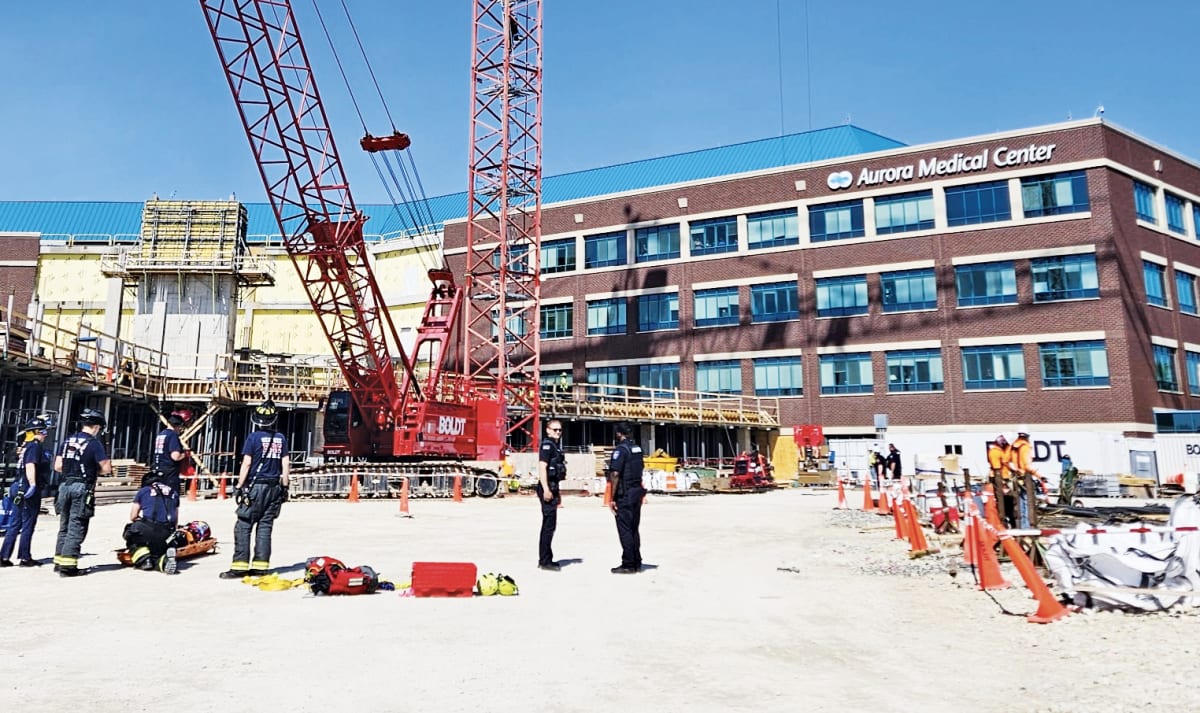
The drama unfolded at Aurora Medical Center in Grafton, Wisconsin, where an expansion project was underway. When the operator stopped responding to radio calls around 9:30 a.m., co-workers climbed the towering crane and found him unconscious in the cramped control cab.
Fire Chief Matthew Karpinski and his team from Ozaukee Central Fire Department had actually prepared for this exact scenario. They'd developed a rescue plan for the construction site but hadn't practiced it yet.
"This was a first for us," Karpinski said. "This definitely was not something we normally encounter."
The first responders climbed the same ladder system the operator used daily, reaching a platform just 36 inches wide. They stabilized the patient at the top while crews on the ground assembled equipment and rigged a system to lower him safely.
The tight workspace made every movement difficult. Emergency workers had to take turns ascending because too many people couldn't fit on the narrow platform.
After carefully treating the man and keeping him stable, crews lowered him in a specialized rescue basket. Once on the ground, they wheeled him straight into the emergency room just a couple hundred feet away.
The timing proved fortunate. "We're definitely glad it happened last week and not this week when temperatures and humidity spiked," Karpinski said, noting crews brought water up to workers during the rescue in the summer heat.
Why This Inspires
What makes this rescue remarkable isn't just the dramatic height or technical complexity. It's that the fire department anticipated a problem that might never happen and planned for it anyway.
Their foresight turned what could have been a tragedy into a successful save. The construction crew from Boldt Construction also jumped in without hesitation, providing equipment and support instantly.
"Any little thing we needed, they had quickly," Karpinski said. "Any help they could give, they did."
The department still plans to hold their aerial rescue practice in the coming months, but now they know their plan works when lives are on the line.
Based on reporting by Google: rescue saves
This story was written by BrightWire based on verified news reports.
Spread the positivity!
Share this good news with someone who needs it