First Woman Graduates in Ancient Kerala Percussion at 96
Apurva Arthur just made history as the first woman to complete her debut performance on the mizhavu, a centuries-old percussion instrument at India's prestigious Kerala Kalamandalam. Her journey from hearing the copper pot drum once in Bengaluru to mastering its complex rhythms shows how passion can break through tradition.
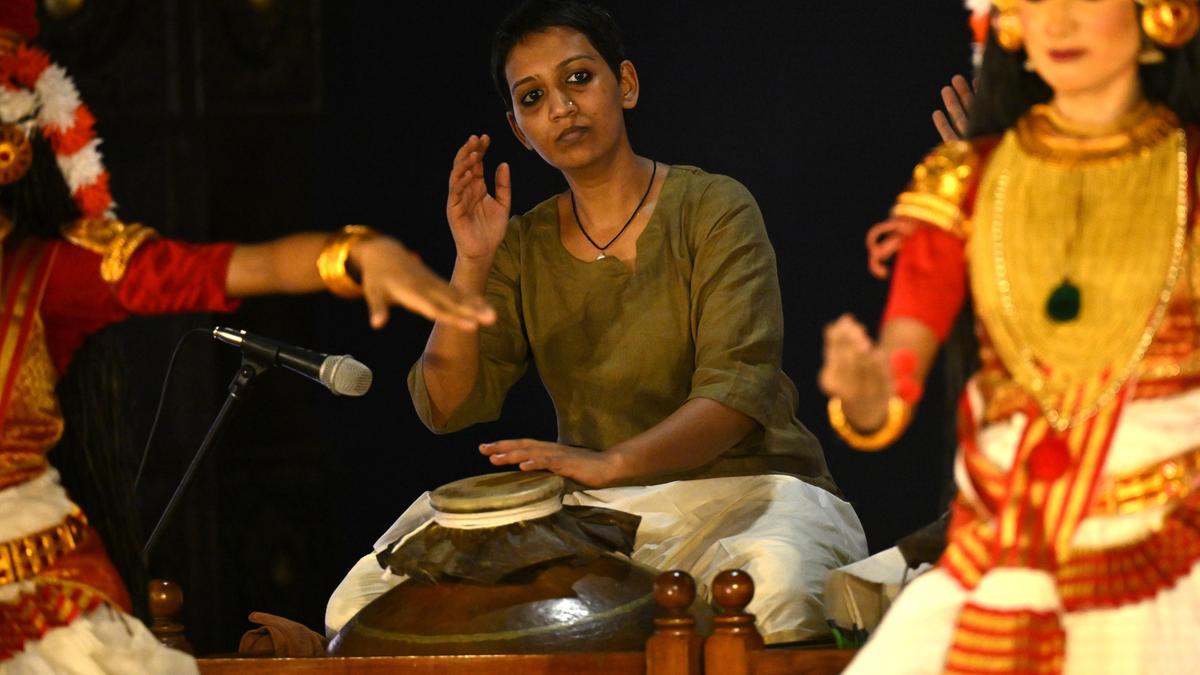
On a cloudy August morning in Kerala, theatre artist Apurva Arthur sat behind the large copper mizhavu drum and made history. She became the first woman ever to perform her debut graduation concert on this ancient instrument at the 96-year-old Kerala Kalamandalam.
The mizhavu isn't just any percussion instrument. This pot-shaped copper drum with leather stretched across its top accompanies Koodiyattam, one of the world's oldest surviving theatre forms. Players sit behind performers where they can't see the stage, meaning they need deep knowledge of every gesture and word in the performance.
It's physically demanding too. Musicians must step into a wooden case and perch on its edge while playing, a posture that makes the instrument especially challenging for women to pursue.
Apurva's path to this moment started at age 18 in a Bengaluru theatre. She heard the mizhavu's resonant tones during a performance and fell instantly in love. "I didn't take to the mizhavu, it found me," she says. "It was love at first sight, rather, at first sound."
She spent years training at Adishakti Theatre Arts in Auroville, learning both the instrument and acting. When she discovered Kerala Kalamandalam offered a Master's degree in mizhavu, she jumped at the chance to study "in the classical language" and understand the instrument's cultural roots.
Why This Inspires
Apurva's story goes beyond breaking gender barriers in traditional music. As a Dalit Christian woman, her connection to the mizhavu carries special meaning. Her ancestors were leather workers, and now she plays an instrument whose surface is made of leather. "I often find myself wondering, 'Who made this? My forefathers!' It feels good," she says.
For Apurva, the mizhavu has become more than an instrument. It shapes how she creates theatre, playing in her head even when she's acting on stage. She calls it her "dramaturg," helping her connect ideas and craft silent moments in performance.
Now graduated, she's ready to perform and bring this ancient sound into contemporary theatre. Her teacher and mentor believed so deeply in the instrument's role that she couldn't create without it nearby.
Apurva didn't set out to make history, but her determination opened a door that had been closed for nearly a century.
Based on reporting by The Hindu
This story was written by BrightWire based on verified news reports.
Spread the positivity!
Share this good news with someone who needs it

%2Ffile%2Fattachments%2Forphans%2Fchancellors_355742.jpg)