Floating Hotel Helps Heal Ancient Mongolian Volcano Site
A new eco-resort in Inner Mongolia hovers above fragile volcanic terrain to protect it while offering travelers a unique connection to nature. The innovative design actually helps damaged land recover instead of harming it.
In the windswept steppes of Inner Mongolia, a new hotel is doing something remarkable: healing the land beneath it while giving guests a front-row seat to a 150,000-year-old volcanic crater.
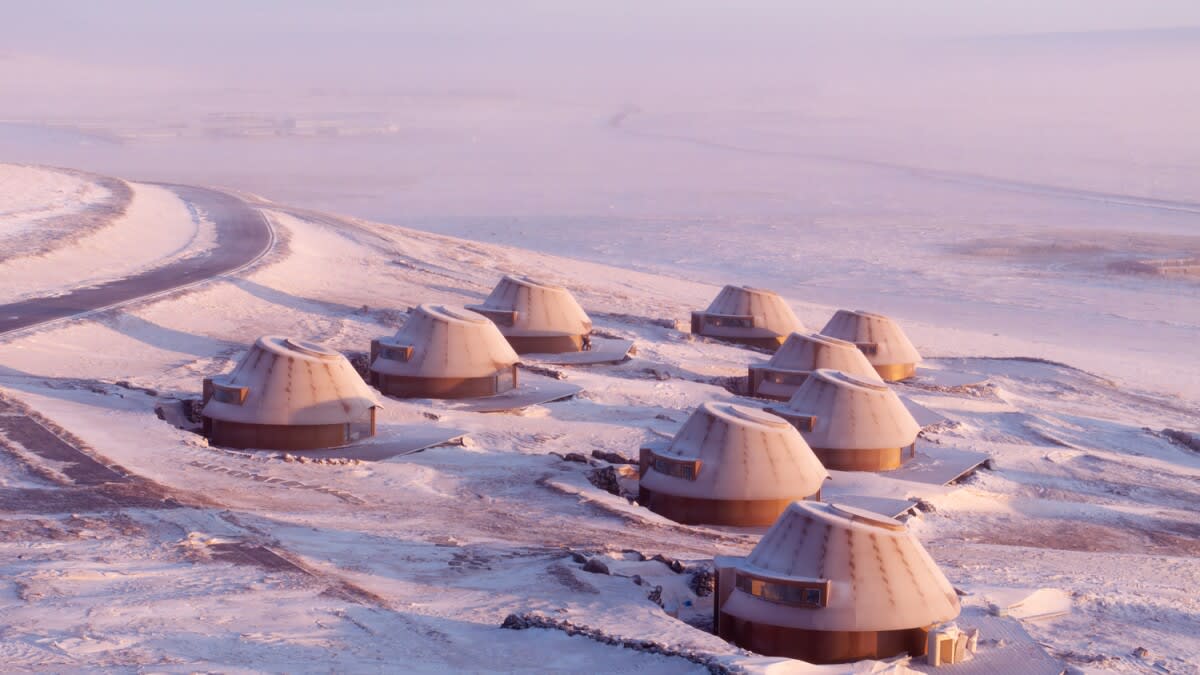
The Volcano-In Hotel of Arrivals sits in the Baiyinkulun Steppe, where harsh winds and shifting sands have left the landscape struggling to sustain vegetation. Instead of adding to the damage, architects from PLAT ASIA designed the resort to float lightly above the ground, positioning each cabin directly over existing sand depressions to stop them from spreading.
The result is a collection of small, spherical cabins scattered across the ancient volcanic field. Each unit hovers on elevated foundations, clad in reddish metal that mirrors the surrounding earth and topped with aluminum roofs that reflect the stark steppe light.
The cabins were built entirely from prefabricated components assembled on site, minimizing heavy construction work that would disturb the fragile ecosystem. Curved retaining walls around each unit serve double duty as wind buffers and snow screens, protecting both guests and the recovering terrain beneath.
Inside, the compact suites feature sleeping areas, living spaces, bathrooms, and private terraces. An oval skylight above the bed frames the night sky for stargazing, while a narrow horizontal window captures endless views of the volcanic horizon.
Stone walkways connect the network of cabins across the 17,588-square-foot resort. A prototype unit perched on a nearby hilltop stands as a reminder of the experimental phase that informed the final design.
The Ripple Effect
This project shows how tourism and environmental restoration can work together instead of against each other. By choosing to build where the land was already damaged, the architects turned accommodation into rehabilitation.
The strategic placement over sand depressions actively prevents further erosion while giving the soil underneath a chance to recover. It's a model that could inspire similar projects in other fragile landscapes around the world.
The hotel is part of the larger Baiyinkulun Steppe & Volcano Tourism Resort, bringing thoughtful development to this isolated corner of China. Guests get an extraordinary experience connecting with an ancient landscape, while the land itself gets a chance to heal.
The long-term success depends on how the ecosystem responds over time, but for now, this floating retreat proves that we can visit beautiful places without loving them to death.
More Images


Based on reporting by New Atlas
This story was written by BrightWire based on verified news reports.
Spread the positivity!
Share this good news with someone who needs it