Floating Solar Rings Power Norwegian Cod Farm in Ocean First
Two circular solar platforms are generating clean energy while riding 13-foot waves at a Norwegian fish farm, proving renewable power can thrive in some of Earth's toughest conditions. The installation marks the world's northernmost floating solar system.
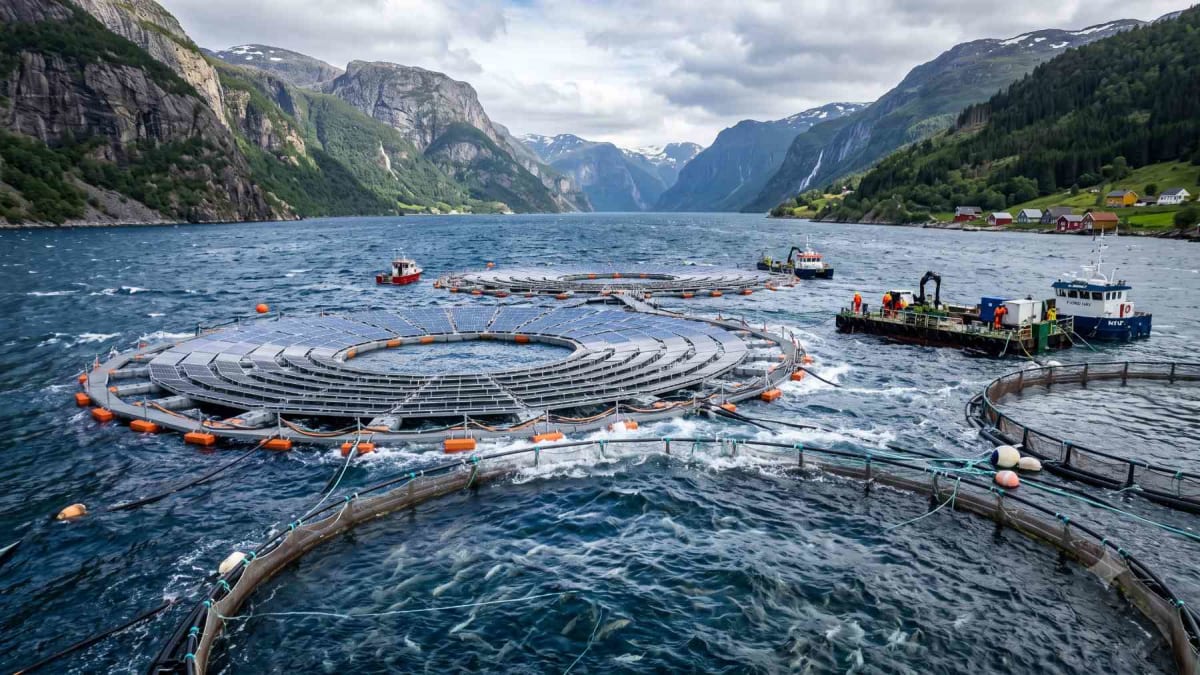
In Norway's Voldsfjorden, two black circles float beside cod pens, quietly turning ocean waves into an engineering triumph. These aren't ordinary solar panels—they're 160-kilowatt floating rings that bend with the sea instead of fighting it.
The Alida system arrived in western Norway's Møre og Romsdal region in 2024. Ocean Sun partnered with Alotta Energy to install the rings alongside Ode's existing cod farming operation, creating the world's most northern floating solar installation.
Here's what makes them special: flexible membranes stretched over circular collars replace rigid platforms. The solar panels sit low against these membranes, which ride the water's natural movement rather than resisting it.
This design sidesteps the usual problem with offshore solar. Traditional high, flat surfaces catch wind and waves like sails, but these low-profile rings let weather pass over them. Engineers built them to handle waves up to 13 feet tall and significant swells over six feet.
The real genius is shared space. The cod farm already occupies this water, so the solar rings don't require additional coastal land. They generate electricity right where it's needed, helping reduce diesel generator use when sunlight is available.
Water contact keeps the panels cooler than land-based systems, which Ocean Sun says boosts electrical output. Mooring lines hold the rings in place while letting them move with the fjord's rhythm.
The Ripple Effect
This project shows how food production and clean energy can occupy the same ocean real estate. As offshore aquaculture moves into deeper waters, floating solar can follow, bringing renewable power to places shore cables can't easily reach.
The system doesn't eliminate backup generators—Norwegian winters bring darkness, and fish need constant care. But it proves that sensitive electronics can survive salt spray, wind, and rolling seas when engineers design around nature's movement instead of against it.
Other coastal industries are watching closely. If solar works beside fish farms, it could power offshore wind maintenance platforms, research stations, or remote island operations facing similar harsh conditions.
The technology is still young, and questions remain about long-term durability and maintenance costs. But the two rings floating in Voldsfjorden have already answered the biggest question: yes, solar power can ride the waves.
What started as an experiment in matching renewable energy to offshore food production has become a working model for bringing clean electricity to the ocean's toughest neighborhoods.
Based on reporting by Google News - Norway Green Energy
This story was written by BrightWire based on verified news reports.
Spread the positivity!
Share this good news with someone who needs it