Florida Researchers Turn Beach Nuisance Into Food Ingredient
Scientists at Florida State University have figured out how to transform pelagic sargassum, the smelly seaweed that smothers beaches and costs millions to clean up, into a valuable food ingredient. The breakthrough could turn a $35 million annual problem into a sustainable solution.
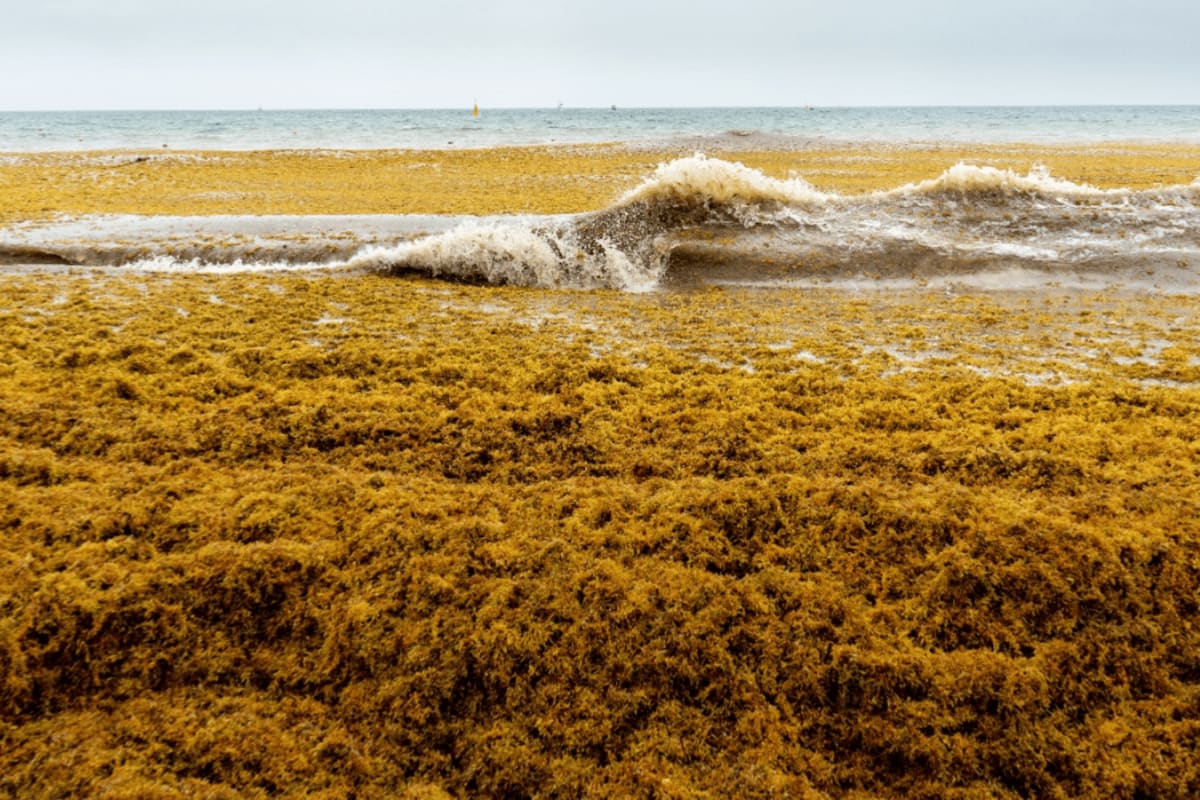
Every year, massive mats of brown seaweed wash ashore across Florida's coast, smothering beaches with a rotten egg smell and creating a cleanup nightmare that costs Miami-Dade County alone $35 million annually. Now, Florida researchers have found a way to turn this stinky problem into something surprisingly useful: a high-quality food ingredient.
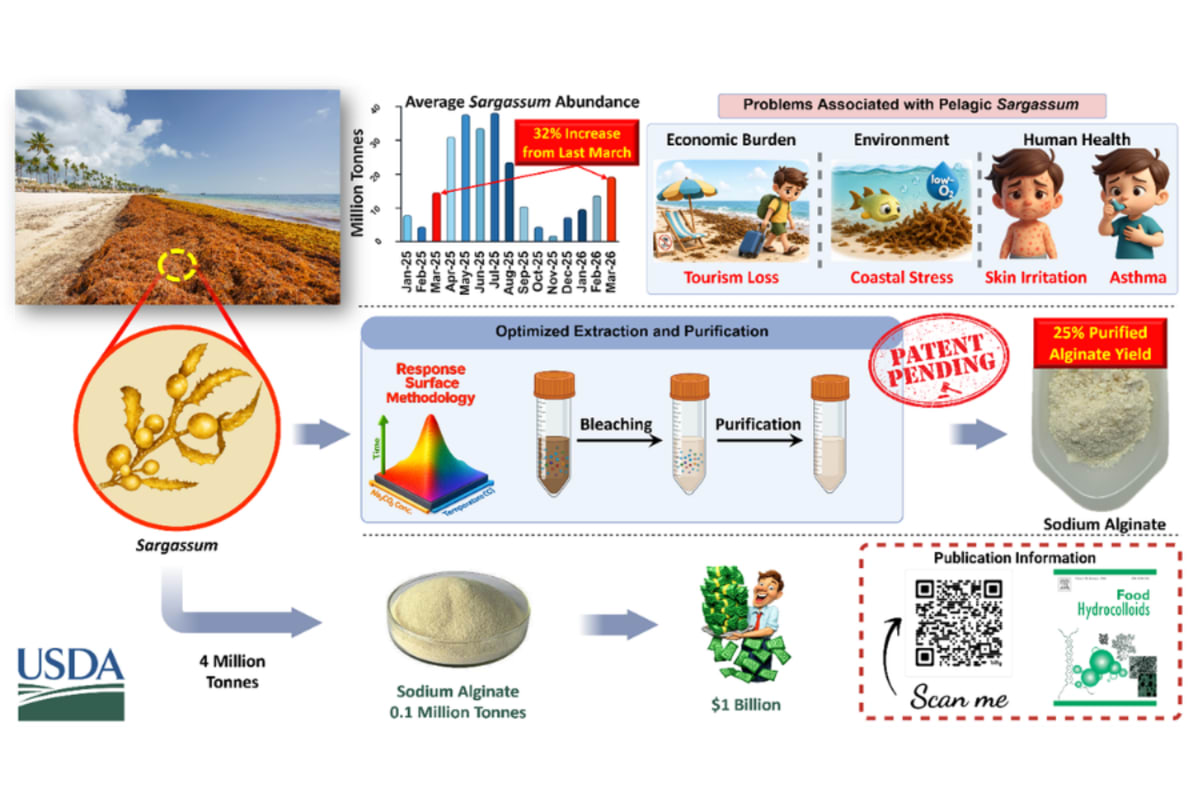
Scientists at Florida State University, working with colleagues from two other Florida universities, discovered they can extract sodium alginate from pelagic sargassum. This naturally occurring compound is already used in foods like salad dressings, desserts, and plant-based alternatives to help thicken, gel, and stabilize products.
The timing couldn't be better. Marine scientists estimate that 2026's sargassum bloom is on track to be the largest ever recorded, potentially surpassing last year's peak of 37.5 million metric tons. As of February, more than 13 million metric tons were already drifting toward Florida and the Caribbean, forming earlier than usual due to warming ocean temperatures.
The research team faced a key challenge: raw sargassum isn't safe for direct human consumption because of its high salt content, fibrous structure, and potential heavy metals. Through targeted extraction and purification, they found they could isolate the alginate while removing the unwanted material.
"Right now, most washed ashore sargassum is treated as waste," said Qinchun Rao, professor in FSU's Department of Health, Nutrition, and Food Sciences. "We wanted to explore whether this abundant biomass could be responsibly transformed into something useful."
The results, recently published in Food Hydrocolloids, showed promise. The alginate retained strong functional performance comparable to commercially available versions already used in food systems. Advanced testing confirmed the chemical structure remained intact, meaning it could actually work in real products.
The Bright Side
What makes this discovery particularly exciting is the scale of the opportunity. With sargassum blooms growing larger each year due to climate change, this isn't just about finding a use for waste. It's about creating a renewable resource that arrives on its own, needs no farmland or fertilizer, and solves an environmental problem in the process.
Doctoral candidate Aravind Kumar Bingi noted that the recovered alginate retained useful functional properties, suggesting this biomass may have value beyond cleanup and disposal. Instead of paying millions to remove and dump seaweed, coastal communities could potentially sell it to food manufacturers.
The researchers emphasize more work is needed before large-scale adoption, including performance testing in actual food products and continued safety monitoring. But the foundation is solid, supported by the U.S. Department of Agriculture's National Institute of Food and Agriculture.
As another record-breaking sargassum season unfolds, this research offers a glimpse of how creative thinking can flip environmental challenges into sustainable solutions.
More Images
Based on reporting by Google News - Researchers Find
This story was written by BrightWire based on verified news reports.
Spread the positivity!
Share this good news with someone who needs it