Flying Car Docking Gets 91% Accurate AI Breakthrough
Scientists in China just solved one of flying cars' biggest problems: how to safely connect the flying and driving parts with pinpoint accuracy. Their lightweight AI system works in real time and could change urban transportation forever.
Imagine a future where your car drops you off, then its top half flies away while the bottom parks itself—but first, those two pieces need to reconnect perfectly, every single time.
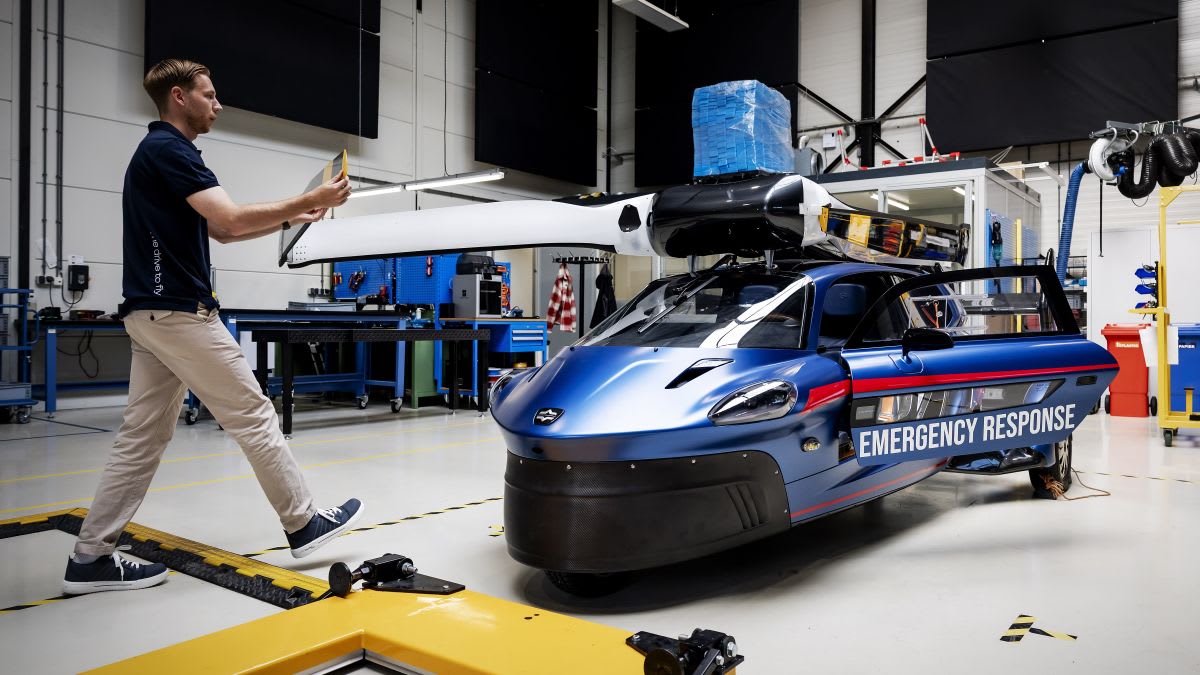
Researchers at Wuhan University of Technology just cracked this puzzle with a breakthrough AI system that makes split flying cars actually possible. These futuristic vehicles separate into three parts: a flight module that takes to the skies, a passenger capsule, and a ground chassis that drives on roads.
The biggest challenge? Getting the ground chassis to dock precisely under the flying module without GPS, which often fails between tall city buildings. Traditional systems also struggled with shadows, changing light, and complex backgrounds that confused their sensors.
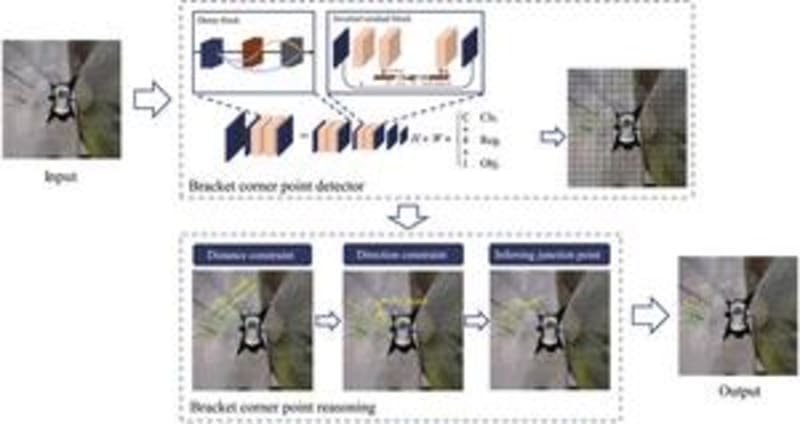
The research team reimagined the problem as a smart parking challenge. They used six cameras to create a bird's eye view and trained their AI to spot specific connection points on the aircraft bracket rather than the entire complex structure. This simpler approach made all the difference.
Their secret weapon was making the system lightweight enough to run on regular car computers. They stripped away unnecessary data through a process called channel pruning, which keeps the AI fast without sacrificing accuracy. The system even reasons through problems like shadows or blocked views by using the bracket's known shape to fill in gaps.
The results speak for themselves. The AI achieved 91.5% accuracy while processing 35 frames per second on standard vehicle hardware. The team also created the first public dataset for this technology, with over 4,600 labeled images taken in different lighting and environments.
The Ripple Effect
This breakthrough reaches far beyond flying cars. When the researchers tested their system on regular parking lot detection, it performed just as well as existing methods but ran twice as fast. Current electric and self-driving cars could use this technology tomorrow to improve their parking abilities.
The lightweight design means automakers won't need expensive sensors or powerful servers to add advanced features. That lowers costs and makes sophisticated autonomous capabilities available to everyday drivers, not just luxury vehicles.
The team plans to add radar data next to handle bumpy or uneven surfaces. They're also working on detecting multiple flying modules at once, which would be crucial for busy urban transport hubs where several vehicles might need to dock simultaneously.
Split flying cars have always seemed like science fiction, but this research provides the practical foundation they need to become real. By solving the "invisible" problem of precision docking with affordable, efficient technology, these scientists just brought tomorrow's cities one major step closer to reality.
Based on reporting by Google News - AI Breakthrough
This story was written by BrightWire based on verified news reports.
Spread the positivity!
Share this good news with someone who needs it