Forest Officer Saved Kaziranga's Rhinos Before Age 36
A young officer from Assam's Mising community transformed how Kaziranga protected its rhinos in the 1930s by bringing local communities into conservation efforts. His hilltop lookout still bears his name today.
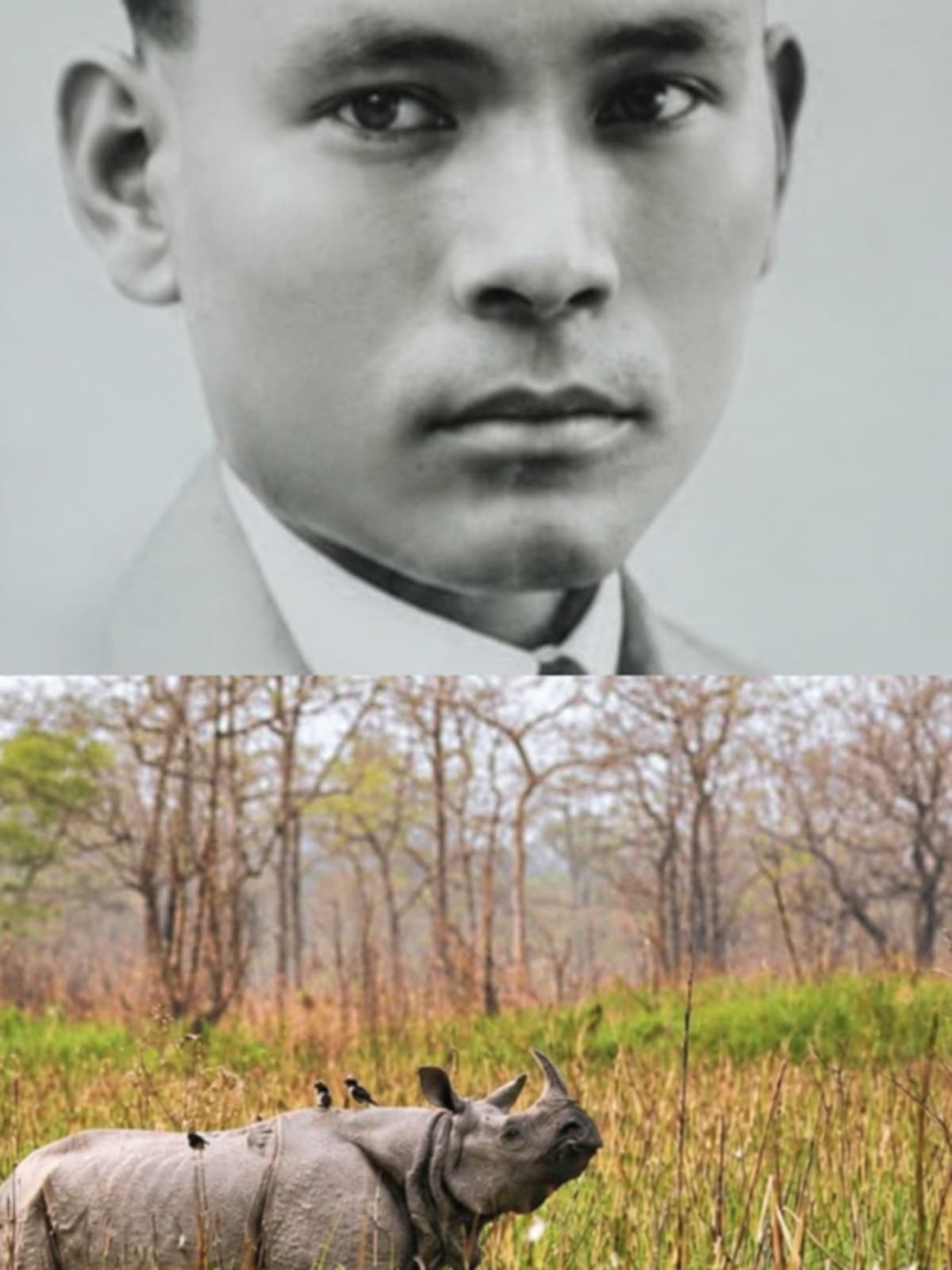
In the 1930s, a 30-year-old forest officer climbed a hill overlooking Kaziranga with binoculars, watching for poachers who threatened the sanctuary's rhinos and elephants. When Mahi Chandra Miri spotted danger, he rode into the forest on elephant-back to stop them.
Born in 1903 to Assam's Mising community, Miri became one of the first two people from Assam selected for the prestigious Imperial Forest Service in 1929. After training at Forest College in Rangoon, he was posted to Kaziranga when poaching camps surrounded waterbodies where rhinos gathered.
But Miri understood something other officers missed. Kaziranga was home to communities who depended on the landscape for their livelihoods, and conservation would only work if they became partners, not obstacles.
As a Mising man, Miri spoke the language and understood the customs of local communities. He built trust among Mising and Karbi people, using their knowledge of the forest to survey the sanctuary and strengthen patrols.
His fieldwork helped transform Kaziranga from a struggling game sanctuary declared in 1916 into a protected landscape that opened to visitors in 1938. Poaching camps began to disappear as community support grew.
The Ripple Effect
Miri's approach created a conservation model that still guides Kaziranga today. By showing that protecting wildlife required trust rather than just enforcement, he proved local communities could become conservation's greatest allies.
His work influenced how protected areas across India engage with indigenous communities. The hill where he kept watch, now called Mahi Miri Tower, reminds visitors that successful conservation starts with respecting the people who know the land best.
The work came at a steep price. In 1939, after years in difficult forest conditions, Miri contracted blackwater fever and died at just 36 years old.
Today, Kaziranga stands as a UNESCO World Heritage Site and home to the world's largest population of one-horned rhinoceros. The sanctuary that Miri helped protect now hosts over 2,400 rhinos, up from a population that faced near-extinction when he arrived.
His legacy lives in every rhino that grazes safely in Kaziranga's grasslands, proof that conservation built on community trust can outlast any single lifetime.
Based on reporting by The Better India
This story was written by BrightWire based on verified news reports.
Spread the positivity!
Share this good news with someone who needs it