Fossil Vomit Reveals New Filter-Feeding Pterosaur Species
A 110-million-year-old regurgitated mass stored in a Brazilian museum for decades just revealed a completely new species of filter-feeding pterosaur that scientists never expected to find in that region. The discovery shows how prehistoric meals can unlock mysteries that might otherwise remain hidden forever.
A student reviewing fish fossils in a Brazilian museum collection stumbled upon something extraordinary hiding in plain sight: the remains of two prehistoric flying reptiles that had been eaten and expelled by a predator 110 million years ago.
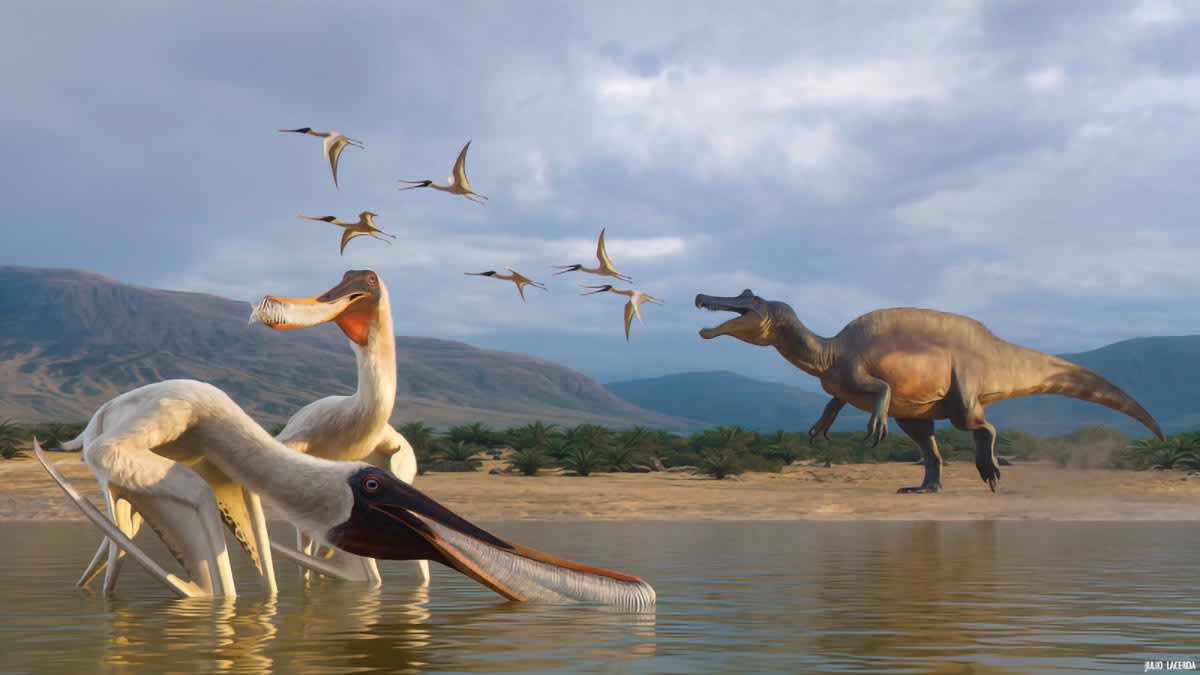
The fossilized vomit, officially called a regurgitallite, sat unnoticed for decades at the Câmara Cascudo Museum. When William Bruno de S. Almeida examined it more closely in 2024, he realized the rock contained not just fish bones, but pterosaur skulls with an unusual feature: rows of tightly packed, bristle-like teeth designed for filter feeding.
This feeding style, similar to modern flamingos, allows animals to strain small organisms like crustaceans from water. Researchers named the new species Bakiribu waridza, meaning "comb mouth" in the local Kariri language.
The discovery caught paleontologists completely off guard. Nearly 30 pterosaur species had already been identified from Brazil's Araripe Basin, but none were filter feeders. These specialized pterosaurs typically lived in freshwater environments, not the coastal setting where this fossil formed.
Professor Aline Ghilardi from the Federal University of Rio Grande do Norte assembled a team of specialists to study the specimen. Within days, they had drafted a scientific paper describing the new species, which belongs to the Ctenochasmatidae family previously known only from Europe, East Asia, and southern Argentina.
The fossil tells a dramatic story. Two seagull-sized pterosaurs were snatched mid-flight over a lake or river, likely by a spinosaurid dinosaur called Irritator challengeri. The predator swallowed them whole, head-first, then ate four fish before expelling the indigestible remains.
Paleontologist Rubi Vargas Pêgas, conducting postdoctoral research at the University of São Paulo, explains why this discovery matters. The Araripe Basin is relatively small, surrounded by environments that weren't preserved in the fossil record. Without this prehistoric meal, scientists might never have known this species existed in the region.
Why This Inspires
This discovery reminds us that museums hold countless secrets waiting to be uncovered. What seemed like a routine collection of fish fossils became a window into an entirely unknown chapter of pterosaur evolution.
The research team also made an ethical choice. They transferred half the fossil to the Plácido Cidade Nuvens Museum of Paleontology in its region of origin. Ghilardi, who helped repatriate an illegally obtained dinosaur fossil to Brazil in 2023, calls this "an ethical and decolonial bias" ensuring the specimen stays in its home territory.
Sometimes the most important discoveries come from looking at familiar things with fresh eyes and asking new questions about what we think we already know.
More Images
Based on reporting by Google: fossil discovery
This story was written by BrightWire based on verified news reports.
Spread the positivity!
Share this good news with someone who needs it