Four Astronauts Return from First Moon Trip in 54 Years
NASA's Artemis II crew splashed down safely in the Pacific Ocean after becoming the first humans to travel to the Moon in over half a century. The historic mission marks a giant leap toward establishing a permanent lunar base.
For the first time since 1972, humans have journeyed to the Moon and returned home safely, opening a new chapter in space exploration that promises to take us farther than ever before.
NASA astronauts Reid Wiseman, Victor Glover, Christina Koch, and Canadian astronaut Jeremy Hansen splashed down in the Pacific Ocean Friday night after a flawless nine-day mission. Their Orion spacecraft, named Integrity, blazed through Earth's atmosphere at over 24,000 mph, temperatures outside reaching a scorching 5,000 degrees Fahrenheit.
The crew made history in multiple ways. They became the most distant travelers in human history, reaching 252,756 miles from Earth. Glover is the first Black astronaut to travel to the Moon, Koch is the first woman, and Hansen is the first Canadian.
"These were the ambassadors from humanity to the stars," said NASA Administrator Jared Isaacman, watching the recovery from a Navy ship nearby. "I can't imagine a better crew that just completed a perfect mission."
The journey wasn't without risk. Orion's heat shield had shown unexpected cracking on a previous test flight, forcing engineers to adjust the reentry angle. The spacecraft plunged into the atmosphere on a steeper path, shortening exposure time to extreme heat while subjecting the crew to brief periods of nearly four times normal gravity.
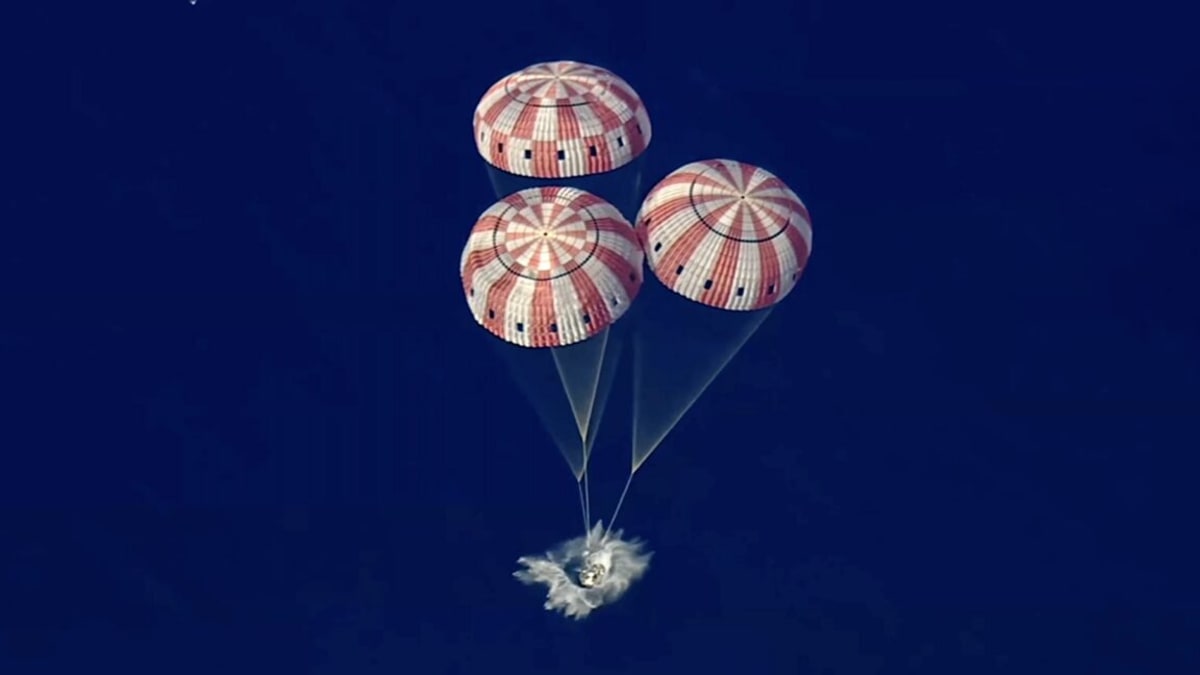
After a tense six-minute communications blackout caused by superheated plasma surrounding the capsule, ground teams reconnected with Commander Wiseman. Minutes later, three massive parachutes deployed perfectly, each spanning over 10,500 square feet, gently lowering the crew to the ocean surface.
Wiseman reported "four green crew members" after splashdown, confirming everyone felt great. Navy helicopters plucked each astronaut from inflatable rafts beside the capsule, flying them to the USS John P. Murtha for medical checks before reuniting with their families in Houston.
Why This Inspires
This mission proves we're ready to return to the Moon permanently. While Artemis II didn't land on the lunar surface, it tested every system needed to support future crews who will establish a base near the Moon's south pole.
The crew beamed back stunning images of the Moon's rugged landscape and a crescent Earth hanging in the black void, reminding millions watching from home of our shared humanity and boundless potential. Their professionalism and spirit during the journey inspired a generation of future explorers.
NASA's next missions will test new lunar landers developed by SpaceX and Blue Origin in Earth orbit before attempting the first Moon landing in over 50 years.
The stars aren't as far away as they once seemed.
More Images


Based on reporting by Ars Technica Science
This story was written by BrightWire based on verified news reports.
Spread the positivity!
Share this good news with someone who needs it