Four Stars Orbit Each Other Closer Than Mercury to Sun
Astronomers discovered the tightest quadruple star system ever found, packed so densely the inner three stars could fit inside Mercury's orbit. Scientists even mapped out the system's fate 276 million years into the future.
Astronomers just found four stars dancing together in the cosmic equivalent of a packed elevator, and they're rewriting what we thought was possible in space.
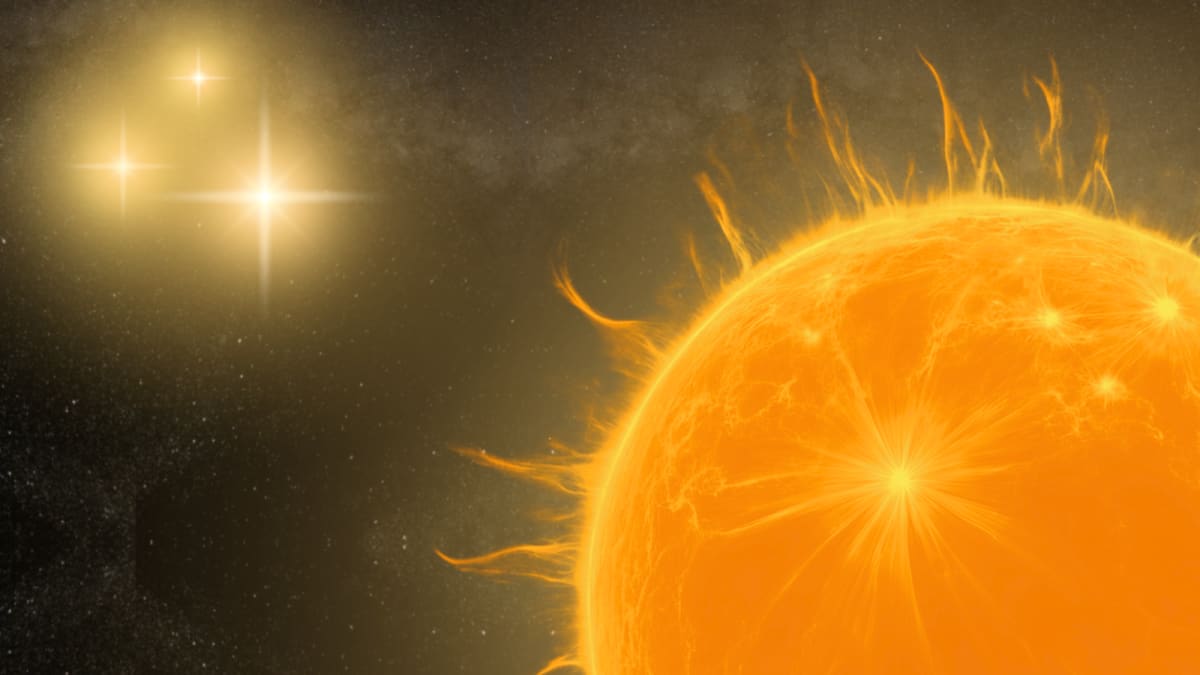
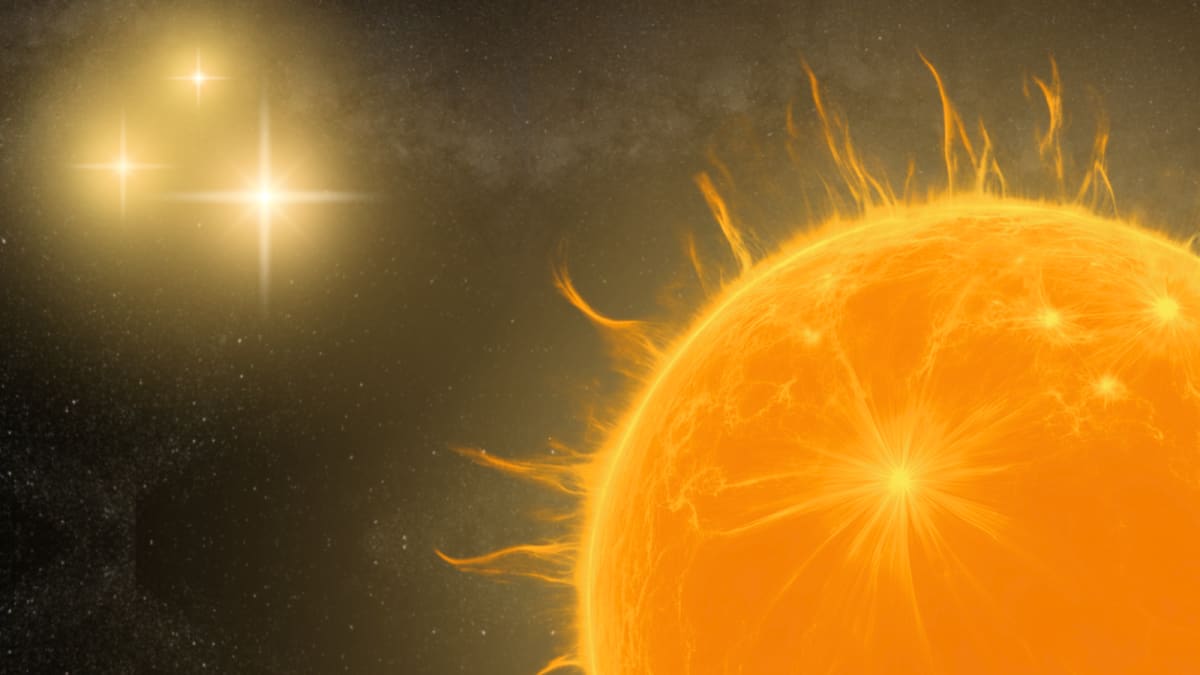
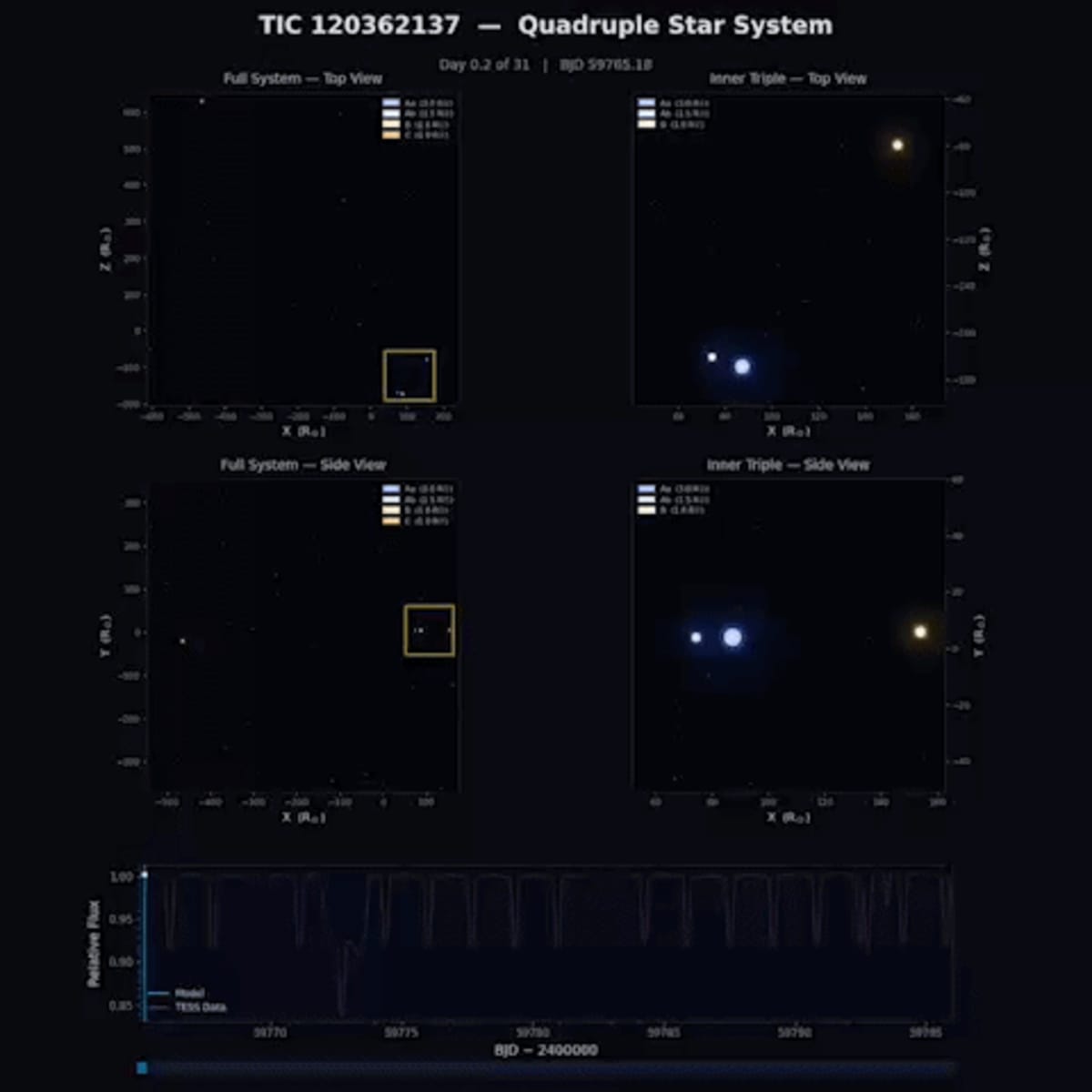
Using NASA's planet-hunting telescope TESS, researchers discovered TIC 120362137, a quadruple star system that's breaking records for how tightly packed it is. The three inner stars orbit each other in a space smaller than Mercury's path around our sun, while a fourth star circles them from about Jupiter's distance.
"TIC 120362137 is currently the most compact known 3+1-type quadruple star system," says team leader Tamás Borkovits from the University of Szeged in Hungary. These systems are incredibly rare, making this discovery a cosmic treasure.
The find almost slipped past the team at first. They initially spotted what looked like a normal pair of stars eclipsing each other every 3.3 days. Thousands of these systems exist, so nothing seemed special.
Then they noticed extra dimming every 25 to 26 days, revealing a third star with a 51-day orbit. Only when they used Arizona's Tillinghast telescope did they confirm the fourth star, completing the quartet with a 1,046-day orbit. That's the shortest outer orbit ever found in this type of system by far.
The three inner stars burn hotter and heavier than our sun, while the outer companion is cooler and more sun-like. Together, they're teaching scientists new lessons about how stars form and stay stable when crammed into tight neighborhoods.
Why This Inspires
The team didn't just find these stars. They used computer simulations to predict their entire future across hundreds of millions of years.
In about 276 million years, the innermost pair will merge when they become red giants. That merged star will then combine with the third star, creating one massive stellar body. Eventually, both this merged giant and the distant fourth star will shed their outer layers and collapse into white dwarfs, the peaceful stellar remnants that mark the end of a star's life.
It's like watching a cosmic preview of events our great-great-grandchildren millions of generations from now will never see, yet we can understand it today. The universe may be impossibly vast, but human curiosity keeps finding ways to unlock its secrets, one incredible discovery at a time.
More Images


Based on reporting by Space.com
This story was written by BrightWire based on verified news reports.
Spread the positivity!
Share this good news with someone who needs it