Free Daily Game Turns Met Museum Art Into Global Puzzle
A 21-year-old college student created Anthropeum, a free daily game where players guess the origins of artifacts from the Met Museum's collection. The game deliberately showcases underrepresented cultures to help players discover art they've never seen before.
If you've ever wondered whether you could identify where an ancient bronze chariot came from, there's now a game for that.
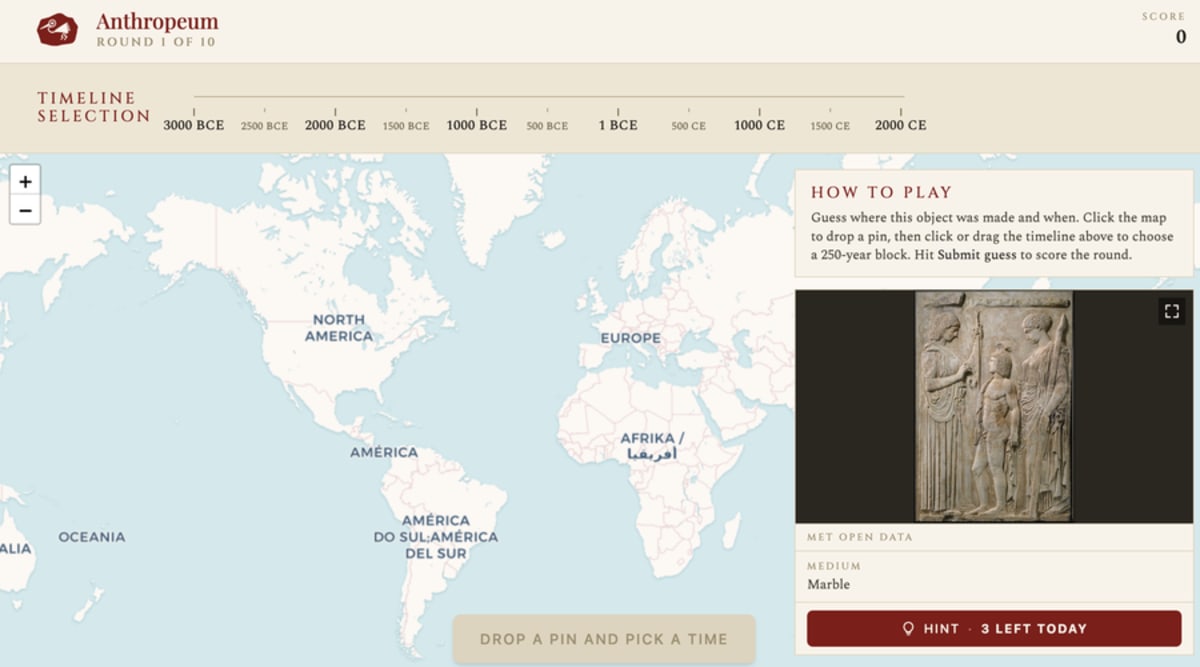
Matthew Chu, a 21-year-old accounting and data science student at the University of Washington, created Anthropeum, a free daily game that challenges players to guess where and when artifacts originated. The game draws from the Metropolitan Museum of Art's Open Access collection of over 492,000 artworks.
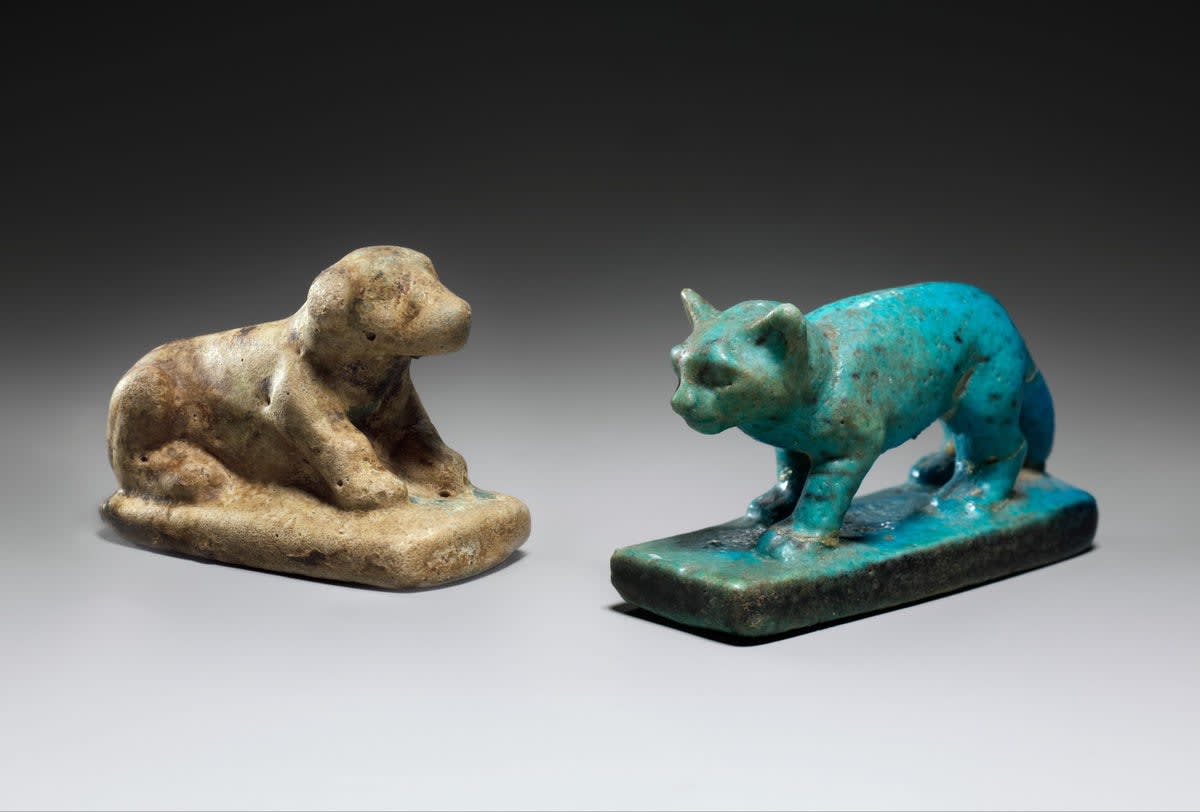
Here's how it works: Players see an image of an artifact, then place a pin on a world map and select a date on a timeline. The game reveals how close they got. One day might feature Egyptian figurines from the Middle Kingdom. Another might show pre-Columbian ceramics or sub-Saharan metalwork.
Chu got the idea from spending time with coin and artifact collectors who rescue mysterious objects from scrapyards and identify them for museums. He wanted to recreate that detective work as an accessible game anyone could play.
But Anthropeum isn't just about testing knowledge. Chu built the game with a mission: to balance representation of cultures in a collection that skews heavily European.
"That bias would otherwise dominate the game: far more 17th-century Dutch paintings than sub-Saharan metalwork or pre-Columbian ceramics," Chu explains on the game's website. His algorithm selects 10 artifacts per day for the next decade, ensuring players encounter art from cultures around the world.
The Ripple Effect
Chu manually checks each artifact's regional data using open-source historical map databases. When cultures aren't represented in those databases, he researches and creates custom files himself. He also filters out objects too generic to identify, like polished rocks.
Some players have complained about encountering unfamiliar artifacts from remote regions. Chu sees that as the point. "You see something that you don't recognize, and you don't know what it is and you get it completely wrong, but then you go and you learn about what culture created that," he says. "That's part of the fun."
The game has no archive yet, but Chu is working on adding one so players can revisit previous challenges. He hopes to eventually include artifacts from other museums, though many collections aren't open access for independent developers like him.
Players have provided valuable feedback that continues to improve the game. "Making your project open source, someone else can build off of that and make life better for the people around you," Chu says.
Learning about the world through ancient artifacts has never been this engaging.
More Images

Based on reporting by Scientific American
This story was written by BrightWire based on verified news reports.
Spread the positivity!
Share this good news with someone who needs it