French Hospital Uses Donkeys to Treat Mental Illness
A Paris hospital has turned donkeys into mental health therapists, and patients say the four-legged caregivers work as well as medication. Since 2016, France's only hospital-based animal therapy unit has helped people with depression, anxiety, and schizophrenia find relief through donkey companionship.
At a psychiatric hospital east of Paris, five donkeys are changing how doctors think about mental health treatment.
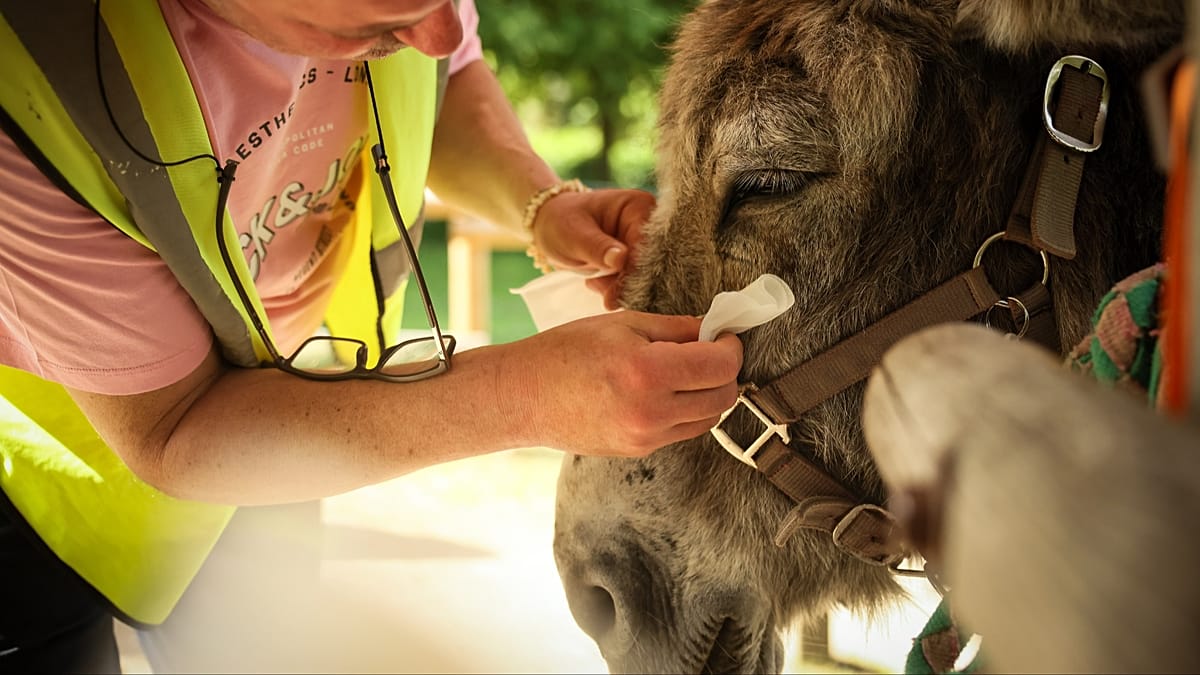
The Ville-Evrard hospital's donkey therapy program pairs patients with gentle companions named Nono, Pitou, Oscar, Manolo, and Malraux. Patients groom the animals, walk them through wooded grounds, and form bonds that help them reconnect with themselves.
Nathalie, 60, says the effect mirrors her medication. "I'd call it animal medicine. It brings relief. You stop thinking about everything else," she told reporters after her Friday session.
The program started in 2016 when psychiatric nurse Ermelinda Hadey and her husband François bet that donkeys' calm, social nature could reach patients in ways pills alone cannot. They were right.
Patients who initially refused to participate now eagerly attend sessions. Nurse Audrey Seffar watched one woman transform from refusing to leave her mobility cart to standing confidently beside her donkey companion. "The animal serves as a mediator," Seffar explained.
Jérôme, 52, credits the donkeys with easing his loneliness. "It helps you break away from the routine of treatment and medication," he said. "Staying at home isn't good for me."
Many of the therapy donkeys survived neglect before François Hadey trained them for healthcare work. He describes them with professional respect: "Donkeys are calm, serene animals. They're emotional sponges."
The Ripple Effect
What began as one couple's hunch became an official healthcare unit in 2022. The program now employs three full-time nurses and has expanded to include guinea pigs, chickens, goats, turtles, and rabbits for patients who cannot go outside.
Sessions are completely free, funded by France's public health system. Staff report improvements in emotional regulation, communication, and self-esteem across patients with anxiety, depression, autism, and schizophrenia.
Ermelinda Hadey explains the mirror logic behind their success. "We work on feeding the animal, which helps us address the patient's own eating habits. We work on the animal's hygiene, and by mirror effect, we work on the patient's hygiene as well."
For patients on antipsychotic medications that flatten motivation, the donkeys provide something medicine cannot: a warm, nonjudgmental companion who notices when you show up.
The team now wants formal research to bring animal therapy into mainstream psychiatric practice. "We have plenty of accounts from patients," Hadey said. "But we need research."
Nursing student Alicia Fabi sees the evidence every session: "Every time we come back, they say they feel good, calm and relaxed."
One nurse may have summed it up best: "Donkeys are my best colleagues."
More Images




Based on reporting by Euronews
This story was written by BrightWire based on verified news reports.
Spread the positivity!
Share this good news with someone who needs it