Fruit Fly Study Unlocks Why Brain Diseases Share Common Path
Scientists discovered why opposite genetic mutations both cause brain diseases like Alzheimer's and Parkinson's, solving a puzzle that has stumped researchers for decades. The breakthrough could help millions living with neurodegenerative conditions.
A groundbreaking discovery in tiny fruit flies just cracked one of neuroscience's biggest mysteries: why completely opposite genetic problems can cause the same devastating brain diseases.
Professor Andreas Prokop at the University of Manchester published findings in Current Biology showing that both hyperactive and disabled motor proteins damage nerve fibers the same way. It's a revelation that could transform how we understand and treat Alzheimer's, Parkinson's, and motor neuron disease.
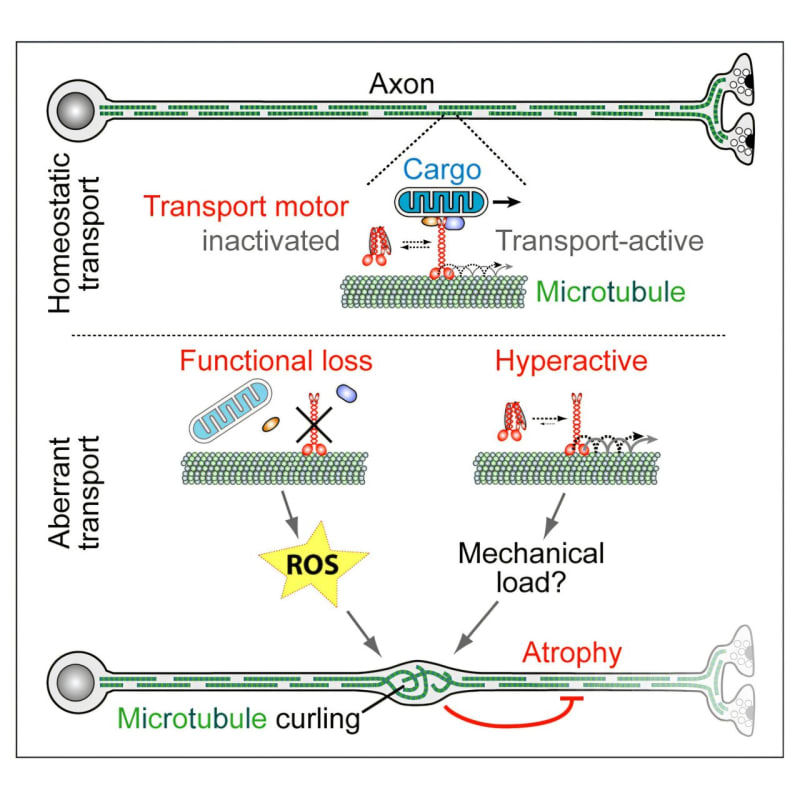
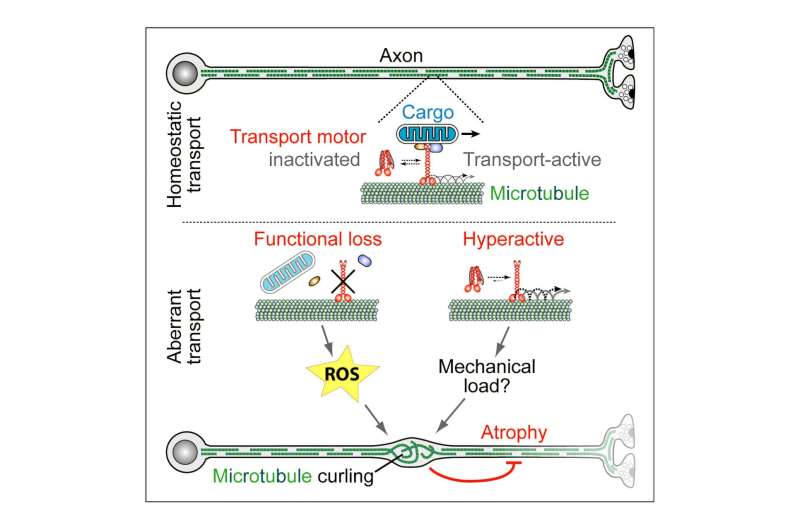
The research focused on axons, the delicate biological cables that carry messages between your brain and body. These nerve fibers must stay healthy for your entire lifetime, relying on motor proteins that act like tiny delivery trucks running along tracks called microtubules.
Scientists already knew that mutations disabling these motor proteins caused axon decay. But another class of mutations does the opposite, making motor proteins hyperactive and unable to rest. Both scenarios somehow led to similar neurodegeneration, and nobody could explain why.
Using fruit flies (which share surprising genetic similarities with humans), Prokop's team discovered both mutation types cause microtubules to transform from straight, organized bundles into disorganized curls. Think of the difference between dry spaghetti and boiled spaghetti.
The team uncovered two different mechanisms that converge on the same damage. Hyperactive motor proteins generate excessive wear and tear, like cars creating potholes that overwhelm repair systems. Disabled motor proteins reduce supply deliveries to the axon, triggering oxidative stress that sabotages those same repair mechanisms.
This led Prokop to propose the "dependency cycle of axon homeostasis," a circular relationship where axon maintenance requires transport machinery that itself depends on that very transport system.
Why This Inspires
This discovery elegantly explains why mutations in wildly different genes can all cause neurodegenerative diseases. The dependency cycle reveals a common vulnerability, giving researchers a unified target for developing treatments.
The findings also highlight why fruit fly research matters. What works quickly and cost-effectively in these tiny insects often translates directly to human biology, accelerating breakthroughs that might otherwise take decades.
Prokop's parallel research already supports the dependency cycle model, and early evidence suggests it applies to human neurons too. For the millions living with or at risk for neurodegenerative diseases, this unified understanding represents real hope for future therapies.
Sometimes the smallest creatures reveal the biggest truths about our own biology.
More Images


Based on reporting by Medical Xpress
This story was written by BrightWire based on verified news reports.
Spread the positivity!
Share this good news with someone who needs it