Gene Therapy Restores Hearing in 90% of Deaf Patients
A groundbreaking gene therapy trial has restored hearing in 90% of people born profoundly deaf, with improvements lasting over two years. The treatment worked across ages from infants to adults, offering new hope beyond cochlear implants.
Children born unable to hear are now listening to their parents' voices for the first time, thanks to a gene therapy that's changing what doctors thought possible about reversing deafness.
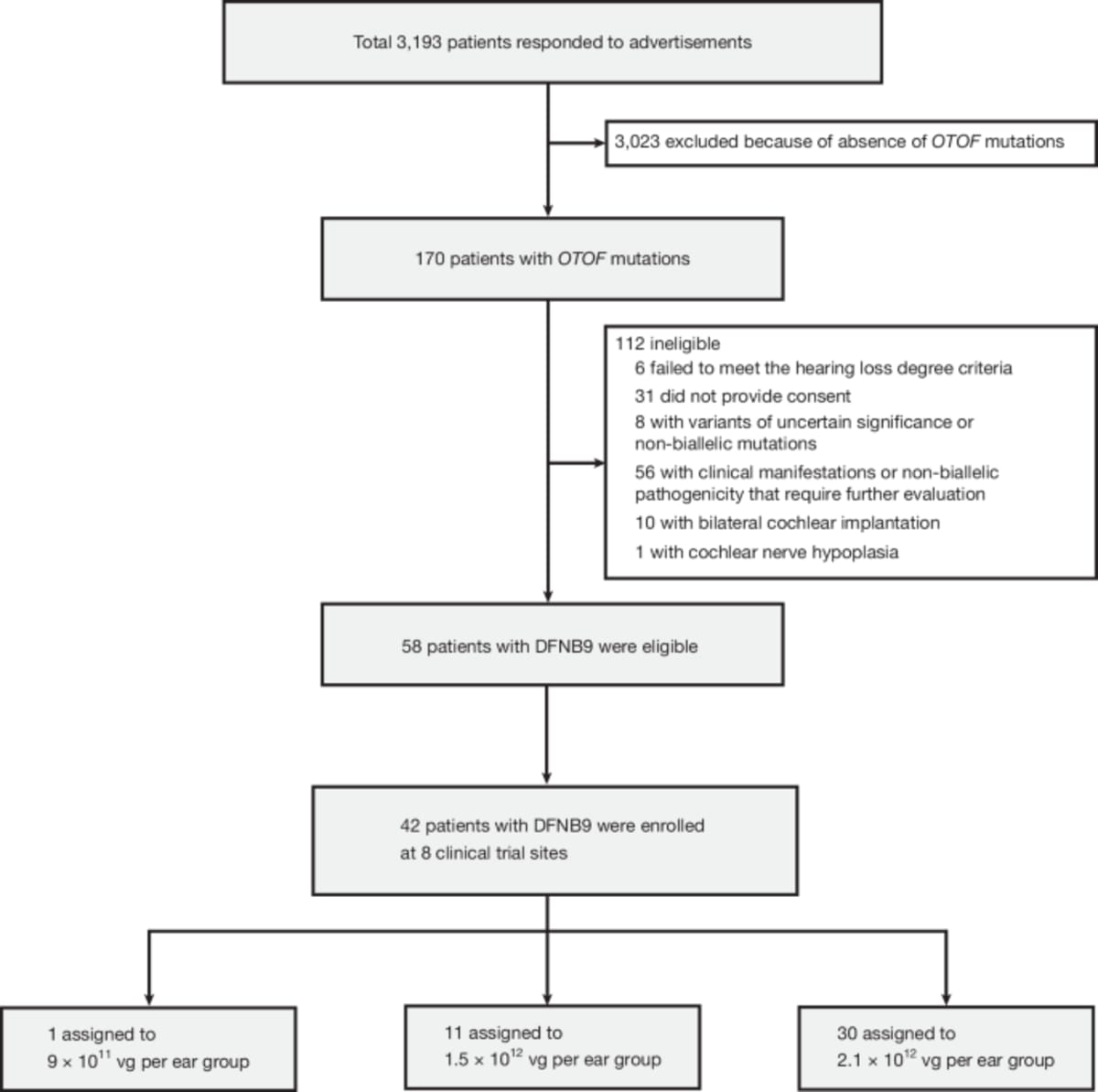
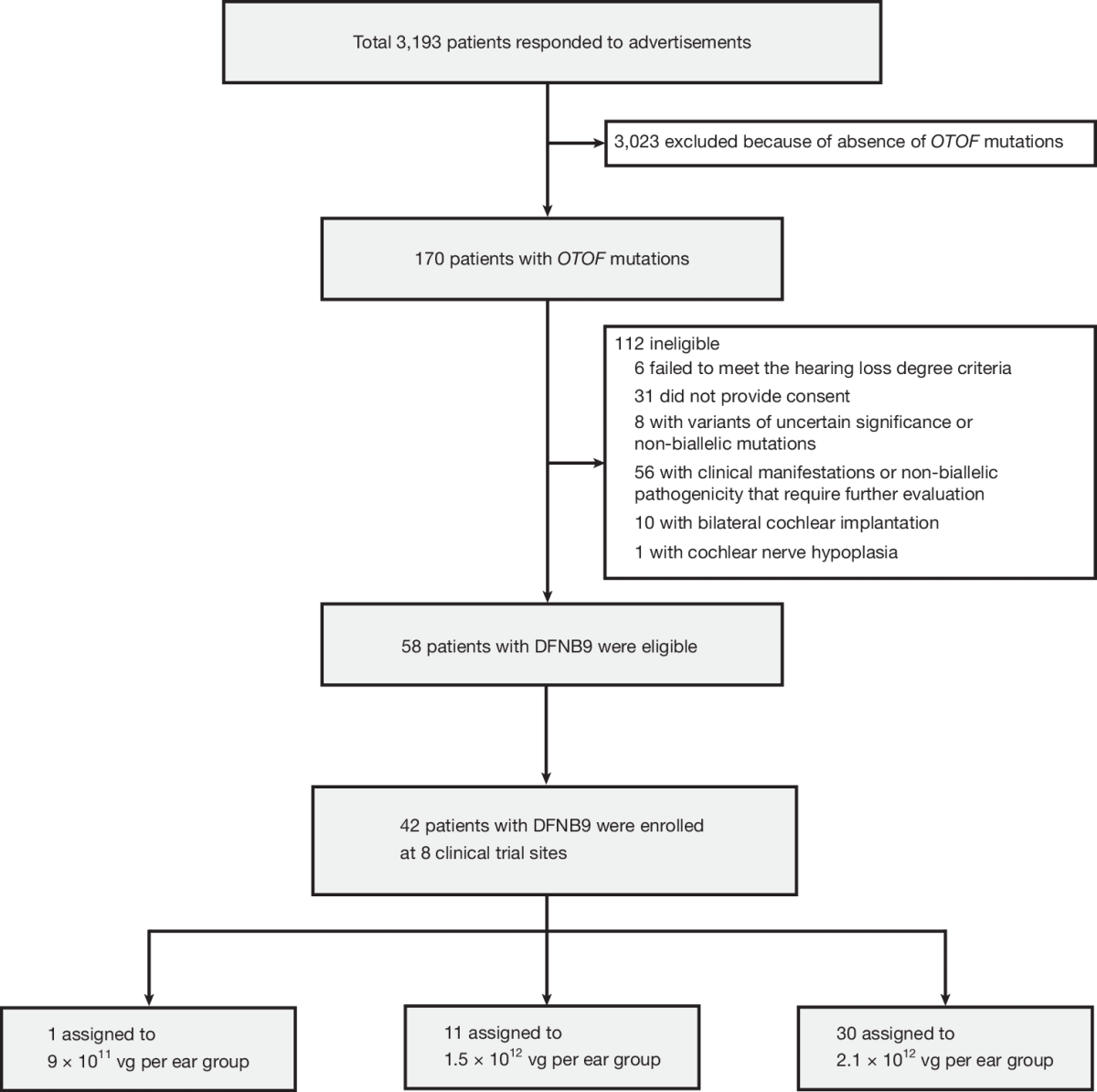
A major clinical trial across eight medical centers in China treated 42 people with a genetic form of deafness using a single injection of gene therapy. The results, published in Nature, show that 90% of participants gained significant hearing ability that continued improving for up to 2.5 years.
The patients all had mutations in the OTOF gene, which causes complete or near-complete deafness from birth. This affects thousands of people worldwide and previously had no cure. The gene therapy delivered a working copy of OTOF directly into the inner ear using a modified virus.
Before treatment, participants couldn't hear sounds below 97 decibels, roughly as loud as a motorcycle. After 2.5 years, their hearing improved to 37 decibels on average, letting them hear normal conversation at about 60 decibels.
The improvements came gradually and steadily. Hearing thresholds improved from over 97 decibels at the start to 54 decibels after one year, then continued getting better each year. Participants didn't just detect sounds either. They developed actual speech perception, understanding and responding to spoken words.
Why This Inspires
What makes this breakthrough especially meaningful is how it worked across different ages. While children and teens saw the best results, even adults in their thirties gained hearing ability. The youngest participant was less than a year old.
The treatment also proved remarkably safe. No serious toxicity occurred, and the most significant side effect was a temporary decrease in certain white blood cells. All 42 participants tolerated the therapy well across different dose levels.
Researchers identified factors that predict better outcomes. Younger patients responded more strongly than adults. People with certain types of OTOF mutations saw greater improvements than others. These insights will help doctors identify who benefits most from treatment.
The implications extend beyond this one genetic cause of deafness. The trial demonstrates that gene therapy can successfully target the delicate structures of the inner ear and produce lasting benefits. It opens doors for treating other genetic forms of hearing loss that affect different genes.
For families facing a deafness diagnosis, this offers a genuine alternative or complement to cochlear implants. Unlike implants that bypass damaged structures, gene therapy actually repairs the underlying biological problem.
The 2.5-year follow-up shows the results are durable, not temporary, with hearing continuing to improve rather than decline over time.
More Images
Based on reporting by Nature News
This story was written by BrightWire based on verified news reports.
Spread the positivity!
Share this good news with someone who needs it